Work through the details
A clear description, good photographs and an organised record make it easier to compare a card with published guidance. Start with condition, then learn how to read the label and prepare an actual submission.
Four useful starting points before you decide what to submit.

A clear description, good photographs and an organised record make it easier to compare a card with published guidance. Start with condition, then learn how to read the label and prepare an actual submission.

A calm, repeatable way to document the card in front of you.
Read more
Match the record, the holder and the card before drawing a conclusion.
Read more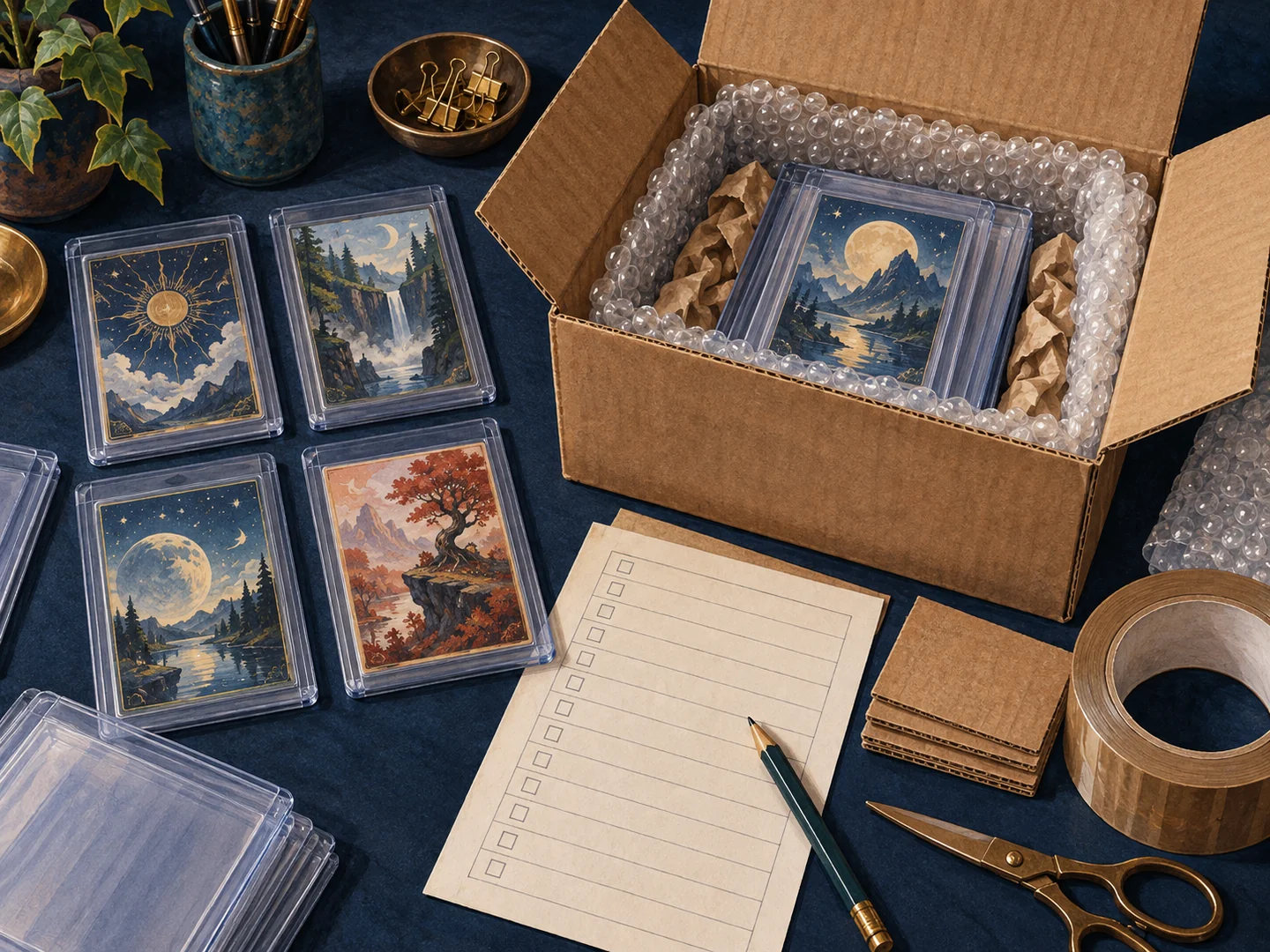
An organised checklist for a submission you arrange directly with the grader.
Read moreRead the grade in the context of the card and the grader’s own standard.
Read more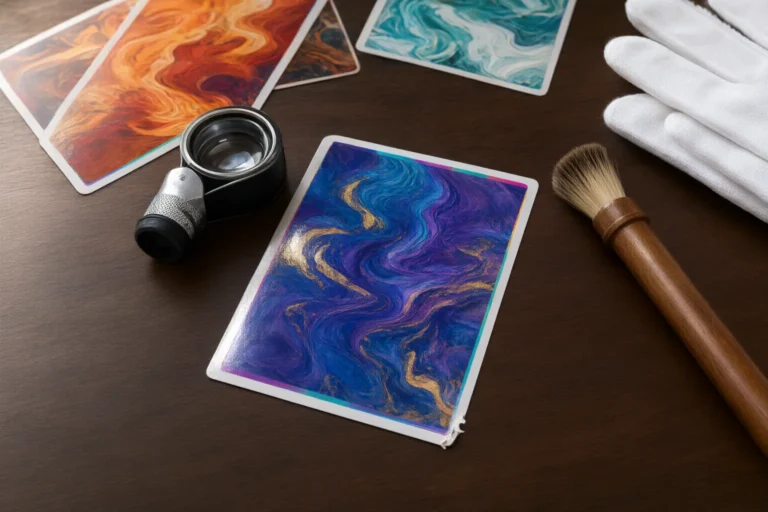
Print registration errors can cause coloured fringes, displaced colour, blur, overlap or white gaps along printed boundaries. A careful inspection records these signs separately from edge whitening, nicks,…
Read more ↗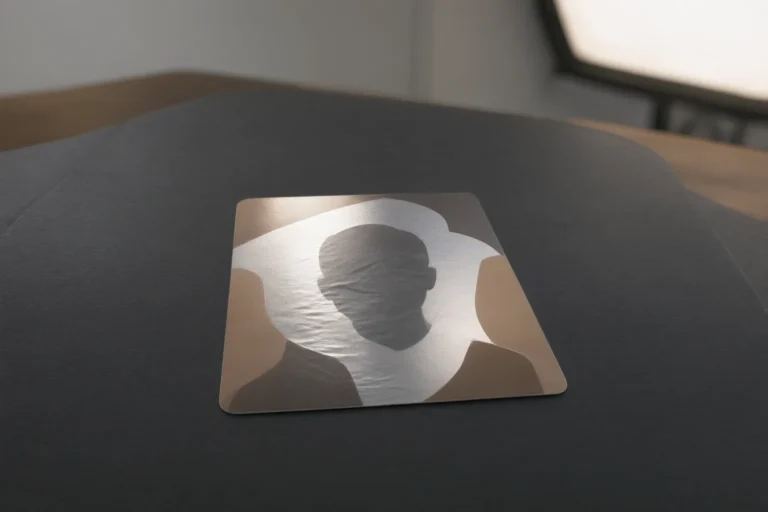
Uneven grey reflections or optical distortion may indicate internal card delamination, even when the surface feels smooth. Keep the card supported, avoid flexing or pressing it, document visible…
Read more ↗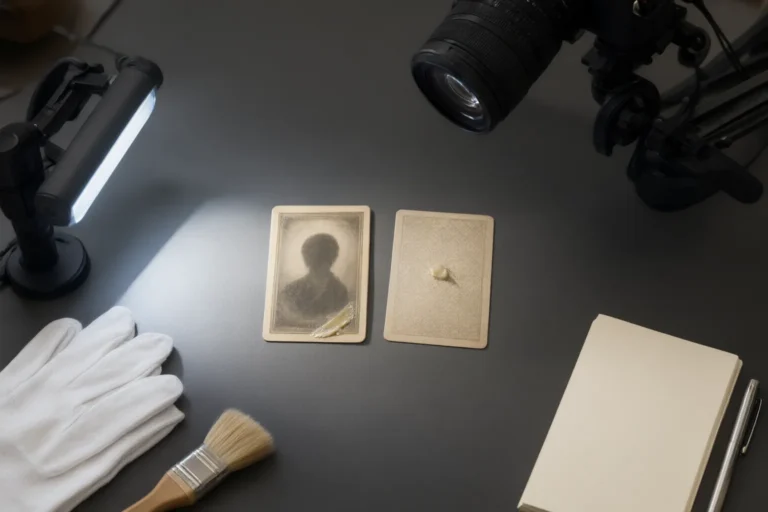
Create a useful pre-grading record with front-and-back photographs, angled-light close-ups and plain-language notes describing the location and visible appearance of suspected residue.
Read more ↗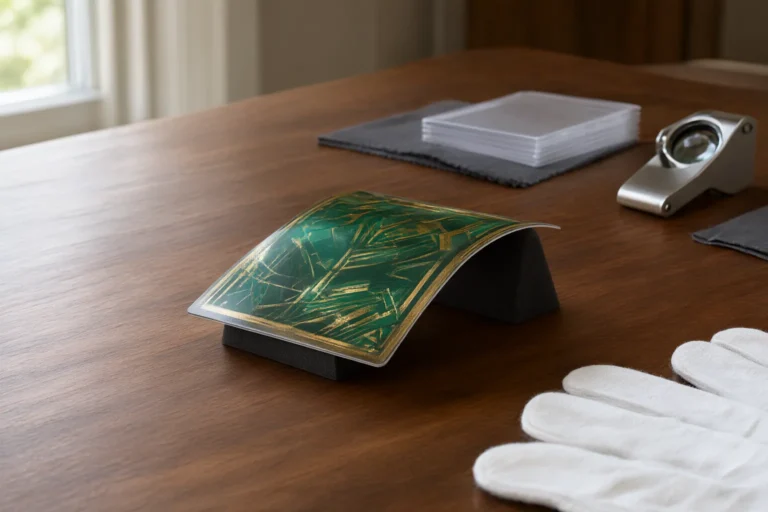
Inspect a card at eye level from all four sides to compare a smooth, symmetrical arc with uneven lift or twisting. Check for creasing, separation and surface stress,…
Read more ↗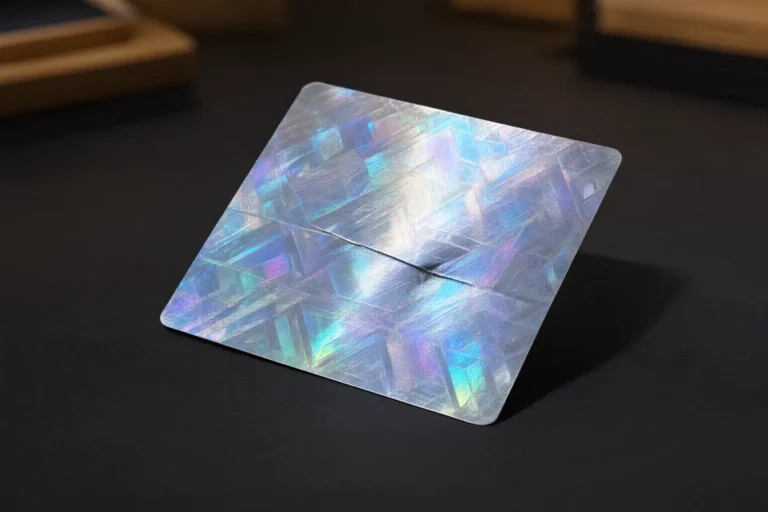
Inspect a holofoil card from table level, then slowly tilt it through focused light at roughly 30–45 degrees. Uneven lifting, a broken reflection, or a faint shadow may…
Read more ↗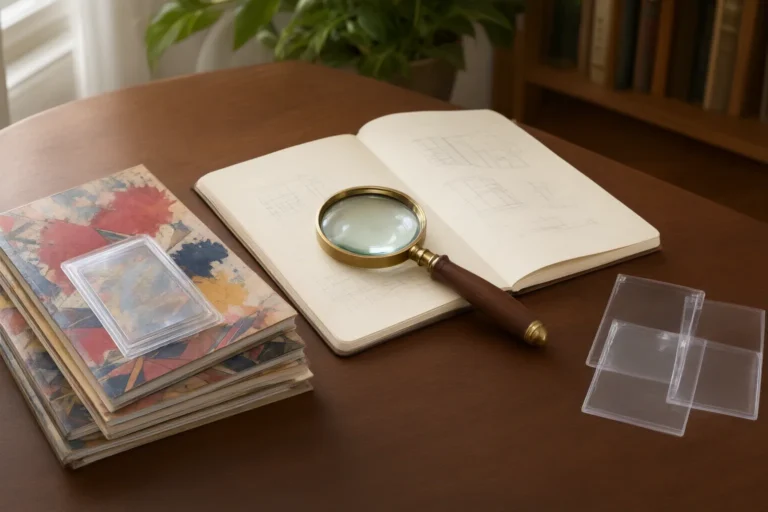
Grading population reports document figures within a grading company’s records. Read CGC figures alongside its current 10-point scale and legacy-grade key, record the date and exact figures consulted,…
Read more ↗