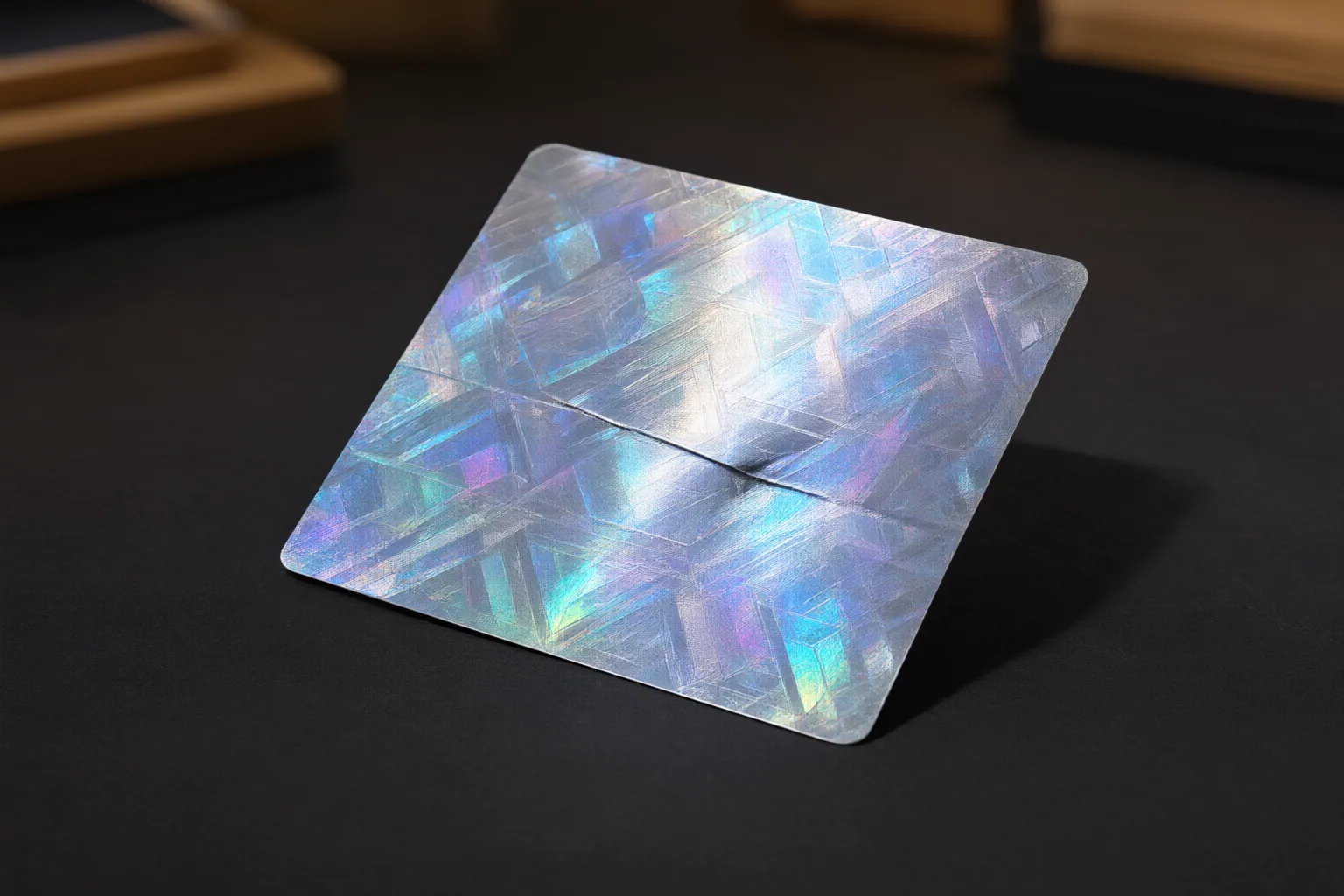
A micro-crease can be difficult to see when a holofoil card is viewed straight-on. Inspect the card from table level, then slowly tilt it through focused light set at roughly 30–45 degrees; uneven lifting, a broken reflection, or a faint shadow may indicate structural deformation rather than an ordinary surface mark.
Why Direct Lighting Can Hide a Micro-Crease
A glossy surface can produce a strong, continuous reflection that makes a subtle structural line difficult to recognise from a single, straight-on viewpoint. DEDCcard says soft creases may become apparent when the viewing or lighting angle changes, rather than under direct observation alone.
Using two viewing geometries provides different evidence. Looking across a card at table level can reveal whether its edges or corners lift unevenly from a flat surface. Angled illumination can then expose an interruption in the reflected light. This distinction matters because Iconic Grading Co separates minor surface or print defects from creases in its published criteria.
These observations should be treated as inspection clues, not universal rules. The available guidance does not establish a controlled method for every holofoil construction, and grading standards can differ between companies. A visual check can identify an area requiring closer attention, but it cannot guarantee a grade.
A Two-Angle Inspection Method
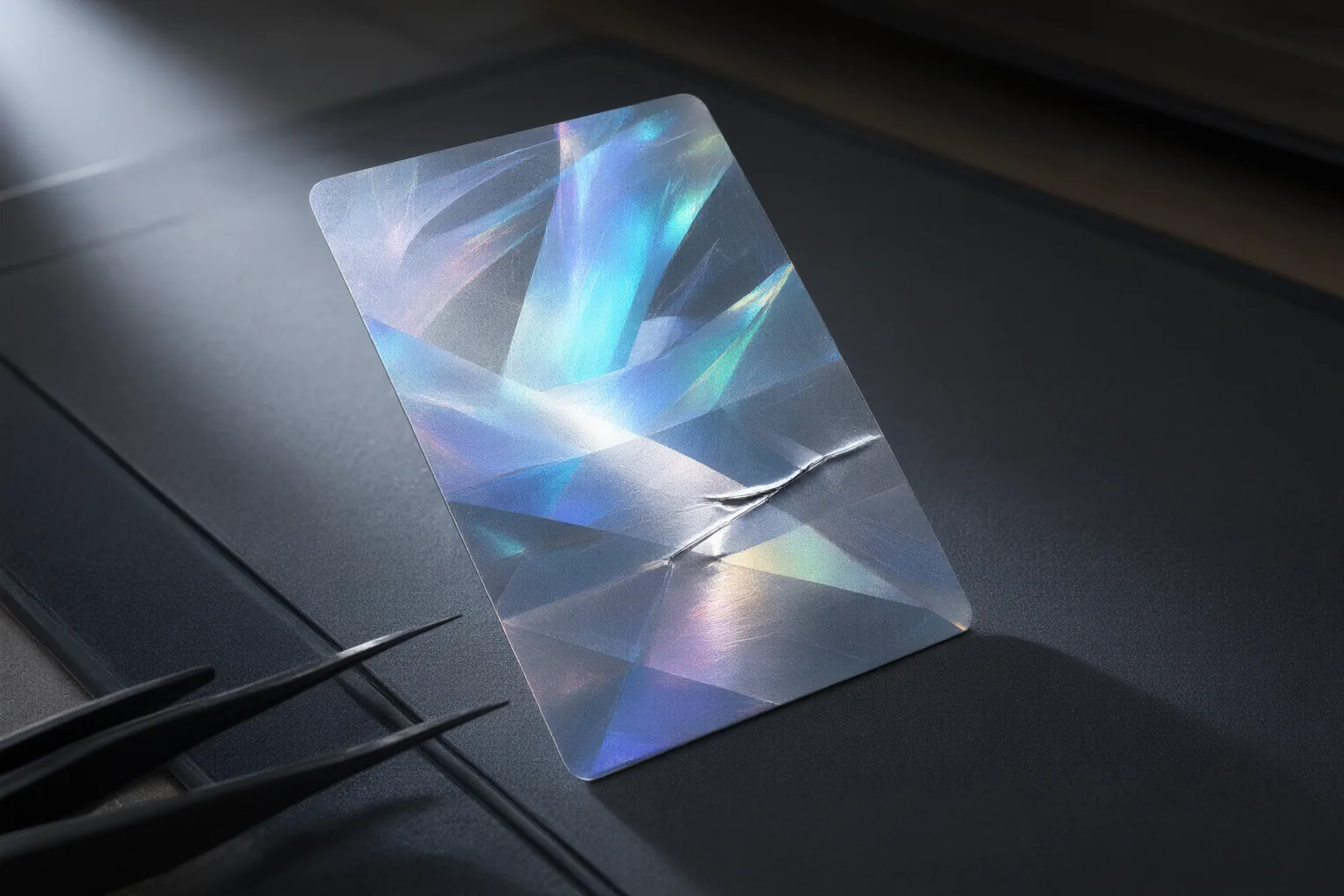
Begin by placing the unsleeved card on a clean, flat inspection surface. Avoid pressing it down. Lower your viewpoint to approximately table level and look along the card rather than directly at its face. Check whether one corner or edge rises differently from the others. According to DEDCcard, asymmetrical lifting can help reveal a loss of flatness associated with a subtle crease.
Next, aim a focused light across the card at approximately 30–45 degrees. Slowly tilt the card through the beam while watching how the reflection travels over the holofoil surface. DEDCcard says a soft crease may interrupt an otherwise continuous reflection or create a faint shadow. Examine the suspected area from more than one direction because the line may disappear again when the light aligns with the reflective surface.
Keep the process observational. Do not bend, flex, or force the card flat to make a line easier to see. The purpose is to compare flatness and reflected light without adding mechanical stress. If a feature appears only at a particular angle, note its position and repeat the same slow movement to see whether the interruption is consistent.
Crease, Scratch, or Print Mark?
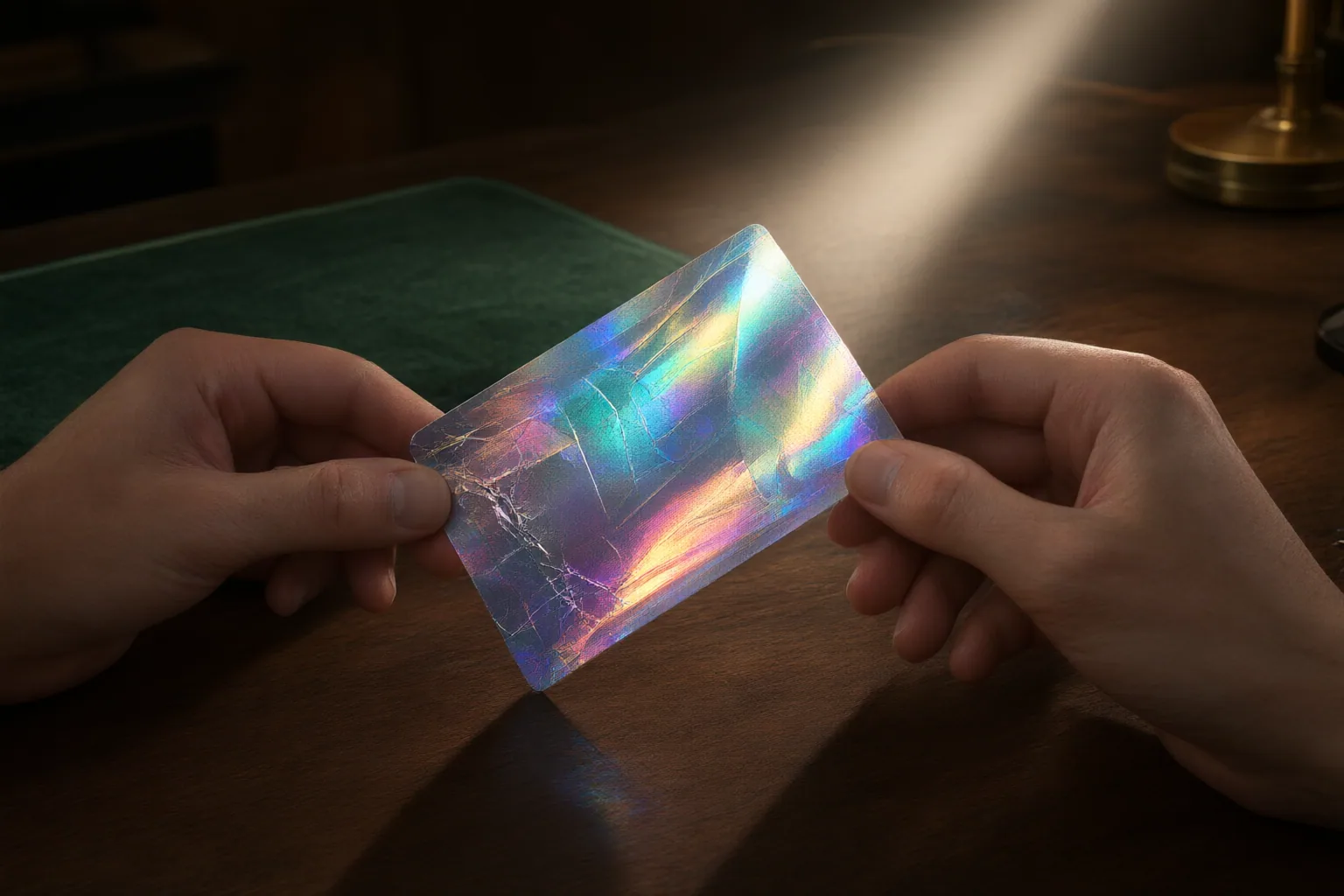
A visible line is not automatically a crease. Look for two related signs: a change in the card’s flatness and a repeatable interruption in the reflection. A superficial scratch or print line may affect the appearance of the surface without producing the uneven lifting that can accompany structural deformation. Conversely, a suspected crease may be subtle straight-on yet cast a shadow or break the reflected band under angled light.
Iconic Grading Co’s published criteria illustrate why the distinction can affect condition interpretation. Its Mint 9 criteria allow the possibility of a subtle micro-scratch or print tick under bright light but permit no creasing. Its criteria for grades 8 and 7 also exclude creases, wrinkles, and dents. These are that company’s criteria, not a universal grading scale, but they show that a minor-looking surface or print feature and a structural crease may be treated differently.
Avoid deciding from a single flash of light. Repeat the tilt, compare the suspected line with the surrounding foil, and check the area again from table level. Record what is directly observable—such as the location of uneven lifting or a reflection break—rather than assigning a grade from the inspection alone.
Conclusion
A careful inspection combines two checks: a low, table-level view for uneven flatness and slowly changing angled light for shadows or broken reflections. Together, they provide more useful evidence than a straight-on view alone, while still leaving uncertainty about the exact nature and grading significance of a mark.
Do not force a curled card flat or push it into a tight rigid holder; DEDCcard warns that these actions may create or worsen structural stress. Instead, document the location and appearance of any suspected deformation, including the angle at which it becomes visible. Visual inspection cannot guarantee a grade or remotely authenticate condition, so preserve the card’s current state and use your notes when considering storage, a transaction, or professional grading.
Disclosures and limitations
- This article was prepared with AI assistance from the supplied research package. Its factual guidance is attributed to DEDCcard and Iconic Grading Co; these are commercial grading-related sources, not universal standards or controlled evidence for every holofoil construction.
- No products are recommended and no affiliate relationship is represented. Readers should verify current grading criteria directly with their chosen grading company before making submission or condition decisions.
Related reading
Sources
- What Is a Minor Card Curl & Soft Crease? Card Grading Guide — DEDCcard
- Card Grade Levels – Iconic Grading Co — Iconic Grading Co – Collectible Card Grading Services