Category: <span>Grading</span>
Condition inspection, grade interpretation and official certification checks.

How to Distinguish Print Registration Errors from Wear and Damage on Trading Cards
Print registration errors can cause coloured fringes, displaced colour, blur, overlap or white gaps along printed boundaries. A careful inspection records these signs separately from edge whitening, nicks,…
Read more ↗
Internal Card Delamination: Signs to Check Without Flexing the Card
Uneven grey reflections or optical distortion may indicate internal card delamination, even when the surface feels smooth. Keep the card supported, avoid flexing or pressing it, document visible…
Read more ↗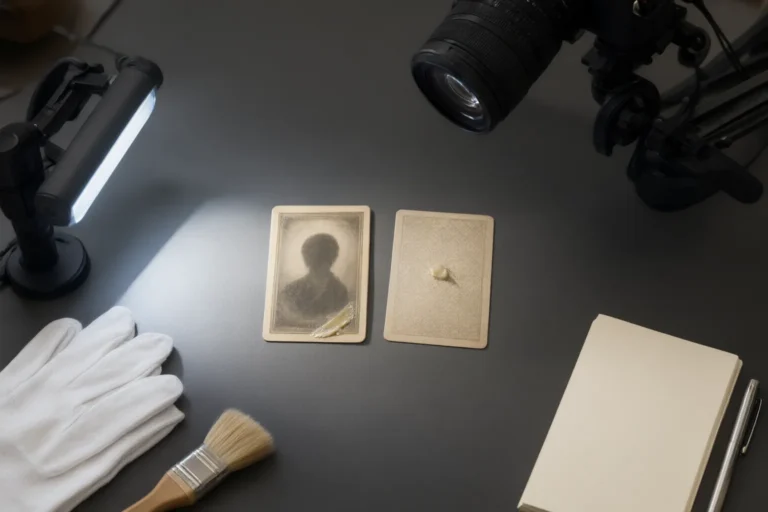
How to Document Wax or Gum Staining on Vintage Trading Cards Before Grading
Create a useful pre-grading record with front-and-back photographs, angled-light close-ups and plain-language notes describing the location and visible appearance of suspected residue.
Read more ↗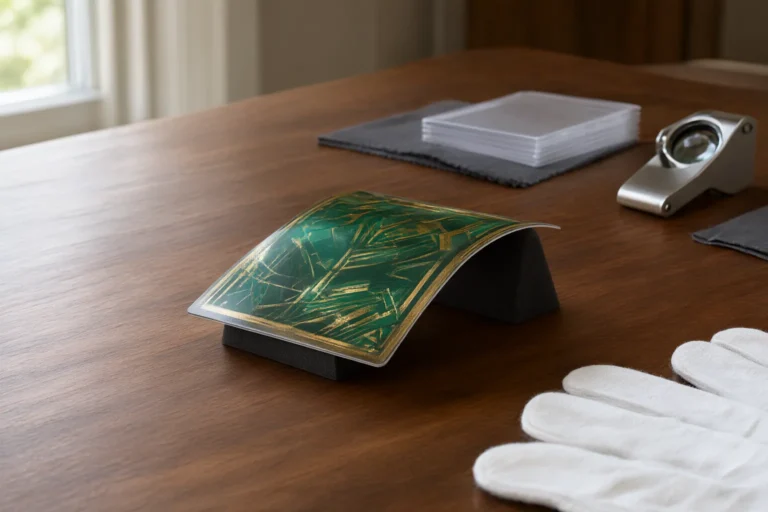
How to Assess Card Warping Before a Grading Submission
Inspect a card at eye level from all four sides to compare a smooth, symmetrical arc with uneven lift or twisting. Check for creasing, separation and surface stress,…
Read more ↗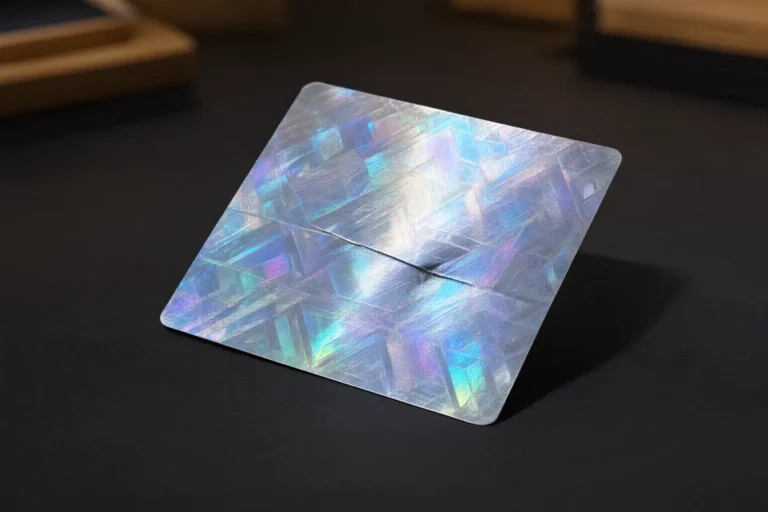
How to Inspect Holofoil Cards for Micro-Creases Under Angled Light
Inspect a holofoil card from table level, then slowly tilt it through focused light at roughly 30–45 degrees. Uneven lifting, a broken reflection, or a faint shadow may…
Read more ↗
How to Read Grading Population Reports Without Mistaking Them for Rarity Censuses
Grading population reports document figures within a grading company’s records. Read CGC figures alongside its current 10-point scale and legacy-grade key, record the date and exact figures consulted,…
Read more ↗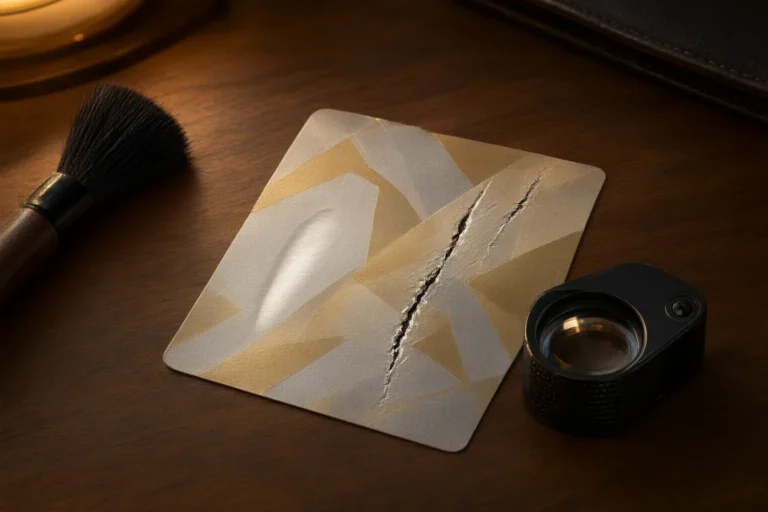
Factory Roller Marks vs Post-Print Card Damage: How to Tell the Difference
Factory roller marks and post-print damage can appear similar. Inspect a mark’s shape, texture, extent and surrounding wear under angled light, using magnification where helpful, to make a…
Read more ↗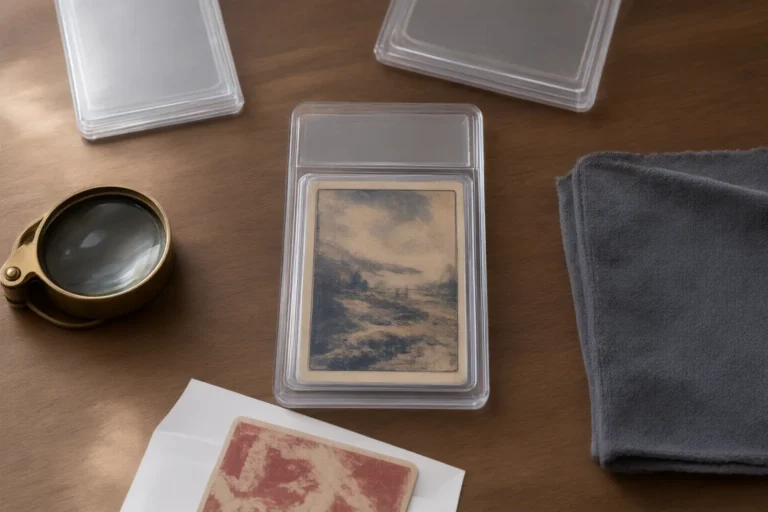
What an “Authentic” Label Without a Numerical Grade Means for Collectors
An “Authentic” label confirms that a card is genuine without assigning a numerical condition grade. Learn why a number may be absent, how “Authentic Altered” differs, and what…
Read more ↗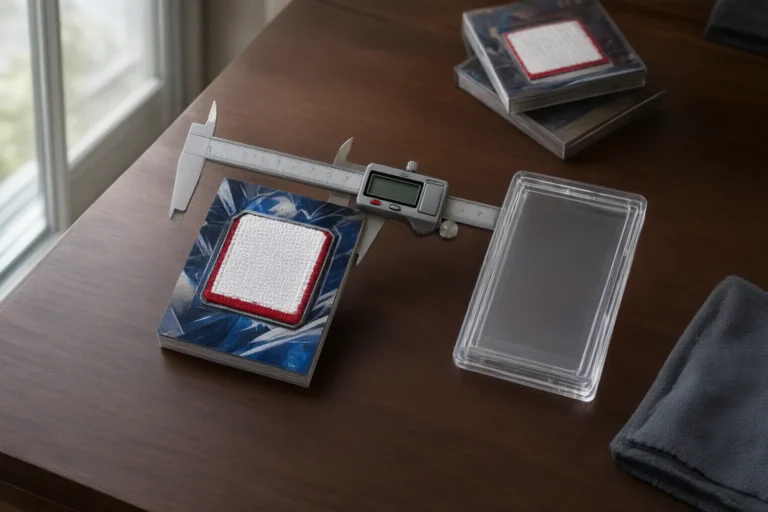
How to Check Whether Thick Memorabilia Cards Fit a Grading Company’s Standard Holders
Measure the card’s point thickness, identify its physical format, inspect its condition, and compare those details with the grading company’s current holder and submission guidance.
Read more ↗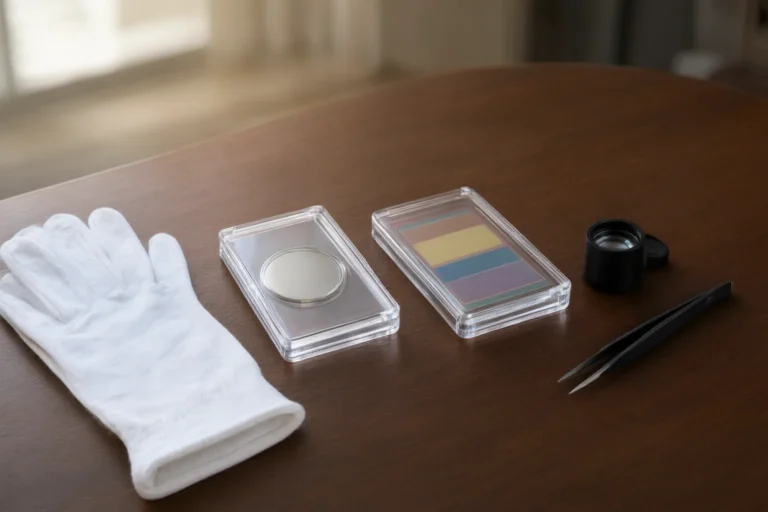
Reholder, Review and Crossover Services: Practical Differences for Collectors
Reholder generally replaces an existing holder, review or regrade requests another assessment, and crossover seeks to move an encapsulated item from another grading company. Compare the routes, document…
Read more ↗