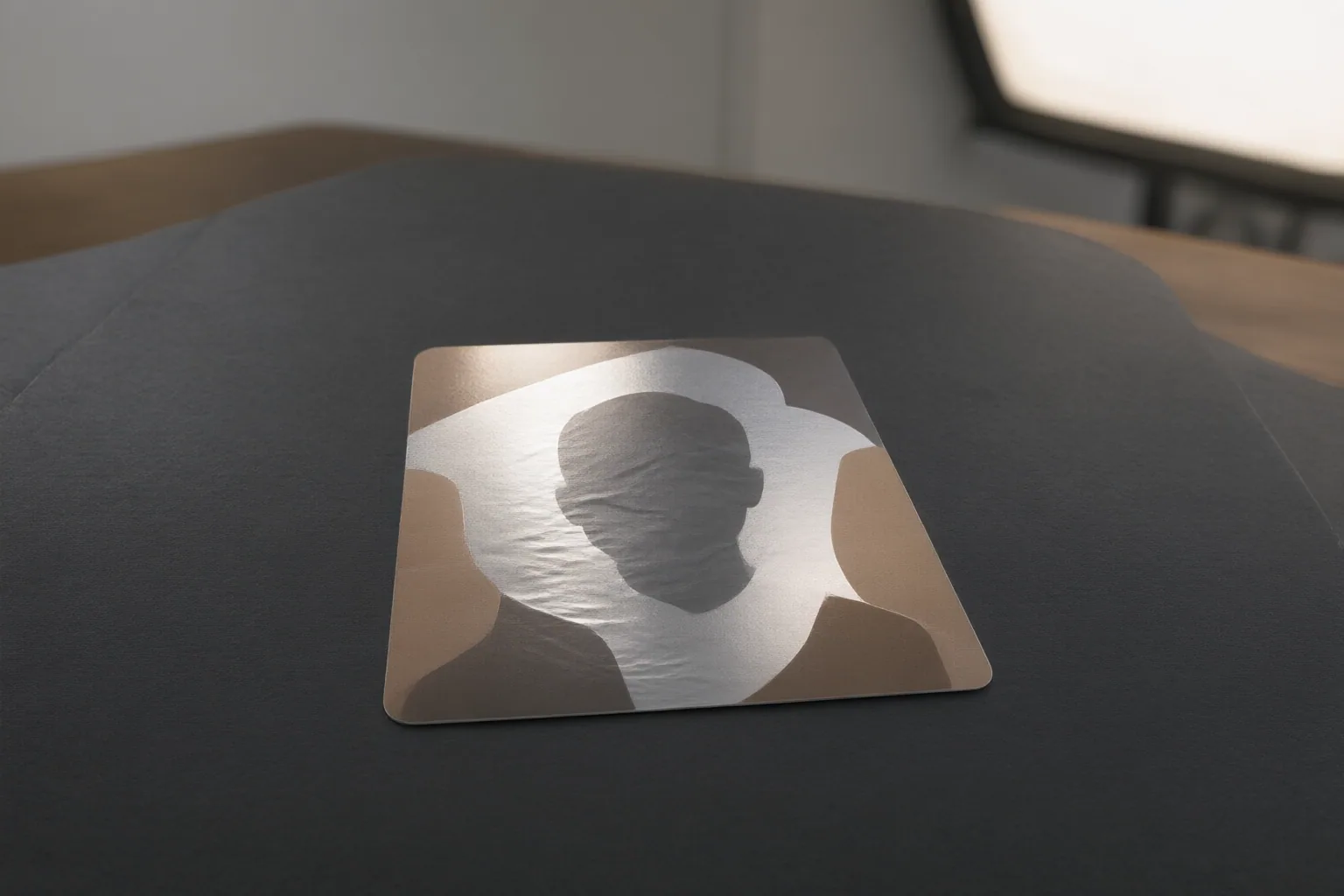
Possible internal card delamination may appear as an uneven grey reflection or optical distortion even when the card’s outer surface feels smooth. Inspect visually while keeping the card supported, and do not flex, wipe, or press a suspicious area. These observations can flag a concern, but they cannot conclusively diagnose delamination, authenticate the card, or determine its grade.
Signs That May Indicate Internal Delamination
Holographic cards can contain multiple bonded layers. DEDCcard describes a possible separation in which the foil loosens from the paper base, creating microscopic air pockets that change how light interacts with the card. The reported visual effects include an uneven grey reflection and optical distortion beneath the surface.
These effects are possible indicators, not proof of internal card delamination. Grey areas may be mistaken for dirt, clouding, or camera glare, so note whether the appearance seems uneven or changes with the visible reflection rather than assuming a cause. The cited account also says the outer surface may remain smooth despite separation underneath. A normal feel therefore does not rule out an internal problem, while an unusual feel does not by itself establish one. Avoid using touch as a diagnostic test or pressing the area to investigate it.
How to Inspect the Card Without Flexing It
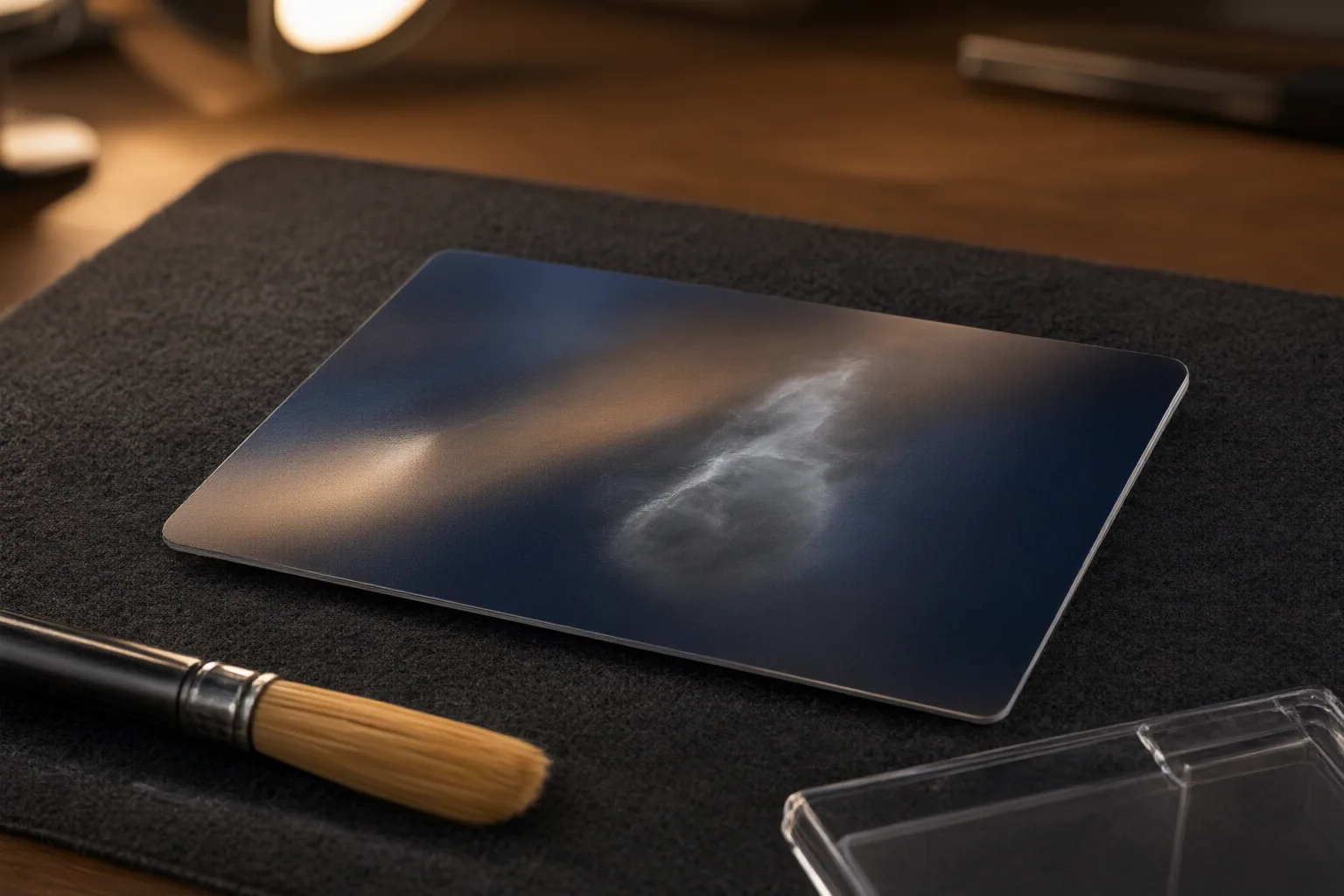
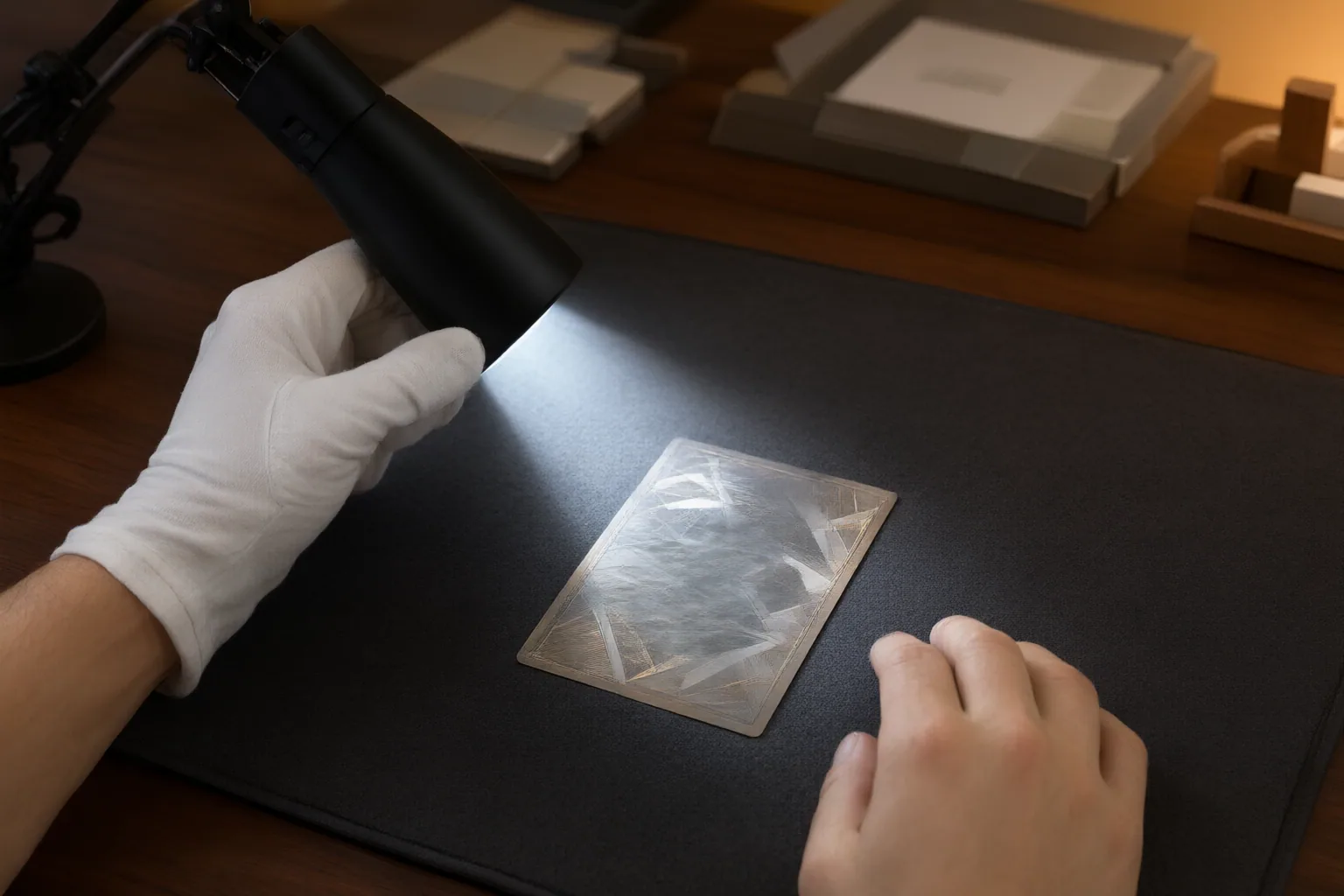
Keep the card supported and limit handling. Use a rigid or semi-rigid support so the card is not deliberately bowed while you observe the suspicious area. Look at the visible reflection without flexing the card, then record the location and appearance of any uneven grey patch or optical distortion. Clear notes or images can help preserve what was observed without repeated manipulation, although the available sources do not establish photography as a diagnostic test.
Do not wipe, rub, or press the area in an attempt to determine whether it is surface contamination. DEDCcard warns that wiping places pressure on a foil layer that may already be unbonded and could enlarge the separation boundary. For the same reason, a smooth surface should not invite repeated touching: the source says an internally affected card may still feel smooth.
This is a cautious observation process, not a validated test. Neither cited source provides a non-flexing method that can conclusively distinguish delamination from every form of glare, contamination, clouding, or other damage. If the optical change persists, stop handling rather than escalating pressure or movement to obtain certainty.
What the Inspection Cannot Establish
Visual inspection can document a suspicious effect, but it cannot conclusively identify its cause from the available evidence. An uneven grey reflection or distortion may raise concern about foil-layer separation, yet contamination, clouding, glare, and other damage can produce confusing appearances. The delamination information comes from a collector-oriented commercial blog rather than official grading-company documentation, so its explanation should be treated as a possible interpretation requiring independent professional assessment when certainty matters.
Condition inspection must also remain separate from authentication and grading. EcoSecurityTape states that an intact tamper-evident seal does not prove that an enclosed card is genuine, correctly graded, or unchanged before it was sealed. Such packaging can provide evidence about opening or interference after sealing, but it cannot establish the card’s earlier condition. Consequently, neither an intact seal nor a careful visual check supplies a definitive grade, authentication result, or confirmed delamination diagnosis.
Conclusion
Treat persistent grey reflections or optical distortion as reasons for caution rather than as a confirmed diagnosis. Do not flex, wipe, or press the suspicious area, and use suitable rigid or semi-rigid support to reduce mechanical bowing. Keep packaging adhesive away from the card. If the card is being stored or transported, a security bag should supplement an appropriate holder, cushioning, and outer protection rather than replace them.
Record where the visible change appears and what it looks like, then stop unnecessary handling. When confirmation could affect a grading, authentication, or care decision, take those observations and the supported card to a qualified professional for an in-person condition assessment.
Disclosures and limitations
- This article was prepared with AI assistance from the supplied browser-acquired research sources. The delamination discussion relies on a collector-oriented commercial blog, not official grading-company documentation, and the packaging source supports handling boundaries rather than diagnosis. No product recommendation or affiliate claim is included.