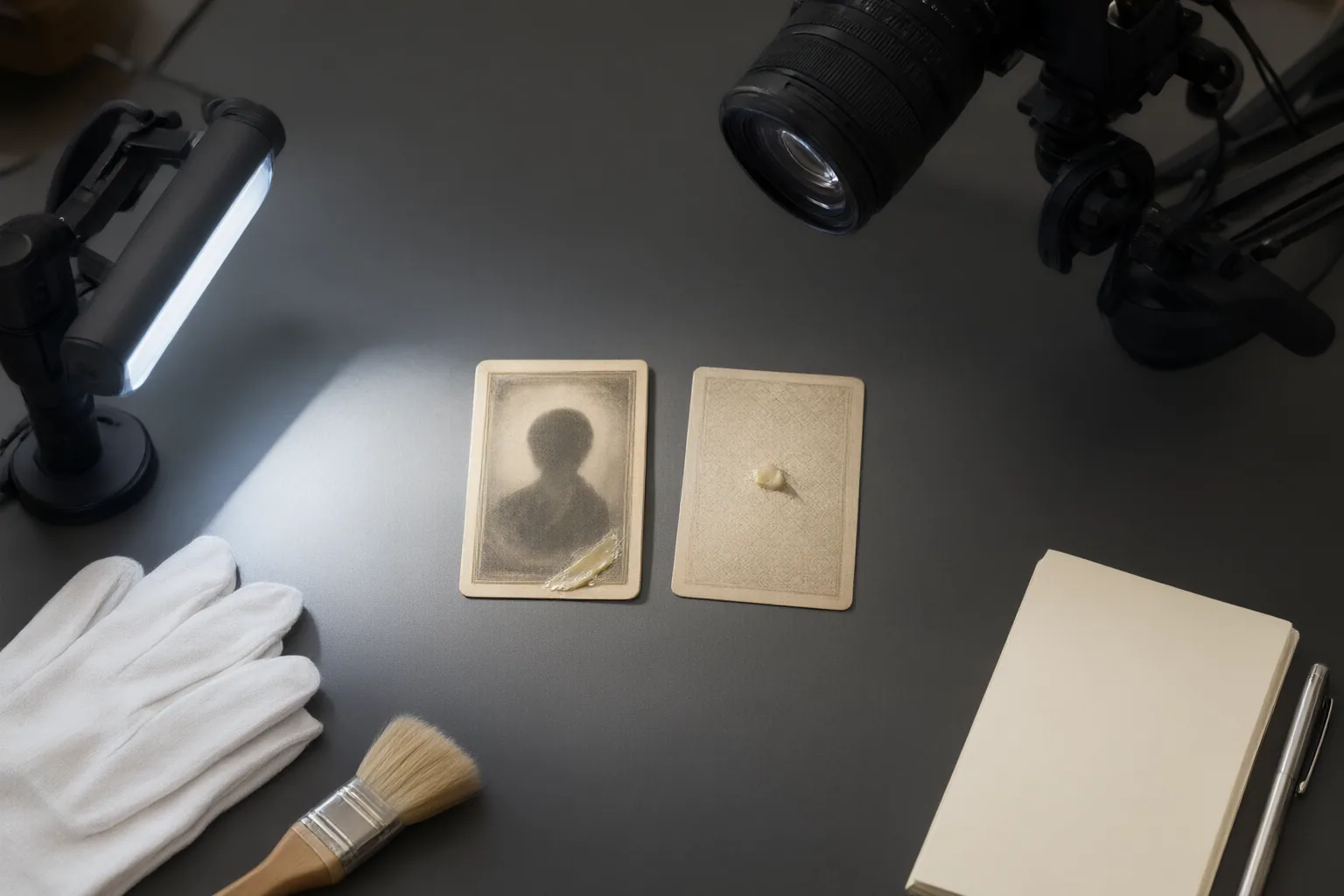
Document suspected staining with clear images of both sides, angled-light close-ups, and plain-language notes covering its location and visible appearance. Treat the record as evidence of what you observed, not as a grade prediction. Because the supplied inspection guidance specifically addresses wax, describe possible gum residue without assuming that it has identical characteristics.
Inspect the card under directional light
Examine the front and back under directional side lighting, slowly changing the card’s angle rather than relying on a single head-on view. The supplied wax-stain guidance describes wax residue as potentially translucent or matte. It recommends watching for areas that appear dull, cloudy, or uneven as reflected light moves across the surface. Those changes in reflection may make a subtle flaw easier to see.
Repeat the observation from more than one angle and note which side and area show the effect. Keep the evidence boundary clear: this description concerns wax staining. The supplied research does not establish that gum residue looks or behaves the same way. If the substance is uncertain, record only its visible features—for example, a matte-looking or unevenly reflective area—and label it as suspected residue instead of making a definite identification.
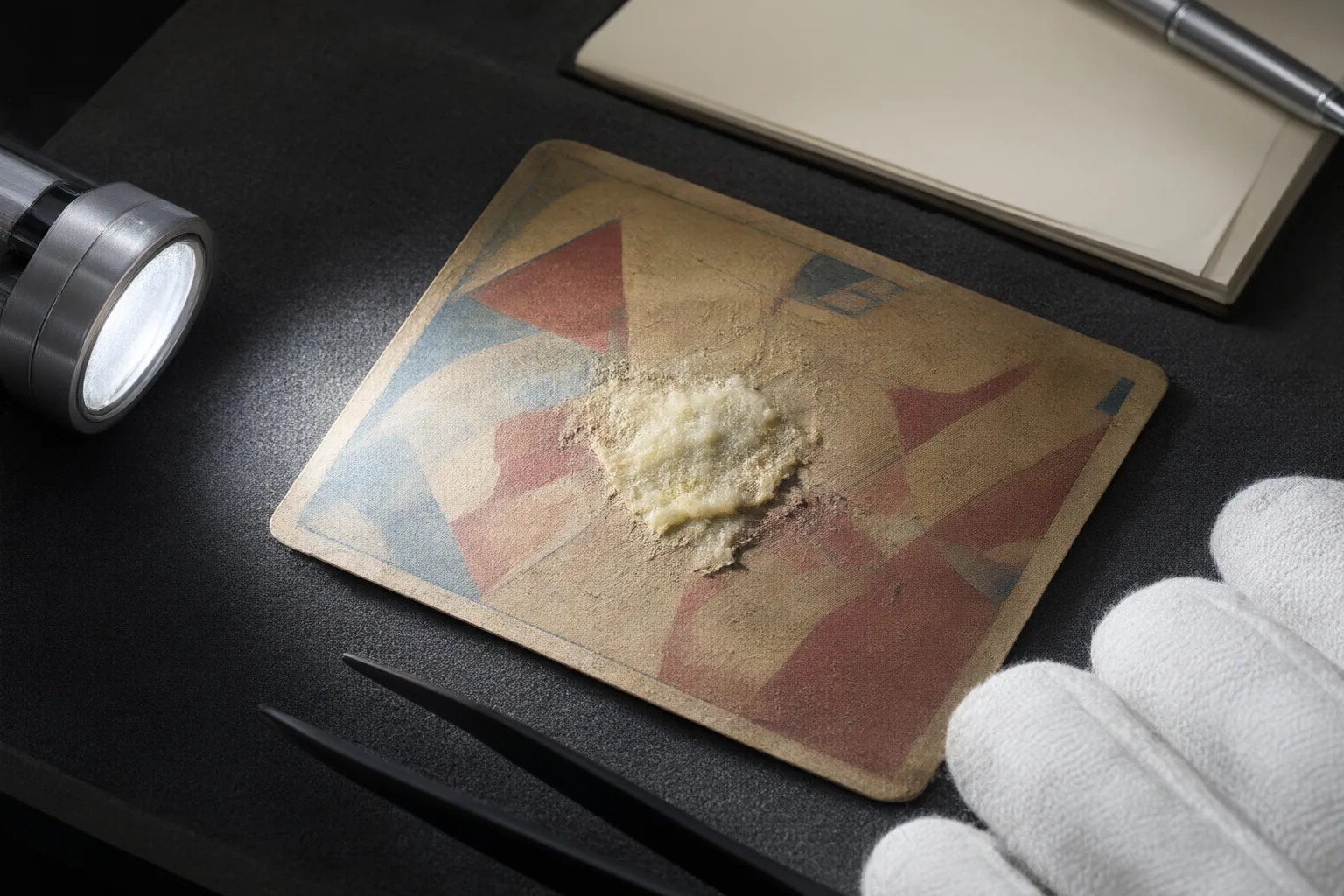
Photograph and describe the affected area
Start with clear overview photographs of the entire front and back. Then photograph the affected area under directional light, including close-ups from angles that show any change in gloss, cloudiness, translucence, or uneven reflection. Retain an image that establishes where the detail sits on the card, rather than keeping only tightly cropped photographs with no positional context.
Pair the images with a dated, plain-language note. Identify the side, the location on that side, and what can actually be seen. A useful entry might state that a suspected residue is visible near a particular edge and appears matte under angled light. Avoid claiming that the mark is wax or gum unless its identity is supported; visible appearance and location are the relevant observations.
This record format is a practical synthesis of the sources’ recommendations for clear photographs, meaningful condition notes, and angled-light inspection. It is not presented as an official grading-company submission requirement. Its purpose is to preserve an understandable account of the card’s condition before submission.
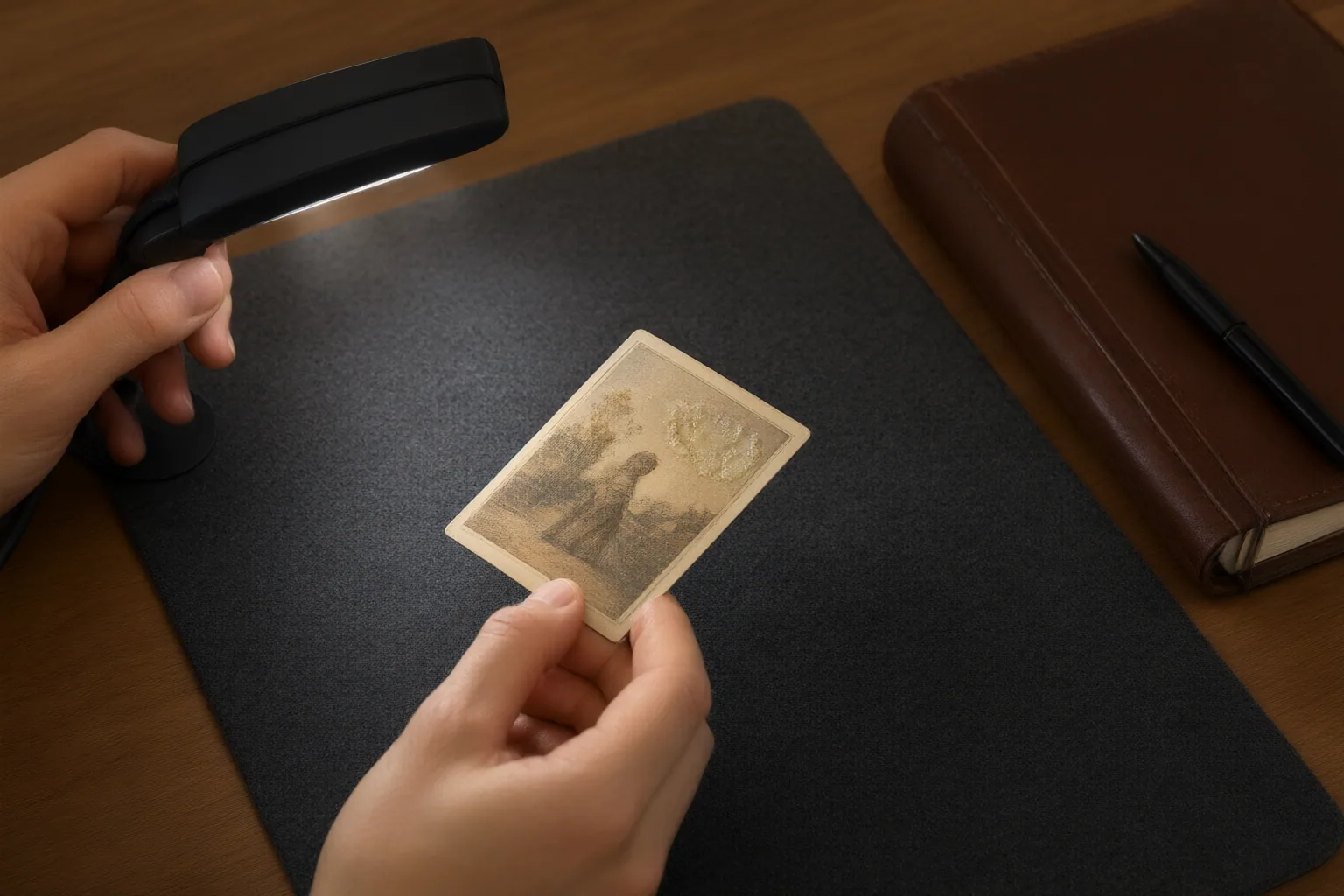
Understand why stain location may matter
Location deserves its own field in the notes because the PSA definitions reproduced on GameStop’s submission page distinguish reverse wax staining from staining generally. In those reproduced definitions, PSA 10 requires a card to be free of staining of any kind. PSA 9 and PSA 8 may exhibit a very slight wax stain on the reverse, while PSA 7 permits slight wax staining on the back only.
These distinctions make “front” or “back” more useful than a general note saying only that the card is stained. They do not provide a formula for predicting a grade. Other condition characteristics may affect how a card presents, and the supplied source is a reproduction of PSA definitions rather than direct official grading-company documentation. Record the stain’s position and apparent severity accurately, but leave the grading decision to the third-party grader.
Conclusion
A collector’s condition record is an observation, not a guaranteed third-party grade. Wax Box Cards explicitly treats raw-card condition descriptions as opinions and distinguishes them from grades assigned by the third-party grading company named on a holder.
Before submission, save a dated set containing full front-and-back photographs, angled-light close-ups, and concise notes describing the suspected residue’s side, location, and visible appearance. If you cannot establish whether the material is wax or gum, preserve that uncertainty in the wording. This creates a clearer pre-grading record without overstating what the photographs or your own assessment can prove.
Disclosures and limitations
- This article was prepared with AI assistance from the supplied research package and cites only the source IDs provided there. No direct official grading-company source was supplied; the referenced PSA definitions were reproduced on GameStop’s submission page.
- No products are recommended and no affiliate relationship is represented. The documentation method is practical editorial guidance, not an official submission rule or a grade guarantee.
Related reading
Sources
- What Is a Wax Stain on Cards? Trading Card Grading Surface Flaws — DEDCcard
- Grading and Condition Standards | Wax Box Cards — waxboxcards.com
- Official PSA Card Grading Service & Submissions | GameStop — gamestop.com