
Choose the service by the result you need: reholder generally addresses an existing holder, review or regrade requests another assessment, and crossover seeks to move an item from another grading company. The names may sound similar, but their effects on the holder, label, grade and fees can differ.
Start with the outcome you need
Begin by identifying the problem rather than selecting a service by name. A damaged or worn case is primarily a holder issue; the PSA-focused source describes reholder as replacing the case and label while retaining the grade. The comics source similarly describes CGC reholder as transferring an already graded comic into a new holder without reassessing its grade.
A disputed grade calls for a review or regrade route, while an incorrect label may belong under a separate mechanical-review process. Crossover serves a different objective: submitting an item already encapsulated by another grading company. Treating holder damage, label errors, grade disagreements and company changes as one problem can therefore lead to the wrong submission route. Terminology and procedures also vary across trading cards, coins and comics, so a familiar service name does not establish identical treatment in every category.

Compare holder handling and possible outcomes
Reholder is the most holder-focused of the three routes described in the sources. In the PSA and CGC examples, the item receives a replacement holder without a new evaluation of the existing grade. Collectors should not assume, however, that every associated label detail or designation will necessarily remain unchanged under every company’s rules.
Review or regrade asks for another assessment. The PSA-focused source distinguishes grade review from mechanical review: the former challenges or revisits the grade, while the latter addresses label errors rather than a grade dispute. The coin guide adds another important distinction within PCGS services. It says Regrade involves removing the coin from its holder, whereas Reconsideration keeps the existing holder unless a qualifying improvement is awarded.
Crossover starts with an item in another grading company’s holder and seeks acceptance by the receiving company. It is not simply a relabelling exercise, and an increase is not assured. Across the supplied sources, neither review or regrade nor crossover is presented as guaranteeing a higher grade. The practical choice therefore depends on whether the collector wants a replacement holder, a fresh assessment or a transfer between grading companies—and on what may happen to the current encapsulation during that process.
Check crossover rules, costs and records before shipping
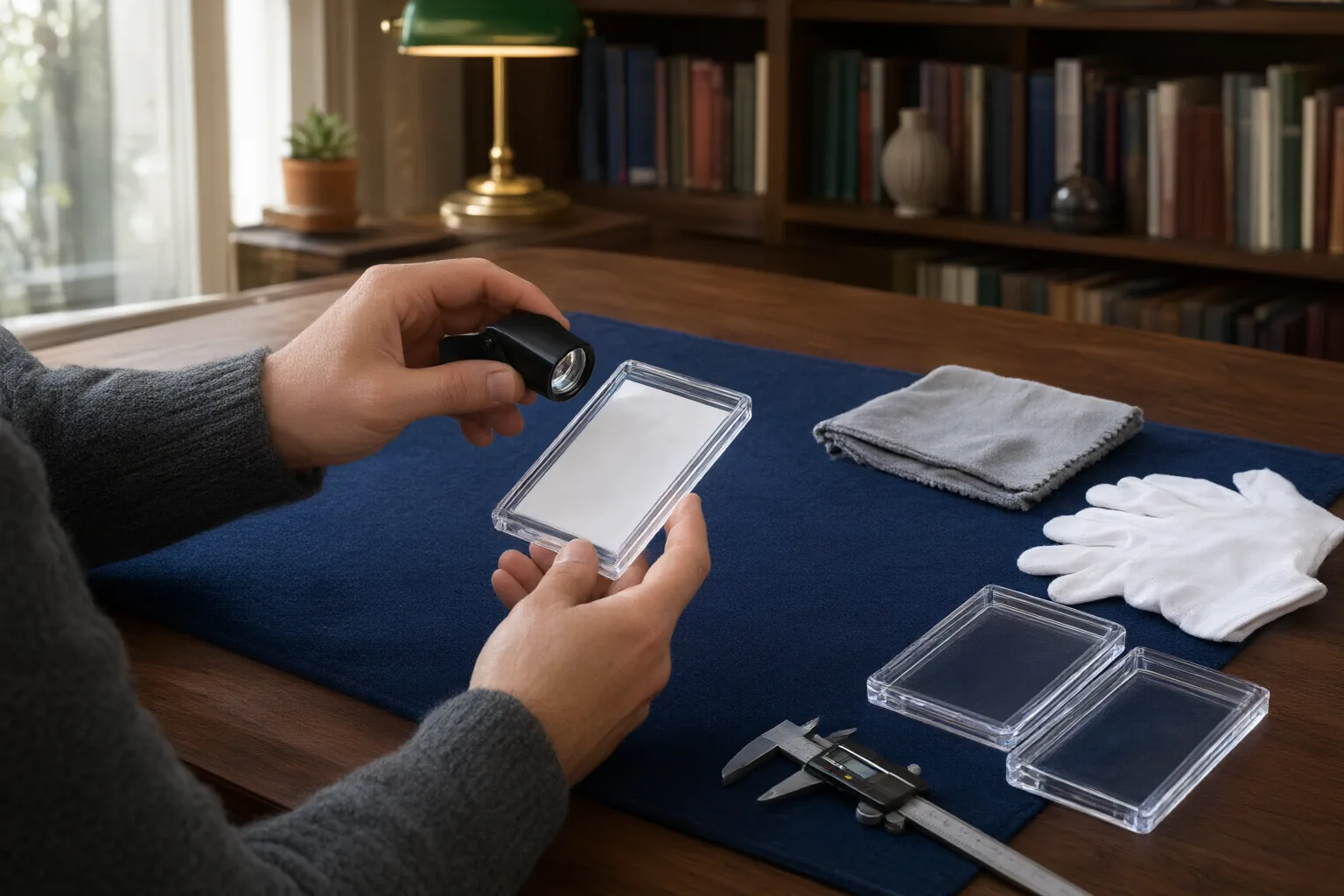
Crossover eligibility, minimum-grade instructions and holder-handling rules can vary by grading company and collectible type. Before opening an existing holder, check the receiving company’s current instructions. Cracking an item out first may remove protections or submission options linked to intact encapsulation.
Minimum-grade instructions also matter because they can influence what happens when the receiving company does not award the requested result. The coin guide says an unsuccessful crossover may still attract a grading fee even when the coin is returned in its original holder. A realistic submission budget should therefore account for applicable service fees, shipping, insurance and other route-specific requirements without assuming that a crossover or upgrade will occur.
Create a record before shipping. Preserve clear photographs along with the certification number or other certification details, the recorded grade, exact label wording, selected service instructions and submission paperwork. These records can help distinguish the item’s pre-submission state from the eventual result. Check how the company treats special labels, designations, attributions, pedigrees and other certification details, because the supplied sources indicate that such information may not transfer automatically or remain unchanged.
The research sources cover cards, coins and comics and are third-party articles rather than current grading-company documentation. Do not apply a procedure from one category universally. Confirm current eligibility, forms, fees, packing requirements and minimum-grade choices directly with the relevant company before dispatch.
Conclusion
Use reholder when the need concerns the holder rather than a fresh grade assessment. Choose review or regrade when you want the existing grade reconsidered, while keeping mechanical label corrections separate where the company provides that route. Consider crossover when the item is already encapsulated by another grading company and you want the receiving company to assess it under its own rules.
Before submitting, photograph the item, preserve its certification and label records, and identify the exact outcome you want. Then verify the grading company’s current eligibility, fees, forms, packing rules and minimum-grade instructions.
Disclosures and limitations
- This article was prepared with AI assistance from the supplied third-party research sources. Service eligibility, fees, forms and handling rules can change, so verify them with the relevant grading company; no product recommendation or affiliate offer is included.
Related reading
Sources
- PSA Reholder and Review Services Explained (2026 Pricing) — BlackJadedWolf
- Coin Crossover vs Regrade vs Reholder: Service Guide — CoinHub
- CGC Reholder: When, Why & How Much It Costs (2026) — mycomicscollection.com