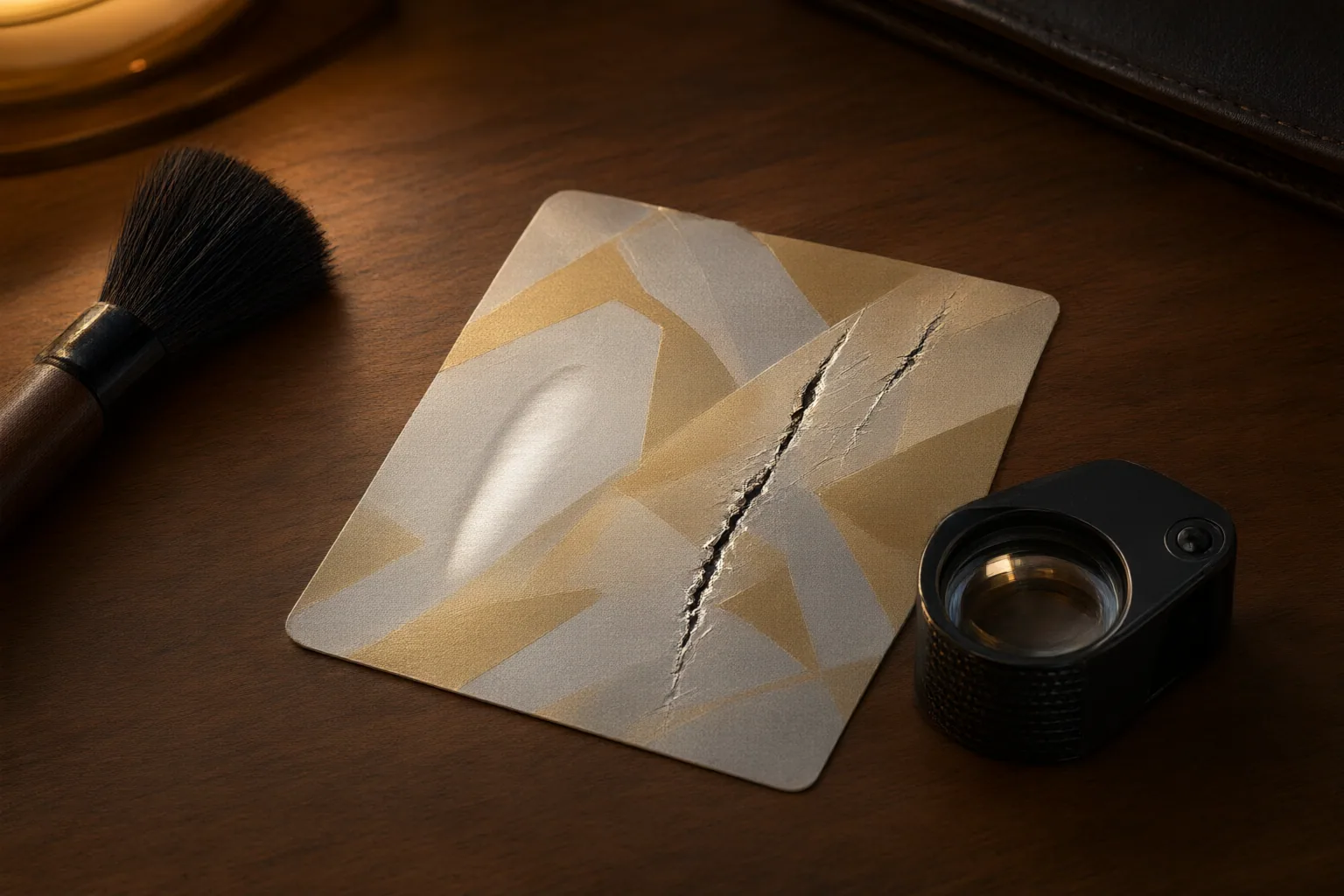
Factory roller marks and later surface damage can look similar, but their shape, texture, extent and surrounding wear provide useful clues. Inspect the whole surface under angled light and use magnification where helpful, while recognising that appearance alone may not establish a mark’s origin with certainty.
What Factory Roller Marks Look Like
Factory roller marks are manufacturing flaws associated with printing, cutting or packaging. The supplied guides describe print lines as straight or slightly curved marks created by printing-press rollers and group them with other production defects such as print spots, factory creases, silvering and miscuts.
A regular linear appearance may therefore point toward a production origin, particularly when the mark differs from the irregular signs of contact or wear elsewhere on the card. However, the appearance of a line is a clue rather than proof: collectors should consider its texture, length and relationship to the surrounding surface before reaching a conclusion.
Factory origin also does not make a flaw irrelevant to condition. Both guides indicate that a visible linear manufacturing mark can still affect assessment of the card’s surface.
Clues That Point to Post-Print Damage
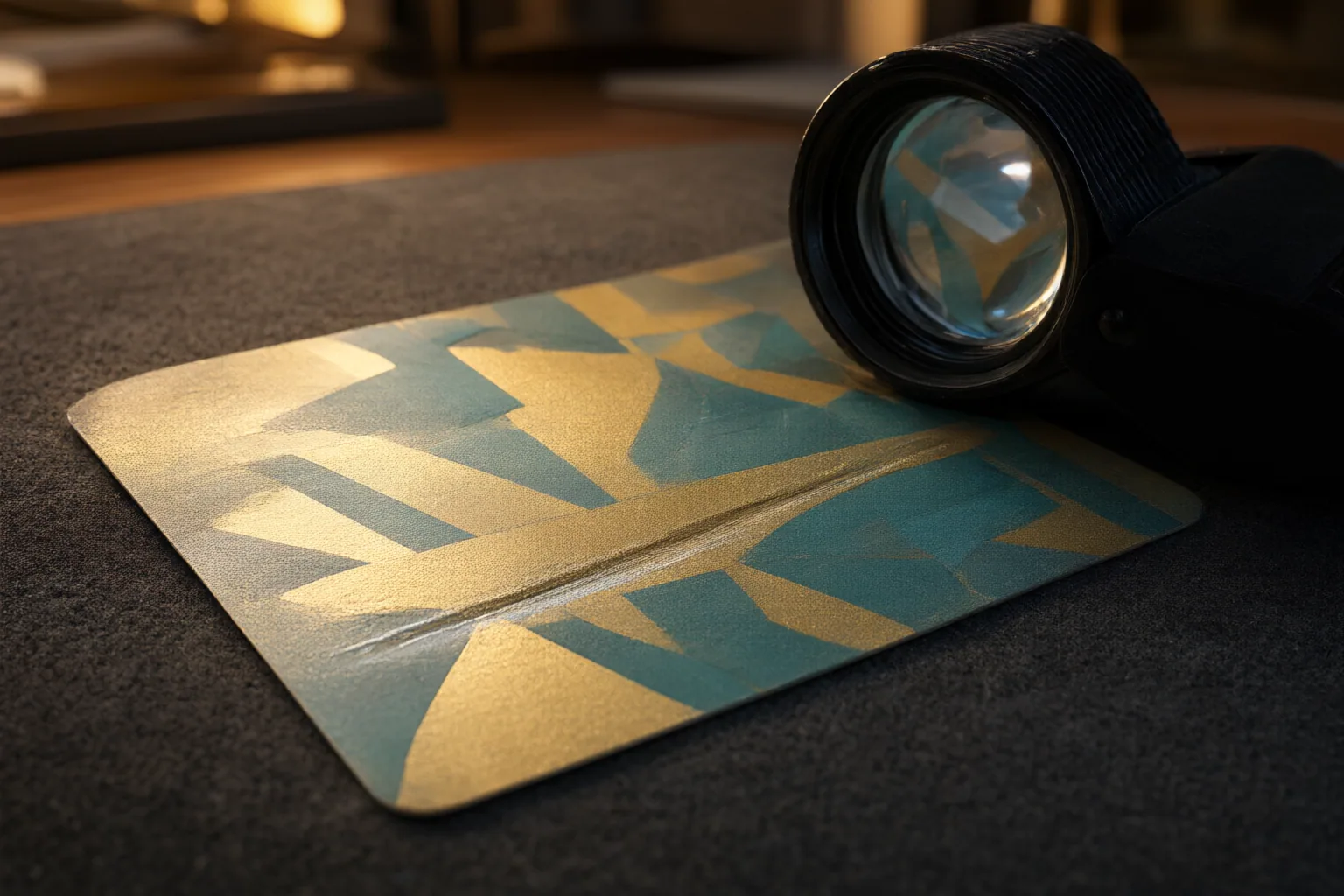
Post-print damage is introduced after manufacture through handling, contact or storage. One guide describes micro-scratches as fine hairline marks typically caused by handling, loose storage or contact with other cards. The other identifies dings, bends, scratches, surface wear, later creases and friction-related whitening as forms of handling damage.
Look beyond whether a flaw is merely linear. Consider whether its path is straight or curved, how far it extends, whether its texture differs from the surrounding finish and whether nearby wear supports a history of contact. Scratches accompanied by whitening, dings or broader surface wear may point toward later damage, while a regular line without those associated signs may be more consistent with a manufacturing flaw.
These distinctions remain cautious judgments. No single feature establishes when every mark was created, and similar-looking flaws may have different origins.
A Practical Surface Inspection Process
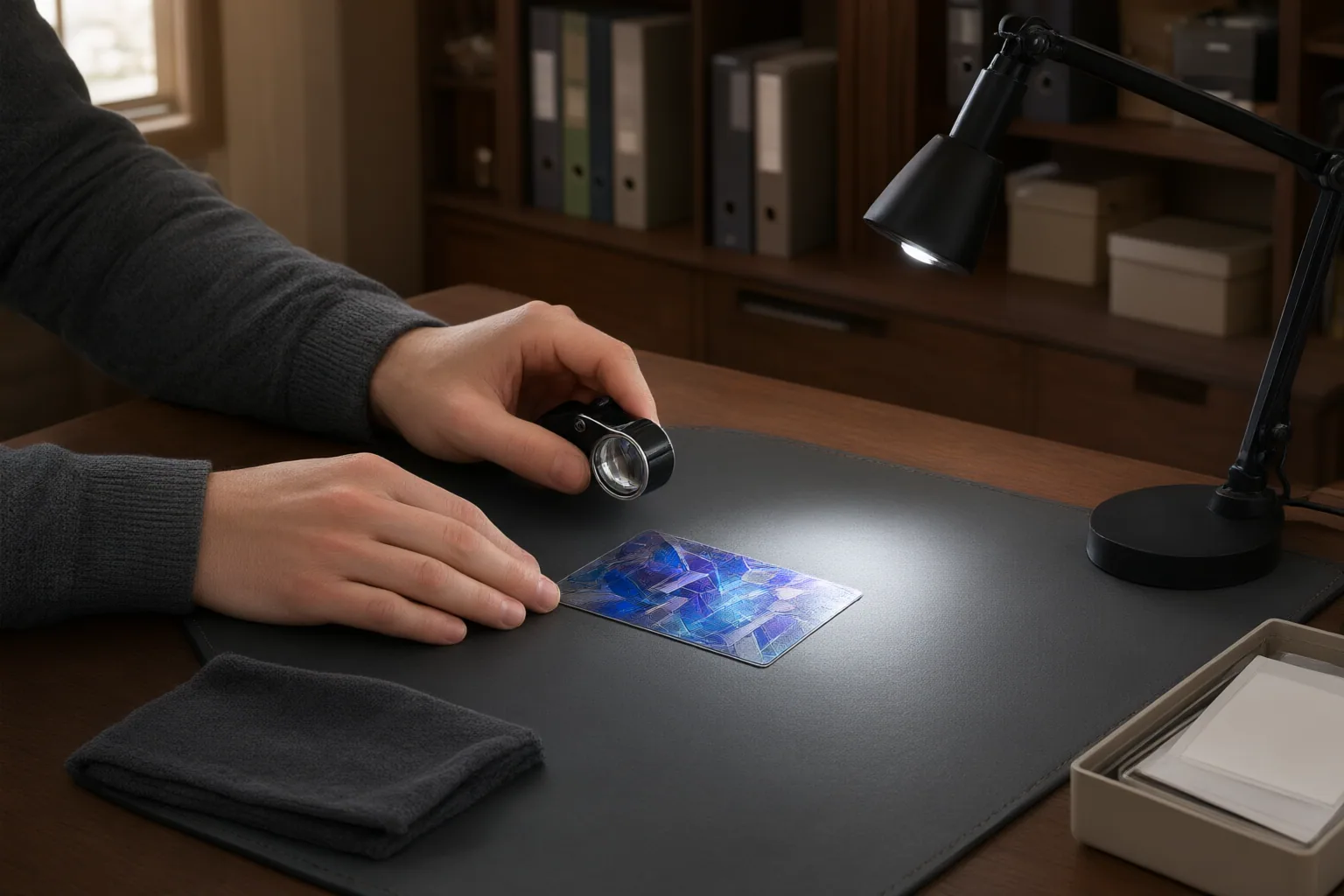
Begin by viewing the card head-on and noting the position, direction and visible extent of the mark. Then tilt the card under controlled light. Angled illumination can reveal subtle lines and surface differences that are difficult to see from a fixed, face-on view.
Use magnification where it helps clarify the mark’s edges or the surrounding texture. Compare the affected area with the rest of the surface: does the line appear regular, or does it resemble a fine contact scratch? Examine nearby areas for dings, bends, whitening, creasing or general wear. These associated features may add context when distinguishing a possible production flaw from later damage.
Record what is visible rather than converting an uncertain clue into a definite conclusion. Shape, extent, texture and surrounding wear are most useful when considered together. This process can support pre-screening, but the supplied guides do not establish a definitive visual or remote method for determining exactly when every linear flaw arose. For company-specific grading decisions, consult the chosen grading company’s current official standards.
Conclusion
Factory roller marks are commonly described as straight or slightly curved production flaws, whereas later damage may include hairline scratches, dings, bends, wear, creases and friction-related whitening. Yet no single visual characteristic proves origin in every case. Assess the mark’s shape, texture and extent alongside the surrounding surface. Before deciding whether to submit a card, inspect it under angled light, document the mark and nearby wear, and check the selected grading company’s current official documentation.
Disclosures and limitations
- This article was prepared with AI assistance from the two supplied commercial collector guides; grading-company documentation was not supplied, so current official standards should be checked for company-specific decisions.
- No products are recommended and no affiliate relationship is represented in this article.