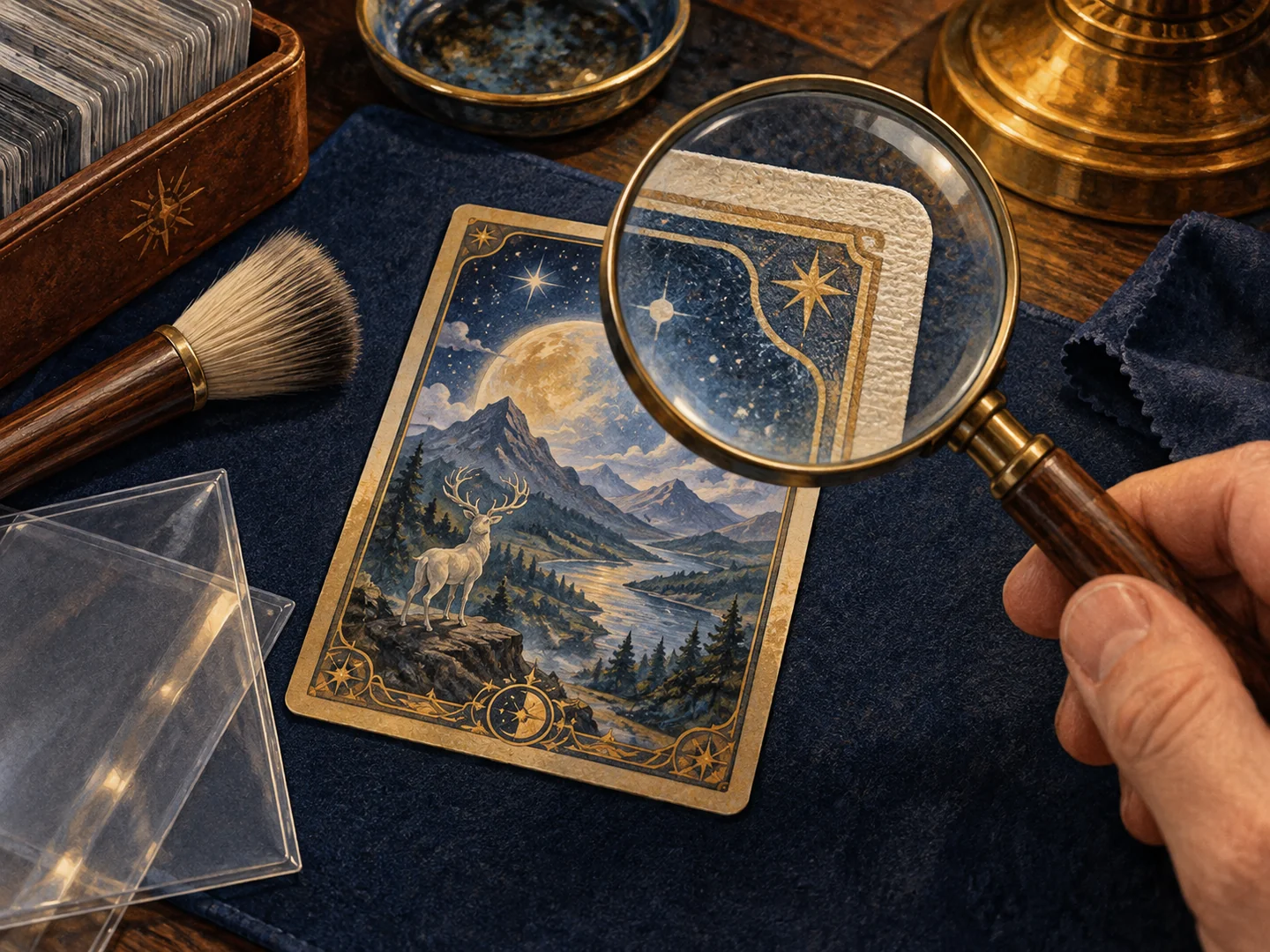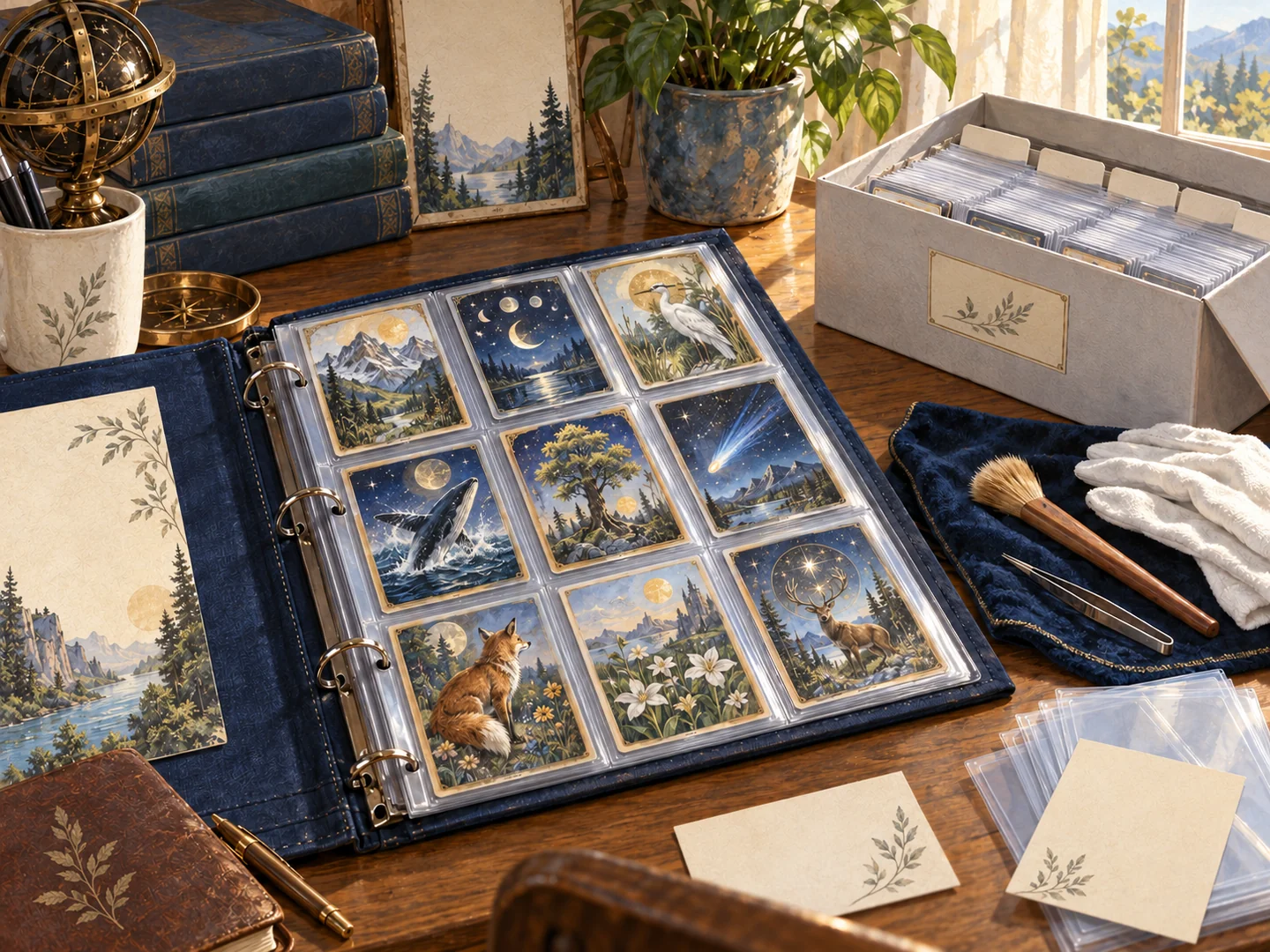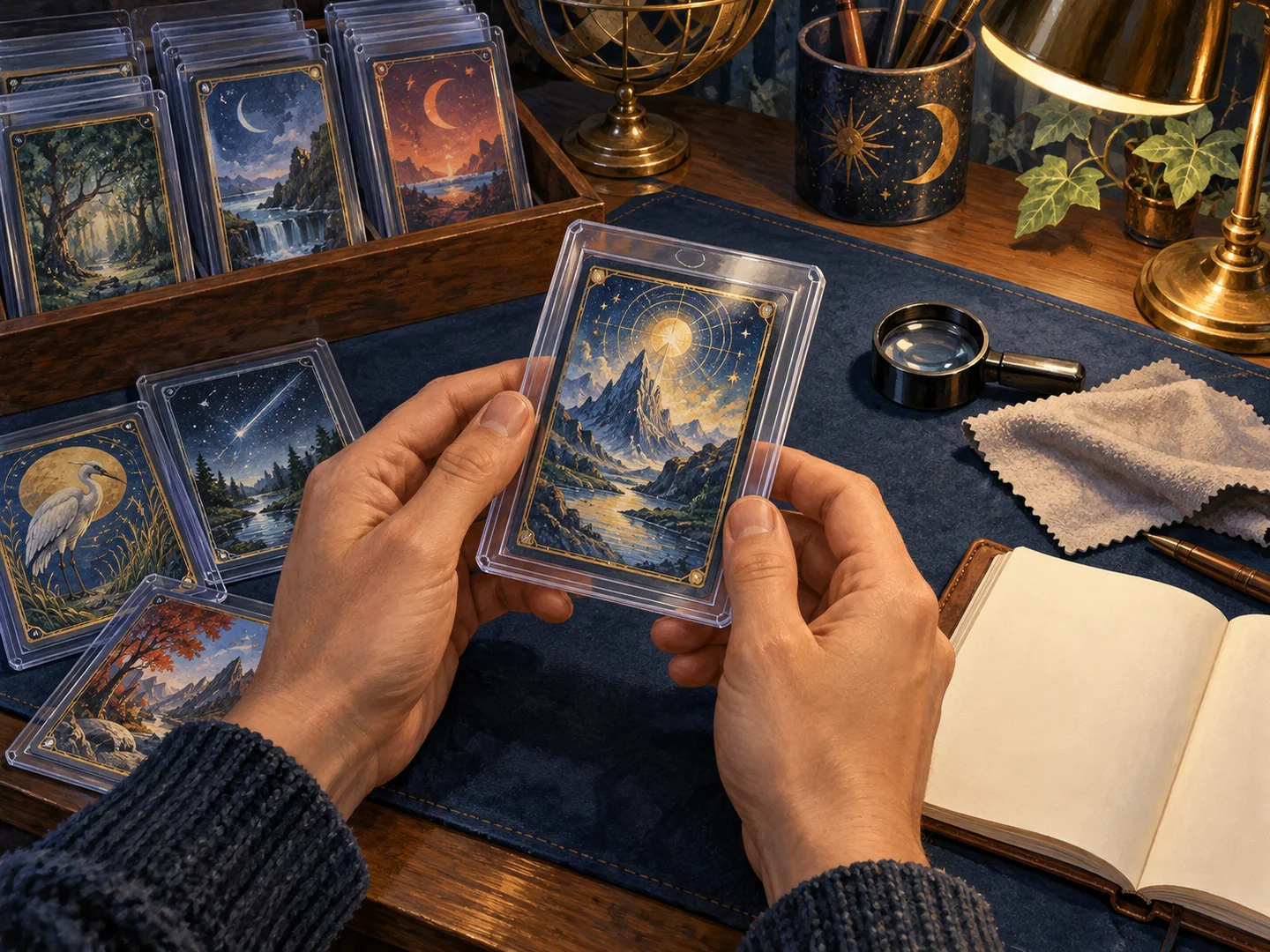
Start with the published scale
PSA describes its numbered grades in its grading standards. Read the relevant definition and any additional terms on the label, rather than transferring a description from another grading company.
Condition is a collection of details
The printed number condenses an assessment. Your notes and photographs can still record particular features that matter to you, including the print, artwork and how the card fits into your collection.
Leave room for judgement
PSA explains that grading combines observable characteristics with professional judgement. Do not treat a photograph or a self-assigned number as a guarantee of a future result.
Collect beyond a target number
A favourite card can be worth keeping even when it shows wear. Decide what you enjoy owning and how you want to care for it, without making a promised resale result the purpose of every card.
Read the label in the context of the standard
Begin by identifying the grading company and the scale it uses. Read the description for the relevant grade on that company’s own website, then compare the visible card with those criteria. A label can give a useful reference point, but it does not describe every aesthetic preference a collector might have. Keep questions about the card separate from assumptions about its market value.

Compare examples without turning them into rules
Two cards with the same grade may appeal to you differently because of their artwork, centering or visible marks. Use photographs to note those differences rather than assuming the grade makes them identical. If you compare a raw card with a graded example, record the limits of the view. Lighting and image quality can make a close comparison less reliable than it first appears.
Decide what information matters to your collection
You might value a readable label for organisation, a protected display item or a particular card’s history. Write down that purpose before deciding how much emphasis to put on a score. A grade is one part of an item record. Keep the description, photographs and provenance notes beside it, and revisit official standards when you need a more specific interpretation.
- Which grader and scale are represented?
- What can I see directly in the photographs?
- What does the label help me decide?