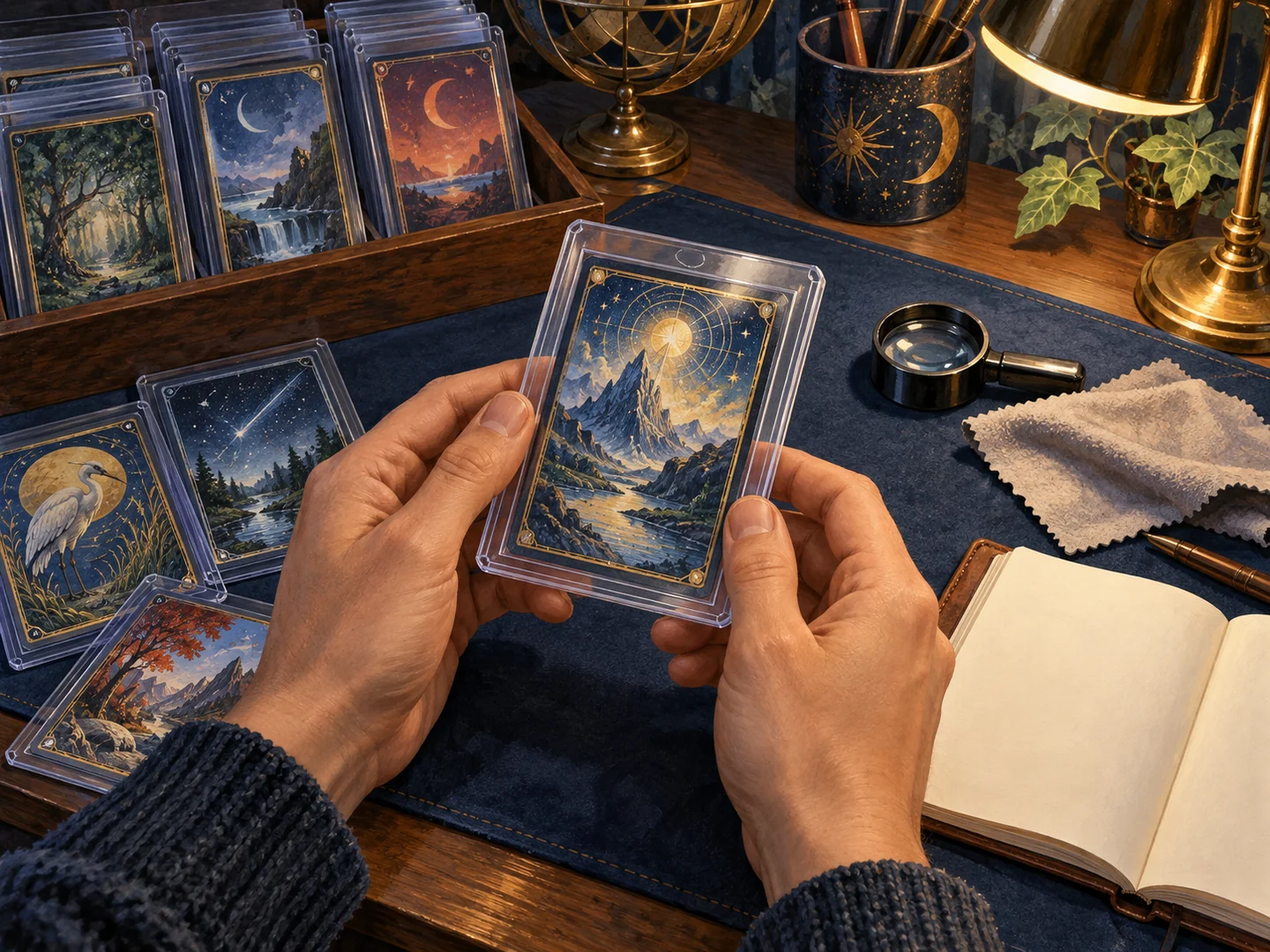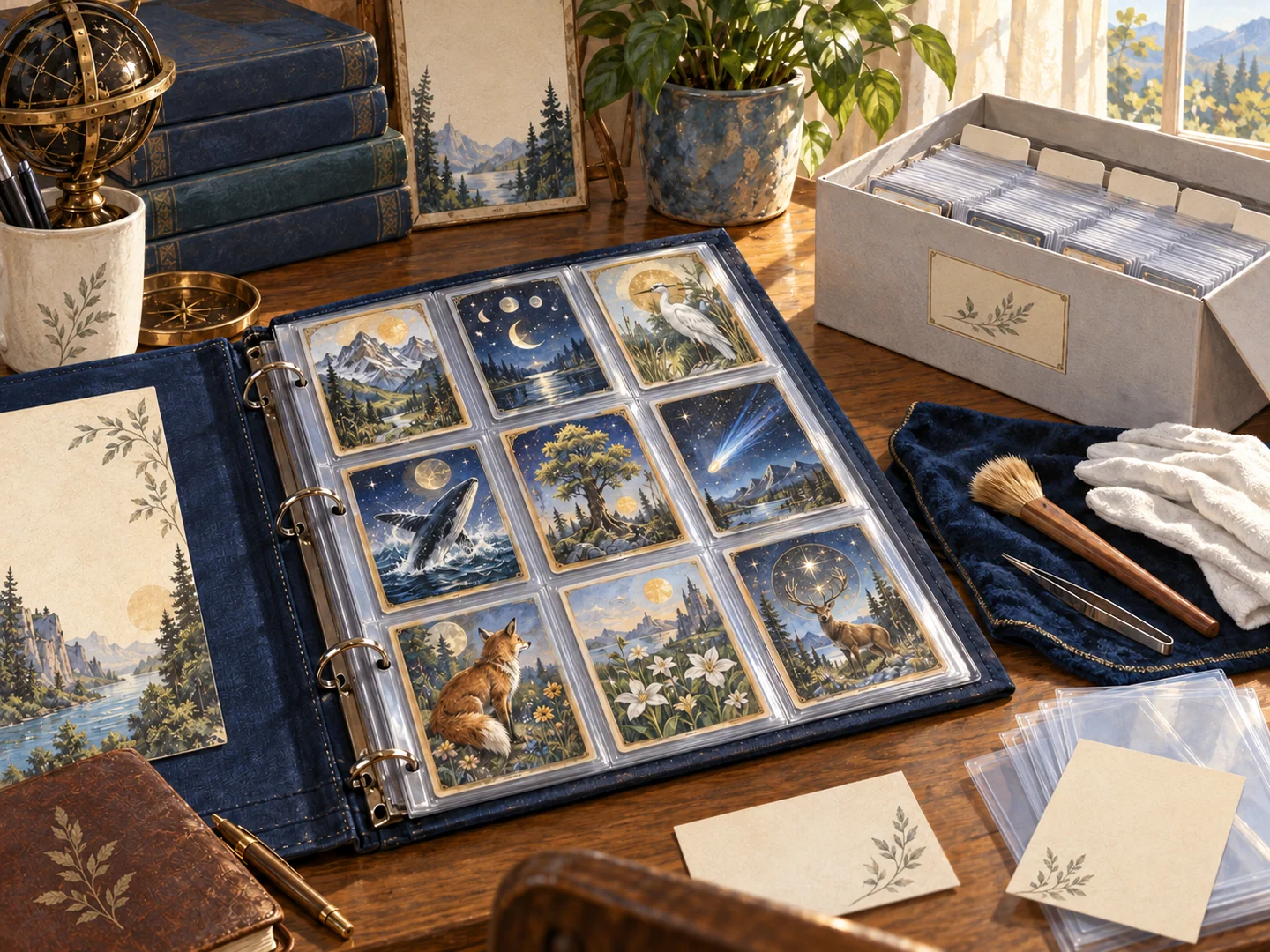
Start with the identity
Record the card name, set, number, language and any edition markings. Photograph the front and back in even light. Use a clean, uncluttered surface and keep fingers away from the face of the card.
Look at four areas
Corners, edges, surface and centring are useful headings for your notes. Describe what you see without assigning a promised grade. Try looking from another angle so that reflections do not hide surface marks.
- Corners: bends, softness or whitening.
- Edges: wear, chips or uneven-looking sections.
- Surface: visible scratches, impressions or marks.
- Centring: the position of the printed design within its borders.
Preserve the evidence
Do not trim, polish, recolour or press a card to improve its appearance. PSA’s standards discuss alterations and questionable authenticity. Leave uncertain marks in place and ask the intended grader how it handles them.
Make a record you can repeat
Keep your original photographs and notes together. Revisit them when the lighting or your understanding improves. This checklist documents observations; the final grading decision belongs to the grader.
Use the same viewing sequence each time
Begin with an overall look at the front, then the back, before moving around the corners and edges in a consistent order. Record what you can see in ordinary light before looking more closely. A repeatable sequence helps you compare your own notes across several cards. Handle a card only as much as needed, and avoid trying to improve its appearance during inspection.

Separate an observation from a prediction
A note such as “small white mark on the upper back edge” is more useful than an unsupported claim that a card will receive a particular grade. Photograph the detail and describe where it appears. You can then compare the card with the grader’s published standard, remembering that your inspection is a personal record and not an official assessment.
- Front and back overview photographs.
- Specific location of each visible mark.
- Questions you cannot resolve from the available view.
Review the record before making a decision
Put the card back into suitable protection, then read the notes without rushing to submit or sell it. Ask whether grading would serve your collecting goal, and which uncertainties remain. A favourite card can be worth keeping without a holder or a score. If you decide to proceed, use the current grader’s guidance and retain your photographs alongside the submission record.