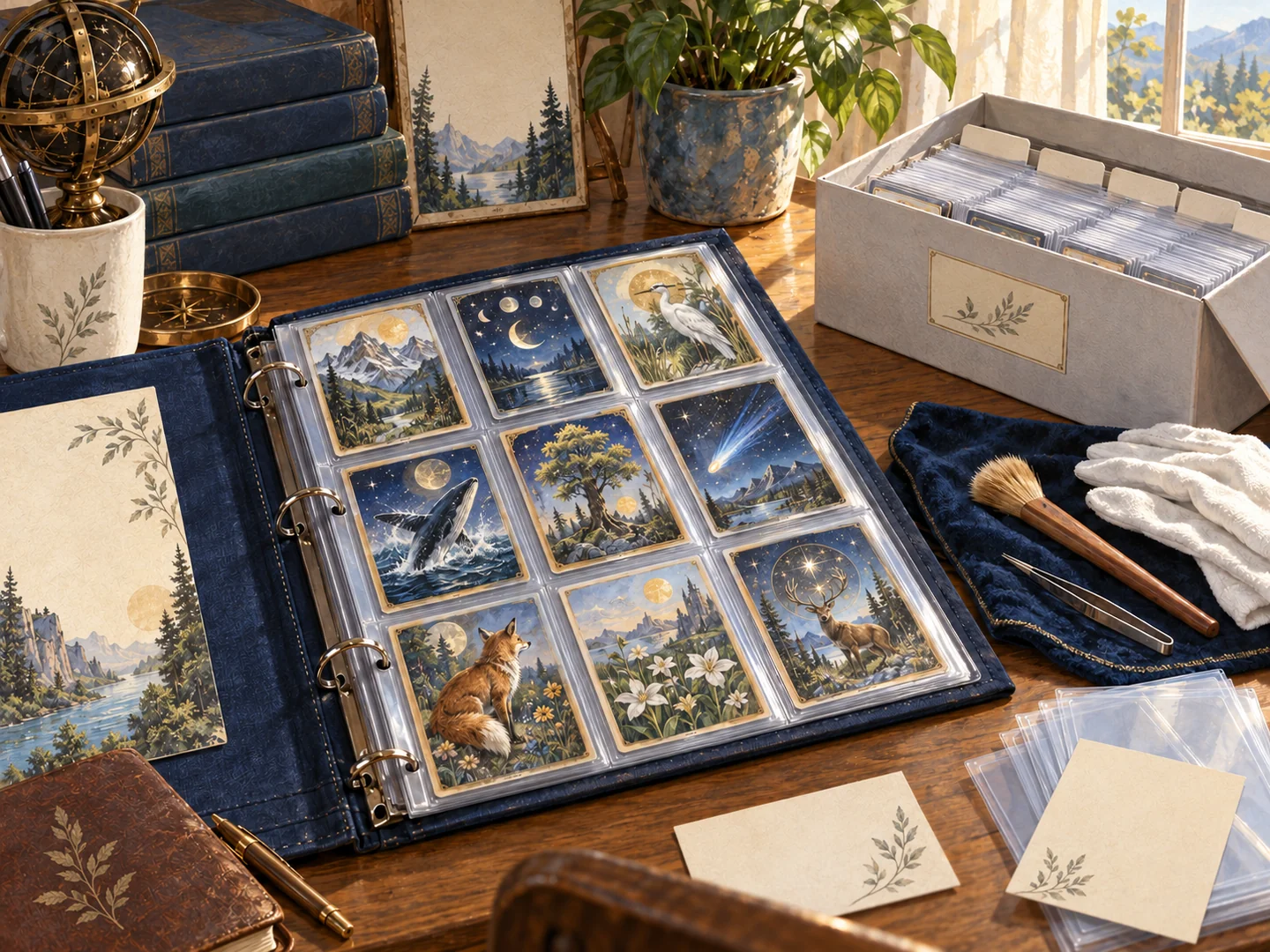
Choose a thread to follow
Write down what attracts you: an illustration style, a set you remember, a card you played with or the way a binder looks as it fills. A clear theme can make it easier to decide what belongs.
Keep an inventory you enjoy using
Record the card name, set, number and where it is stored. Add a short note about why you kept it. A photograph can help you rediscover a detail without repeatedly handling the card.
Leave room for an unfinished page
A collection does not need to be completed quickly. Revisit what you already own, share the story with another collector and let your interests change without turning every empty space into an urgent purchase.
Write a collecting brief you can revisit
Choose one sentence that describes what you want to explore: a particular artist, a favourite era or cards connected with a personal memory. Add a short list of what would make an item interesting to you. The brief can change, but it gives you a reason to pause when an appealing listing falls outside the collection you meant to build.
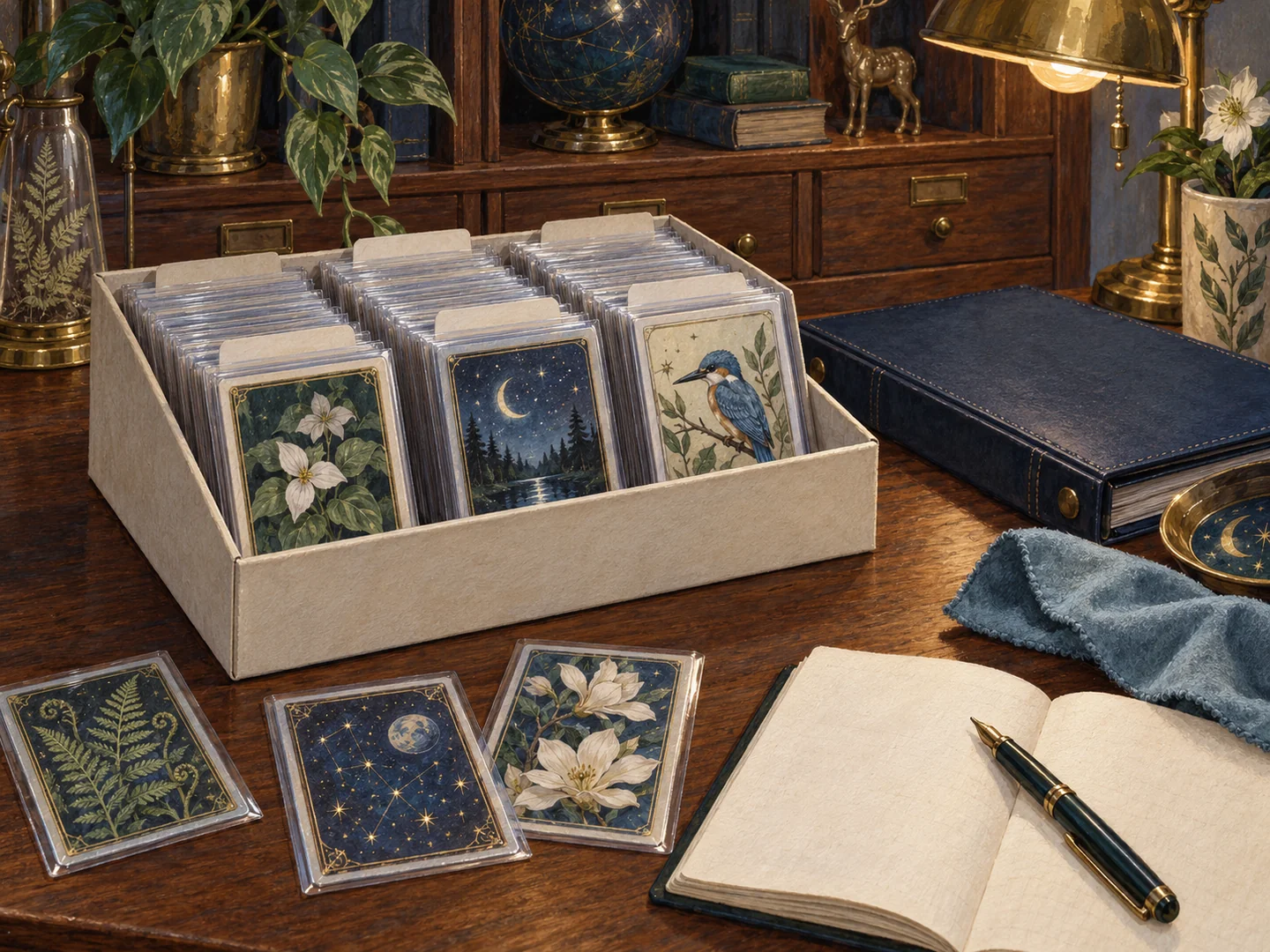
Make a list with room for alternatives
A wanted list does not have to become a race to acquire every item. Note why each card interests you and whether another version would satisfy the same curiosity. Separate essentials from items you would simply like to see in person. This can make browsing more enjoyable, because finding a useful reference image or learning about an artist also counts as progress.
Review before adding another item
Look at what you already own and ask which pieces you return to most often. You may want better storage or clearer records before expanding. Set your own spending boundary and allow time to compare descriptions. Collecting is easier to enjoy when the pace fits your circumstances and when the next purchase has a purpose beyond the excitement of finding it.
- What do I enjoy about the collection today?
- What would this item add?
- Do I have a suitable place and record for it?