Category: <span>Collection Care</span>
Safe handling, sleeves, storage and collection records.
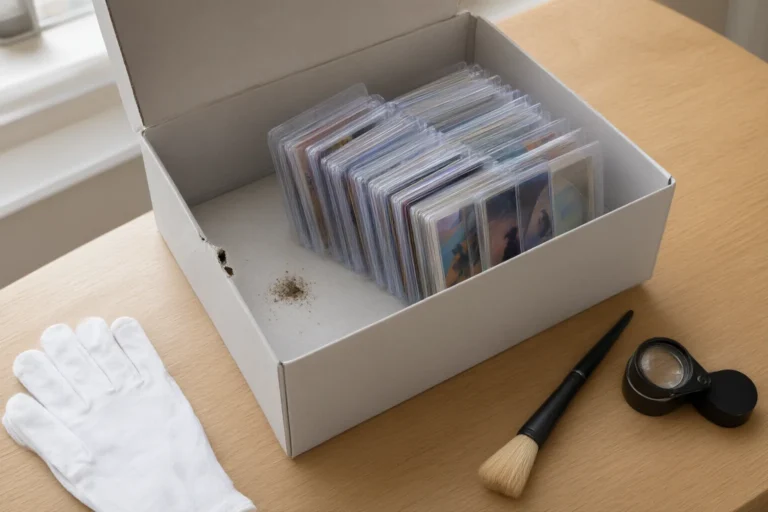
How to Spot Pest Activity in Card Storage and Respond Safely
Possible pest activity may leave holes, grazed surfaces, frass, remains, chew marks, droppings, damaged packaging, or unusual odors. Inspect cards and the wider storage area, record the evidence,…
Read more ↗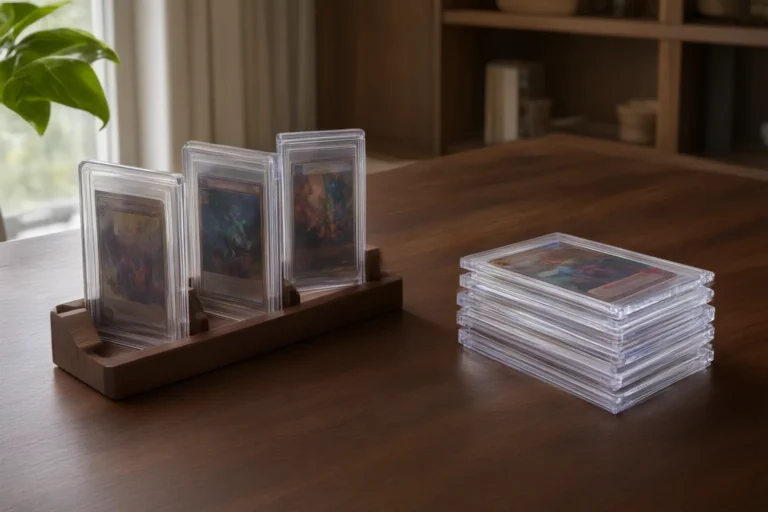
Should Graded Cards Be Stored Upright or Flat?
Graded cards can be stored upright or flat when their slabs are level, supported, and unable to shift or strike one another. Stable environmental conditions and protection from…
Read more ↗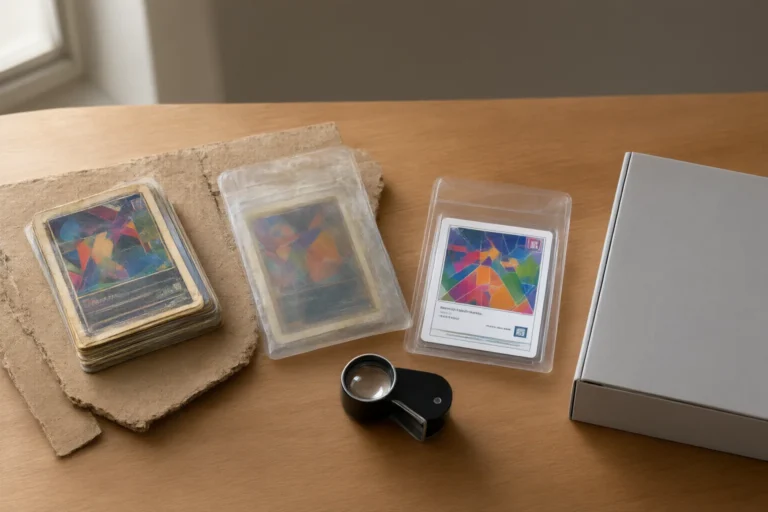
How Acidic Storage Materials Can Affect Trading Cards and How to Identify Them
Acidic paper-based storage can transfer acids to nearby paper objects over time, while unsuitable flexible PVC products may release plasticisers. Learn what warning signs to watch for, how…
Read more ↗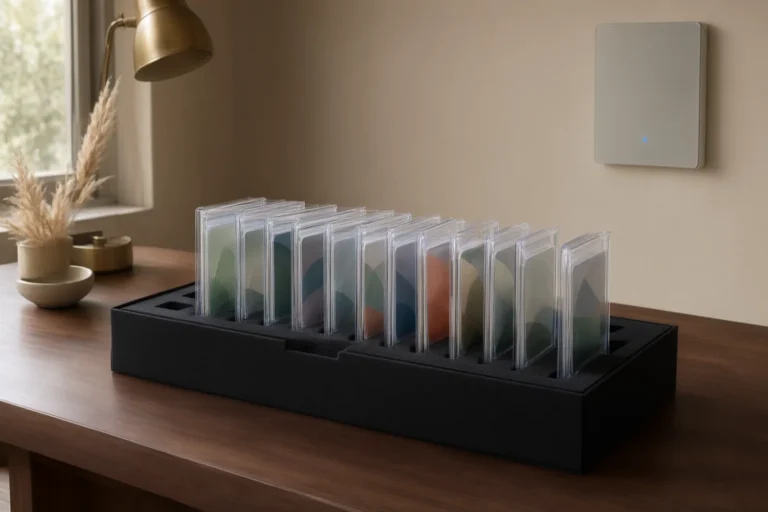
How to Protect Trading Cards from Temperature Fluctuations in Storage
Keep trading cards in a stable, conditioned indoor location away from sunlight and heat sources. Use layered protection and inspect cards regularly for curvature, rippling, adhesion, and warped…
Read more ↗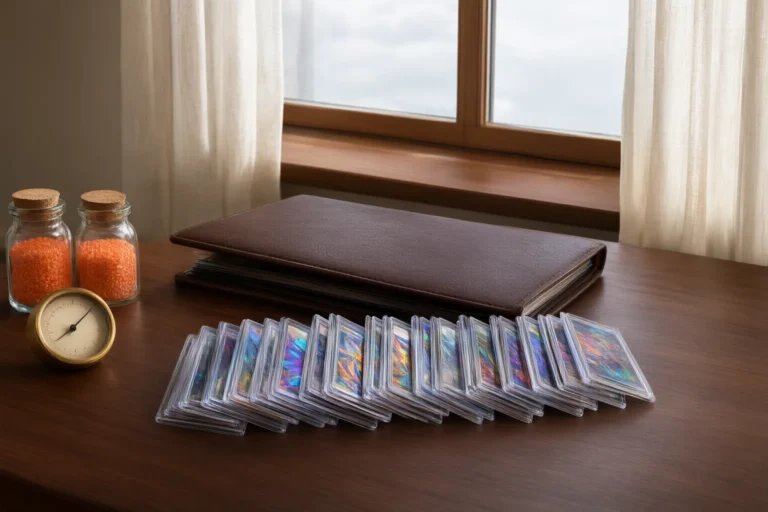
How to Protect a Trading Card Collection from Leaks, Floods and Damp at Home
Reduce water risks around a trading card collection by inspecting likely entry routes, addressing roof and drainage problems, improving leak detection and preparing a limited response for indoor…
Read more ↗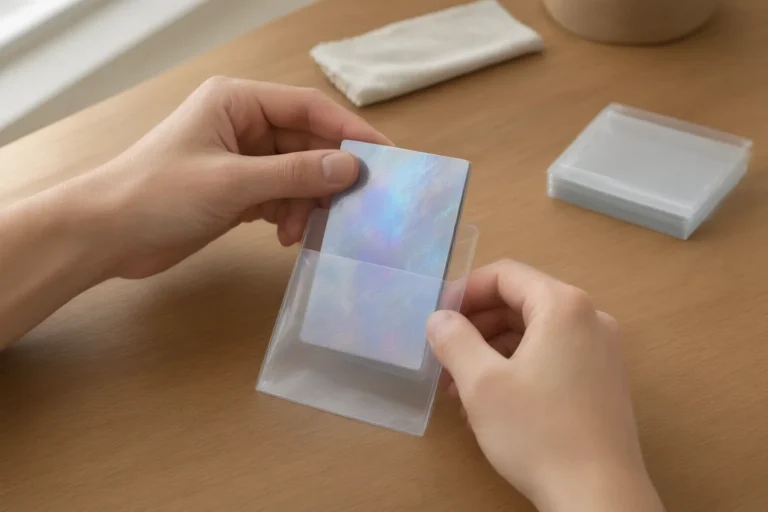
How to Handle Trading Cards Without Damaging Edges or Transferring Skin Oils
Protect raw trading cards by preparing a clean, soft workspace, washing and thoroughly drying your hands, holding cards by their edges, and sleeving them without force.
Read more ↗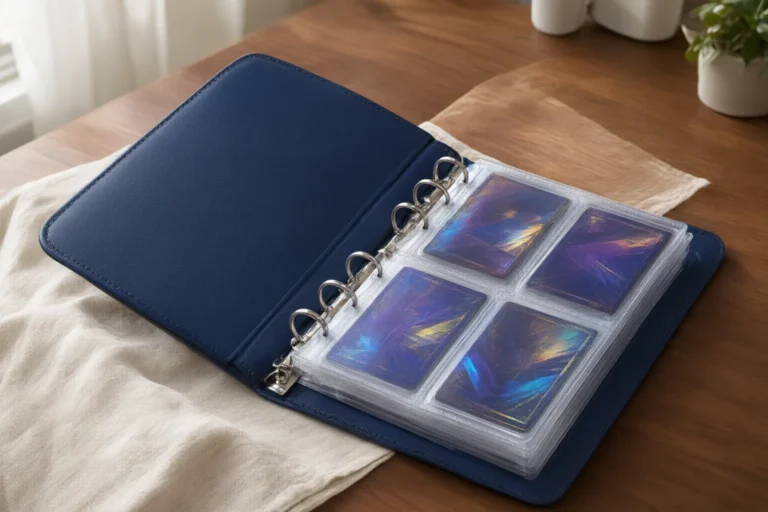
Binder Features to Consider for Reducing Ring-Dent, Page-Sagging and Card-Movement Risks
Assess ring shape, page position, loading, clearance and binder construction before using a binder for long-term trading card storage.
Read more ↗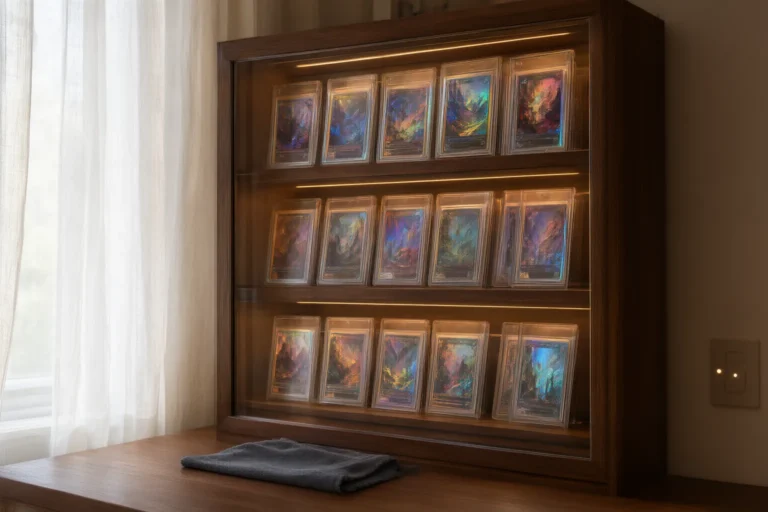
How to Protect Trading Cards from UV Light While Keeping Them on Display
Reduce cumulative light exposure without hiding your collection by combining safer display placement, explicitly specified UV-filtering materials, lower-UV lighting, and periodic card rotation.
Read more ↗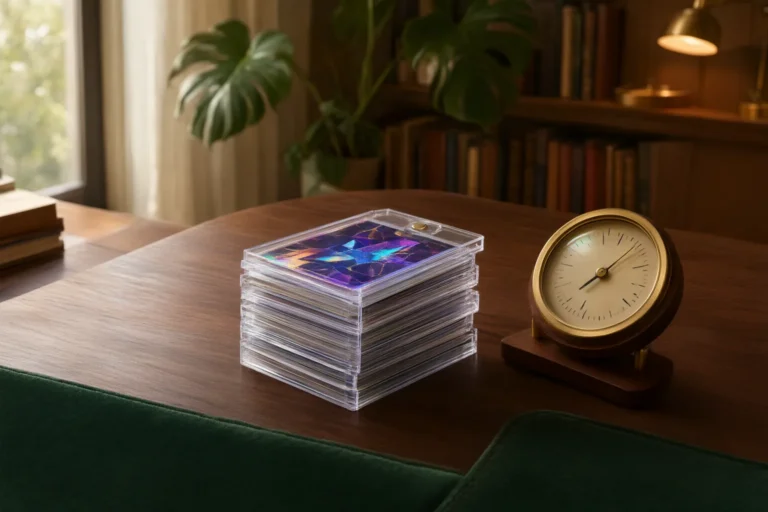
Relative Humidity for Trading Cards: A Practical Home Storage Guide
Several collector guides recommend approximately 45–55% relative humidity for trading cards. Using a hygrometer, limiting fluctuations and choosing a stable interior storage location can help reduce risks associated…
Read more ↗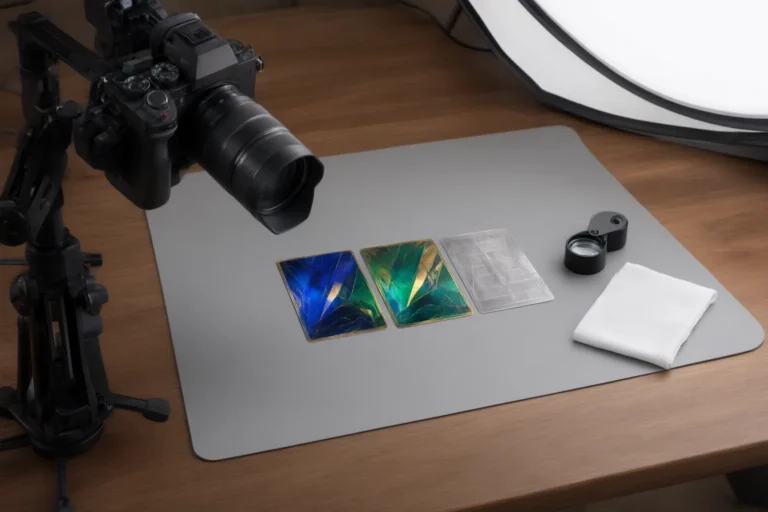
How to Take Trading Card Condition Photographs for Reliable Records
Create reliable trading card condition records with stable framing, even lighting, complete front and back photographs, useful defect close-ups, full-size review, restrained corrections, and a stable identifier for…
Read more ↗