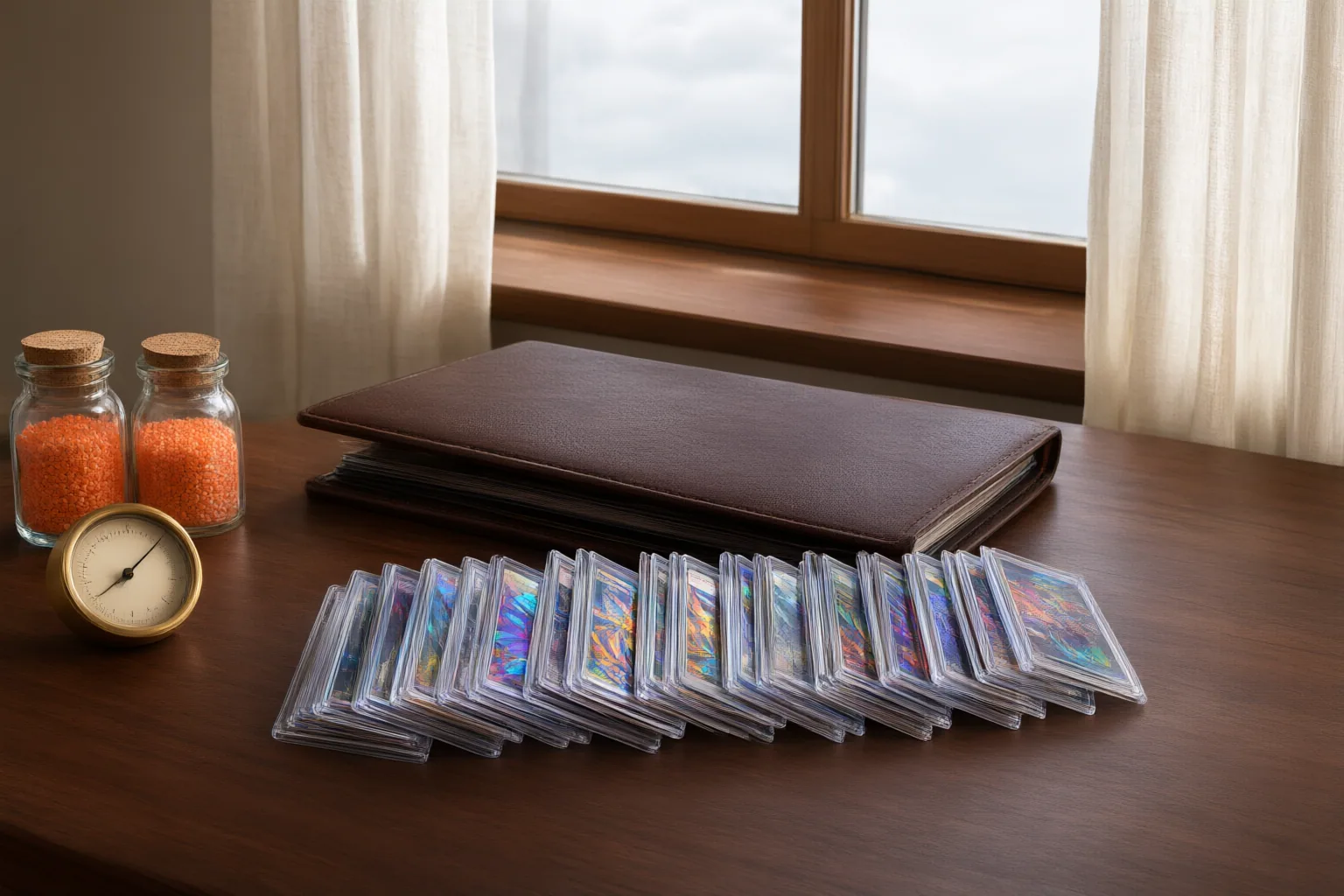
Protecting a card collection from household water starts with identifying possible entry routes, fixing preventable problems and detecting leaks early. These measures can reduce risk, but the available sources do not establish that any card-storage method can withstand a major flood or prolonged damp.
Map the water risks around your collection
Begin with the building rather than the storage accessories. Review the roof, foundation, basement and surrounding drainage for weaknesses or evidence of earlier water damage. These are documented household water-entry routes, so consider how each one relates to the room, cupboard or shelving area where the collection is kept.
Look above and around the collection for plausible paths from a roof problem or nearby appliance. At a lower level, consider whether water entering through a basement or foundation could reach it. Outside, note drainage conditions that might direct water towards the building.
This inspection cannot prove that a location is safe. It provides a practical basis for moving the collection away from an identified route where possible and prioritising property problems that need attention. The source is general household guidance rather than a trading-card storage test, so it does not establish that sleeves, boxes or containers are floodproof.
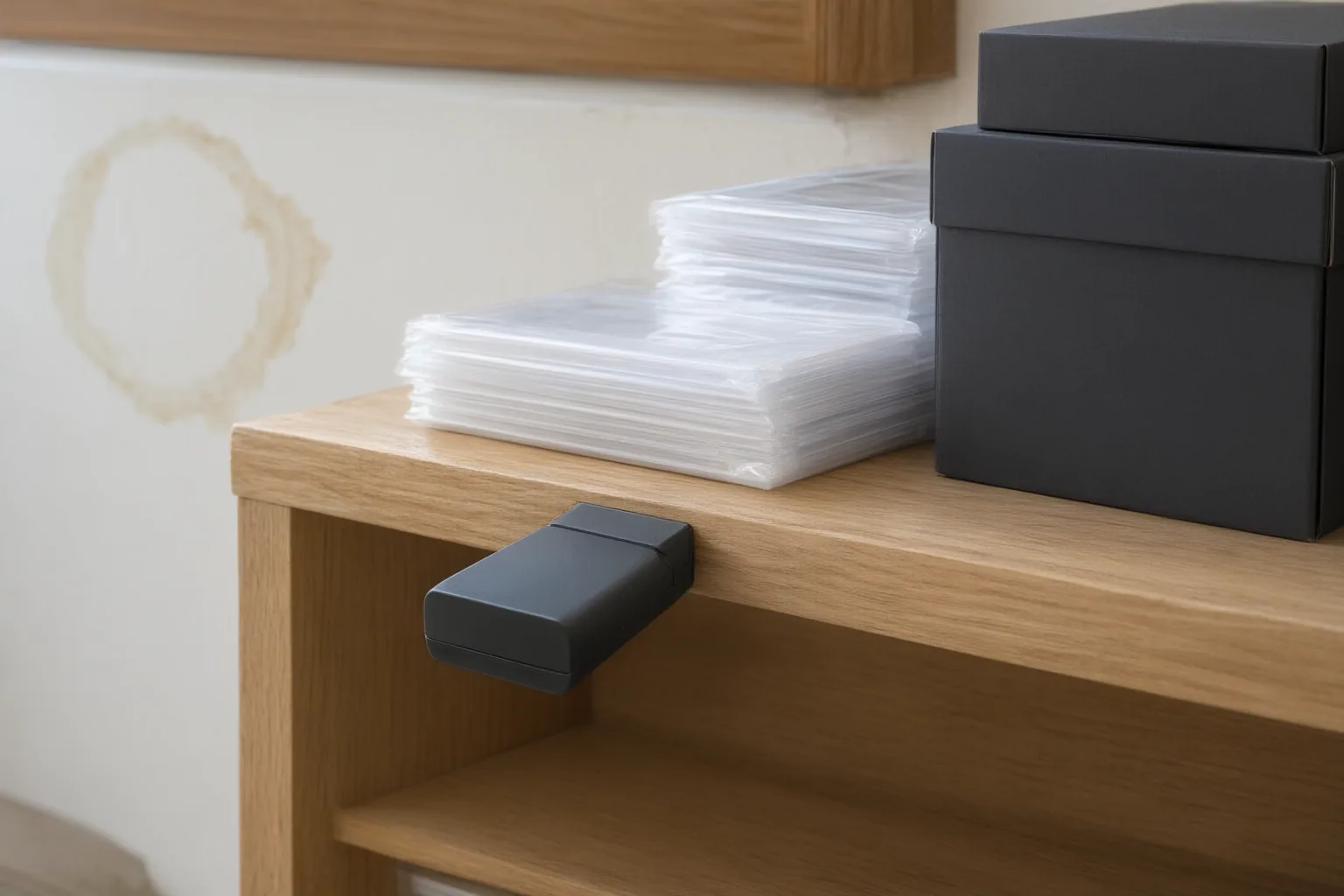
Reduce preventable leaks and drainage problems
Address visible maintenance problems promptly. Today’s Homeowner recommends repairing roof problems without delay. It also warns that clogged gutters can overflow and damage a home’s foundation, advising homeowners to maintain gutters and direct downspouts away from the foundation.
For a collection, these measures are best treated as layers of prevention. Keeping the roof and drainage system in working order may reduce avoidable water entry, while placing cards away from a known risk route may reduce their exposure if something fails. Neither measure guarantees protection.
Create a simple maintenance record covering the areas relevant to the collection room. Record observed roof defects, gutter or drainage concerns, signs of previous water damage, the action required and whether it has been completed. This turns a one-off inspection into a repeatable check. Because the supporting guidance was written for a US audience, it should not be read as stating British legal requirements, construction standards or mandatory inspection intervals.
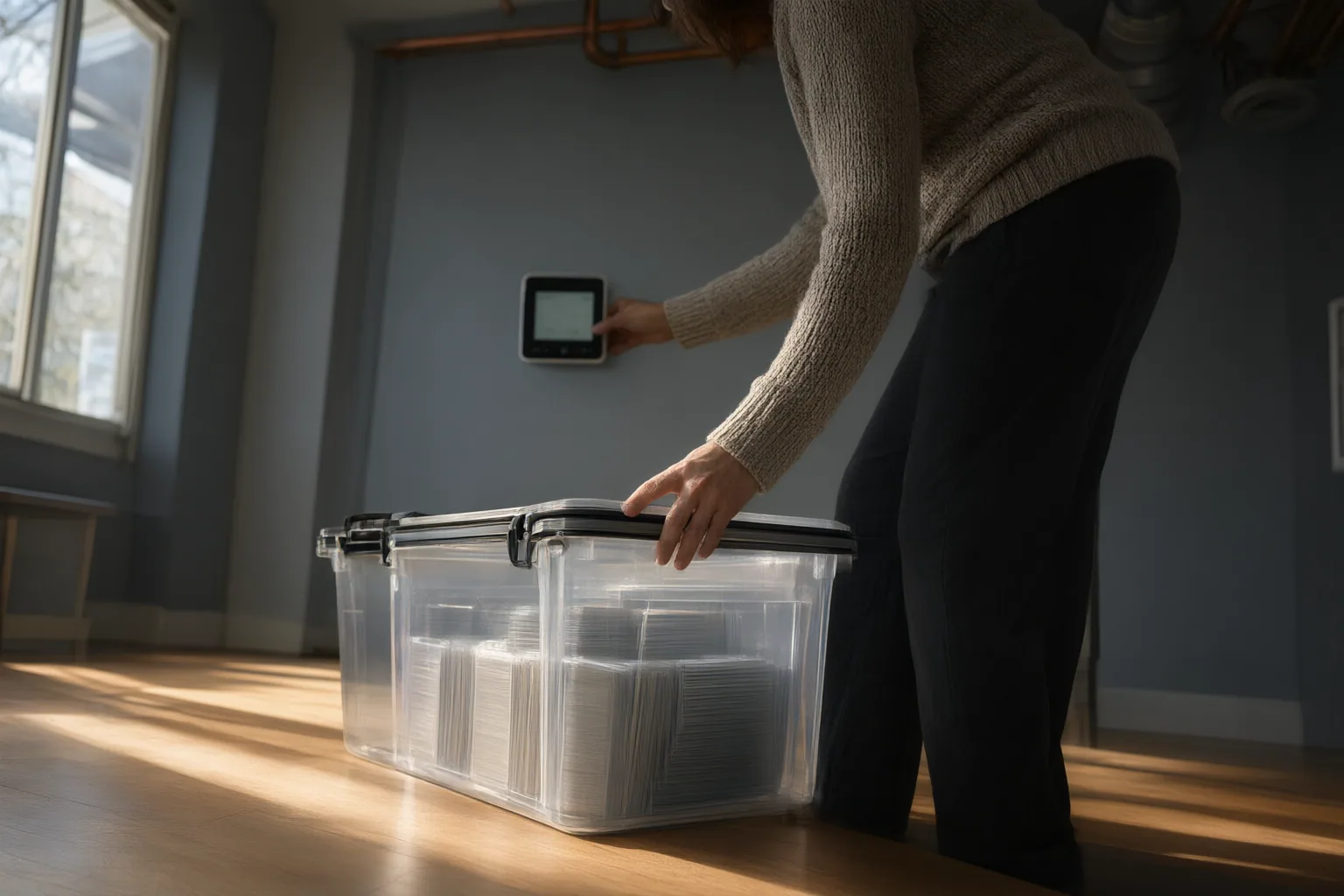
Detect leaks early and prepare a limited response
Early detection matters because a leak may otherwise remain unnoticed while possessions are exposed. Today’s Homeowner recommends placing water sensors near appliances so leaks can be detected promptly. When reviewing collection placement, identify relevant appliances or other plausible leak points nearby and consider suitable detection there.
Emergency materials may provide a limited first response to some indoor water. Quick Dams says its Indoor Leak Kit is intended for condensation, water-based spills and leaks. The manufacturer lists absorbent mats, plastic-backed drip mats intended to prevent seepage, and water-activated dams that swell on contact with water to form a barrier.
Those statements describe the manufacturer’s intended uses, not independently verified performance. The manufacturer also says the water dams are unsuitable for salt water, calcium or chlorine. Do not assume that an emergency barrier works with every liquid or that it can protect cards during major flooding. Keep any response materials accessible, retain their stated limitations, and use early warning as a prompt to address the source of the water rather than as a substitute for repair.
Conclusion
Use a layered checklist: inspect the roof, foundation, basement and surrounding drainage; arrange prompt attention for roof, gutter and drainage problems; review whether the collection sits near an identified water route; and improve early leak detection near relevant appliances. If you keep absorbent or barrier materials for indoor incidents, follow their stated applications and liquid restrictions.
These steps reduce identifiable risks rather than making a collection floodproof. The available sources do not provide trading-card-specific storage tests, protection benchmarks or recovery procedures, and they do not establish protection during prolonged damp exposure.
Inspect the area around your collection now, move it away from any identified route where practical, install suitable leak detection, and write down every maintenance issue or repair that remains outstanding.
Disclosures and limitations
- This article was prepared with AI assistance using only the supplied research sources; factual claims are attributed through the accompanying source IDs.
- The named leak-control product is discussed from manufacturer-provided information, not as a tested recommendation or endorsement. No affiliate relationship is asserted.
Related reading
Sources
- Protecting Your Home from Water Damage and Flooding – Today's Homeowner — Today's Homeowner
- Indoor Leak Kit – Protect Your Home from Leaks – Quick Dams — Quick Dams