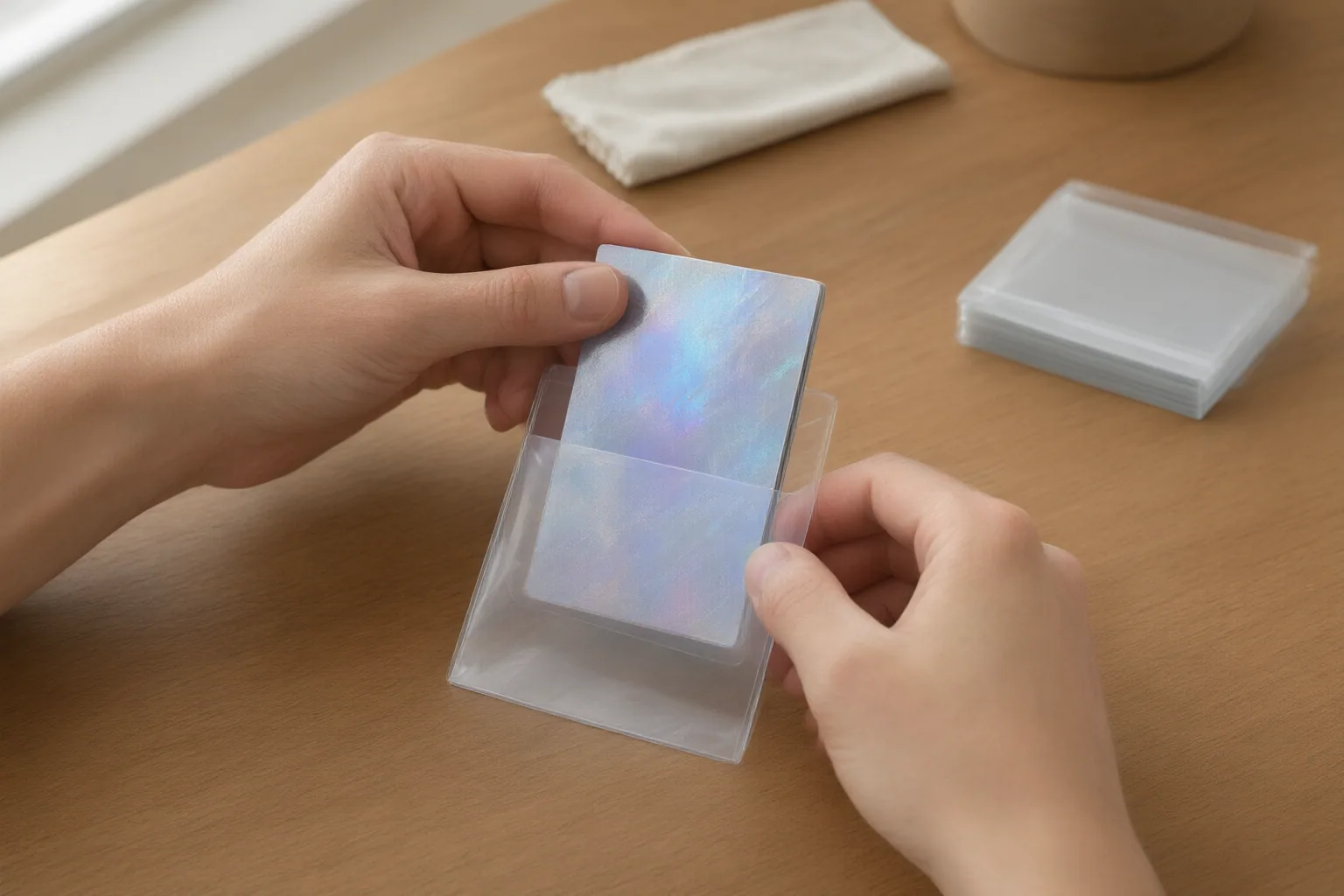
Handle trading cards with clean, thoroughly dried hands, touch only their edges, and work above a clean, soft surface. Promptly place each card in a correctly sized sleeve without forcing it; add a rigid holder when protection from bending or corner damage is important.
Prepare Your Hands and Work Area
Wash your hands before touching raw cards, then dry them thoroughly. Skin oils, moisture, dirt, lotion and sanitiser residue can transfer to a card’s surface or edges. Clean, dry hands therefore provide a straightforward starting point for any opening, inspection, sorting or sleeving session.
Prepare the surroundings as carefully as your hands. Remove food, drinks and pens, clear away dust, and avoid rough worktops. Use a clean, soft surface so that a dropped card is less likely to strike a hard corner. Keeping liquids and crumbs away also reduces avoidable spill and contamination risks.
Arrange suitable sleeves before opening packs or moving cards. This limits the time cards remain exposed and prevents hurried handling while you search for protection. Keep the workspace uncluttered so cards do not need to be dragged across the table or placed beside objects that could mark them.
Hold, Sort and Move Cards Without Stressing Them
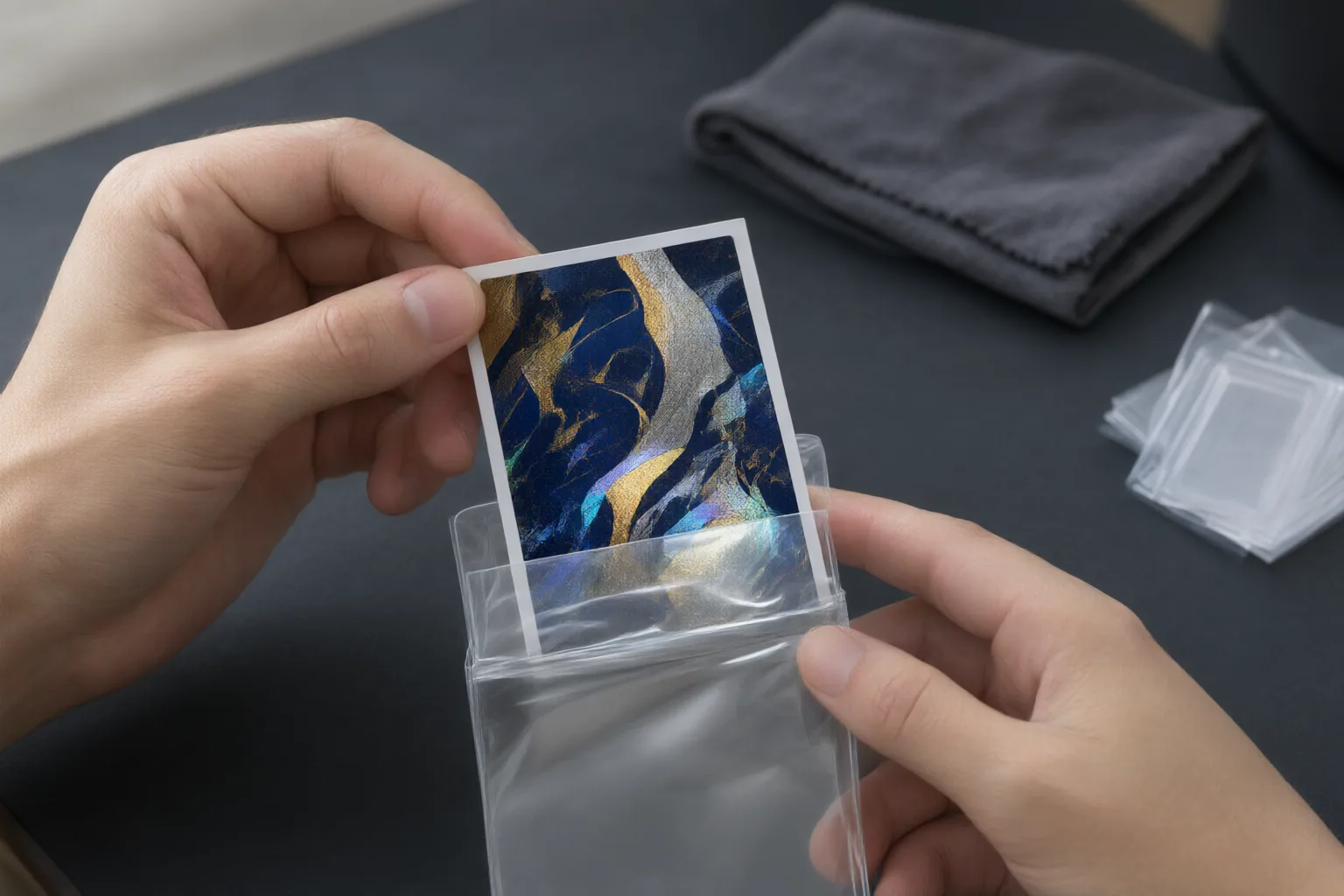
Pick up a raw card by its edges, using light contact and avoiding pressure on the front or back. Repeated contact with the faces increases the opportunity for fingerprints and residue to reach the surface. Edge-only handling does not eliminate every risk, but it reduces unnecessary surface contact.
Move one card deliberately rather than pushing loose cards around in piles. Unsleeved cards that rub or slide against one another can develop surface scratches and edge wear. When sorting, provide enough clear space to separate cards without overlapping, scraping or dragging them.
Keep each card flat and supported. Do not flex it to improve your grip, inspect an angle or separate it from another card, because bending can introduce a crease. If two loose cards are close together, avoid pressing on their faces or prising them apart with force. Slow, controlled movements are preferable to repeated repositioning.
Once inspection or sorting is complete, minimise further raw handling by moving the card into suitable protection.
Sleeves, Rigid Holders and the Limits of Gloves
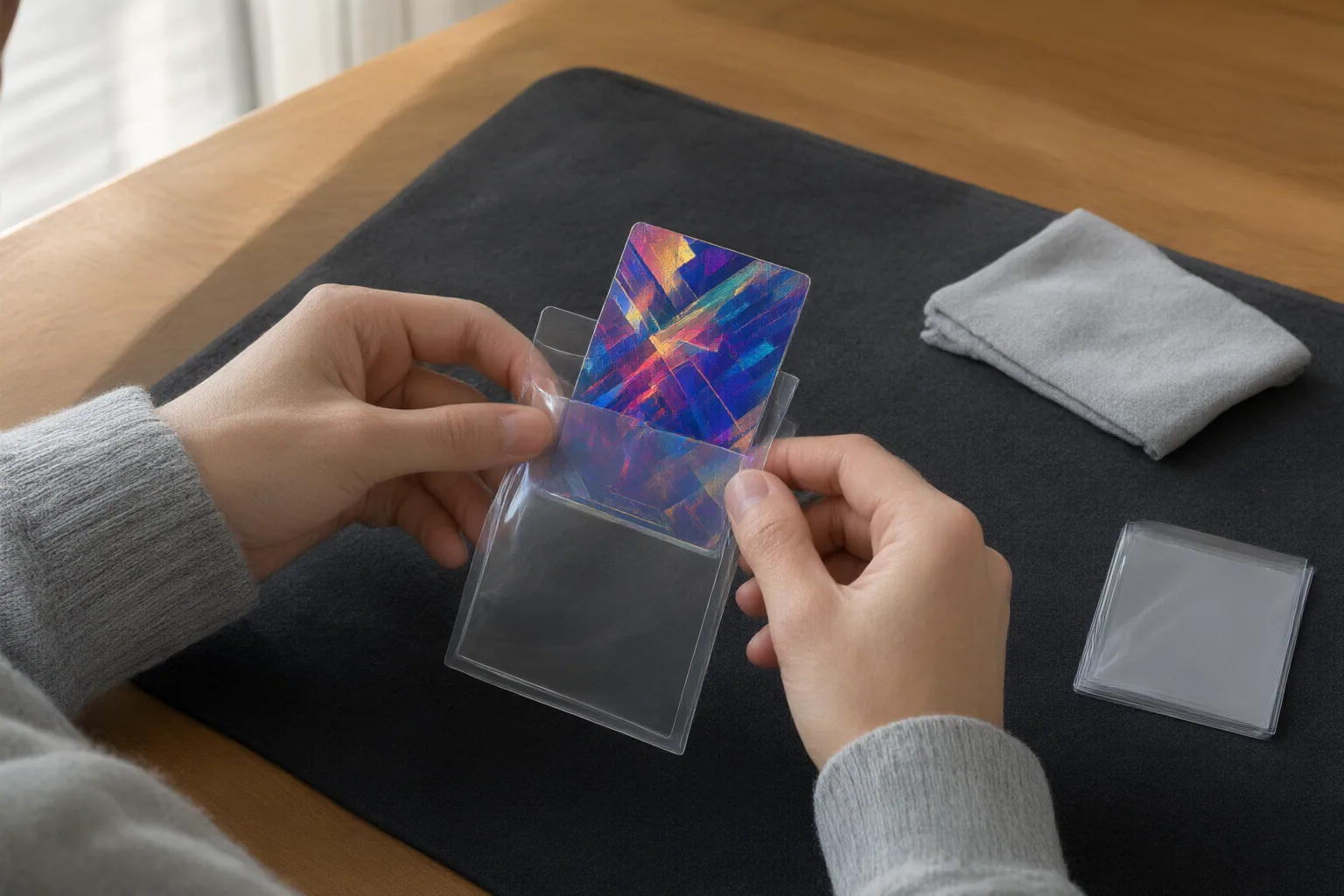
Sleeve cards promptly after handling. A sleeve reduces direct surface contact and helps limit friction, scratches and edge wear during later handling or storage. It must, however, suit the card’s dimensions. A sleeve that is too tight can put corners at risk during insertion, while an overly loose one may let the card slide.
Before insertion, check that the sleeve is clean and correctly sized. Open its mouth without bending the card, align the card carefully, and guide it in without force. Stop if an edge or corner catches rather than increasing pressure. A forced fit defeats the purpose of protective storage by creating a new opportunity for damage.
A flexible sleeve and a rigid holder serve different roles. Sleeves reduce surface contact, but they do not offer the same structural protection against bending or corner impacts. When those risks matter, place the sleeved card in a suitable toploader or other rigid holder, again avoiding a fit that requires force.
Gloves are not a settled requirement in the supplied guidance. One source suggests thin cotton gloves for valuable raw cards, while another recommends high-quality, powder-free nitrile and warns against cloth, powdered or unsuitable textured gloves. These conflicting recommendations mean no single glove material should be treated as a universal standard. Unsuitable gloves may introduce scratching, residue or grip concerns. Clean, thoroughly dry hands combined with careful edge-only contact provide the consistently supported handling routine; anyone choosing gloves should ensure they are clean, powder-free, non-abrasive and do not reduce control.
Conclusion
Use the same sequence whenever you handle raw cards: clear and soften the work area, remove food and drinks, wash and thoroughly dry your hands, touch cards only by their edges, and avoid rubbing, sliding or flexing them. Finish by placing each card in a correctly sized sleeve without force and add a suitable rigid holder when bending or corner protection is a priority.
Before your next pack opening or sorting session, set out the sleeves and holders first and prepare a clean, soft handling area.
Disclosures and limitations
- This article was prepared with AI assistance from the facts and source boundaries in the supplied research package; its handling evidence comes from third-party collector and commercial-style guides rather than official conservation or grading-company documentation.
- No products or affiliate offers are recommended in this article.
Related reading
- Collection Care
- Binder Features to Consider for Reducing Ring-Dent, Page-Sagging and Card-Movement Risks
Sources
- How to Protect Trading Cards: Sleeves, Binders & Storage — Hobby Tech Review
- How to Handle Trading Cards Without Damaging Them | The Bubble Art — The Bubble Art
- Amazon.com: STTRBOX Commander Deck Box with Handle, Trading Card … — amazon.com
- Trading Card Care Tips for Serious Collectors – Jt.Org — Jt.Org
- CardConduct — CardConduct
- Top 5 Best Gloves for Handling Sports Cards – IndoorGameBunker — IndoorGameBunker