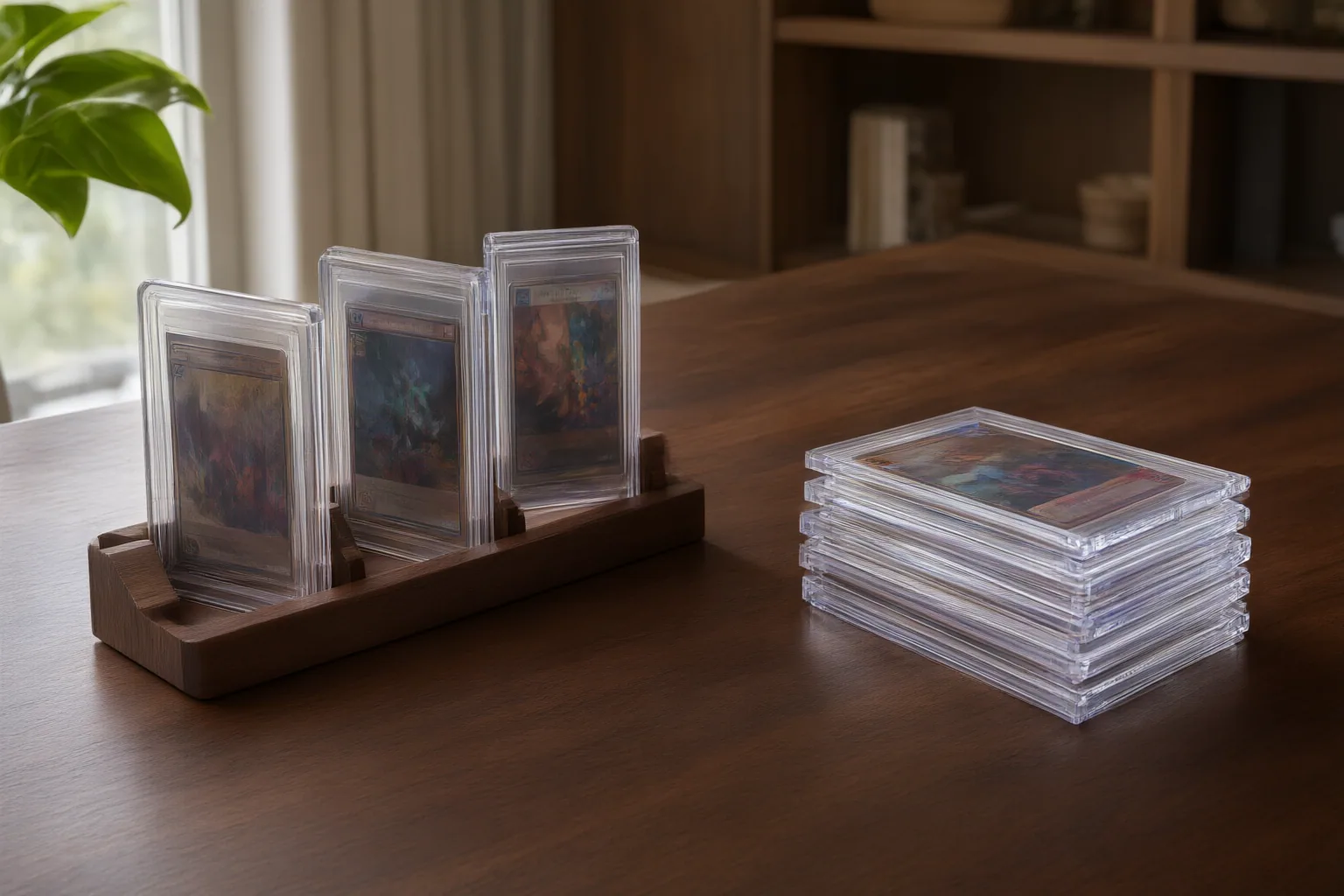
Graded cards can be stored upright or flat if their slabs are level, adequately supported and unable to shift or strike one another. One guide specifically recommends snug upright storage, while another accepts either orientation. Neither source provides controlled testing that proves one position better protects the holder or card.
The short answer: upright or flat can work
The available guidance does not establish a universal winner. Get Graded says dedicated slab boxes can hold graded cards upright or flat and advises keeping slabs in either position rather than tilted. Strictly Graded Cards gives a narrower recommendation: place cards upright and snug inside a purpose-built slab storage box.
These positions share a more important requirement—support. Slabs should not lean at an angle, slide around or repeatedly contact neighbouring holders. Upright storage therefore works best when the row is restrained rather than partly empty and leaning. Flat storage can also follow the cited guidance when the slabs remain level and secure.
Because neither source reports a controlled comparison of pressure or card condition in the two orientations, claims that upright or flat storage is inherently superior would go beyond the evidence. Choose the arrangement that keeps the holders most stable in the storage space available.
How to reduce movement, impact and holder pressure
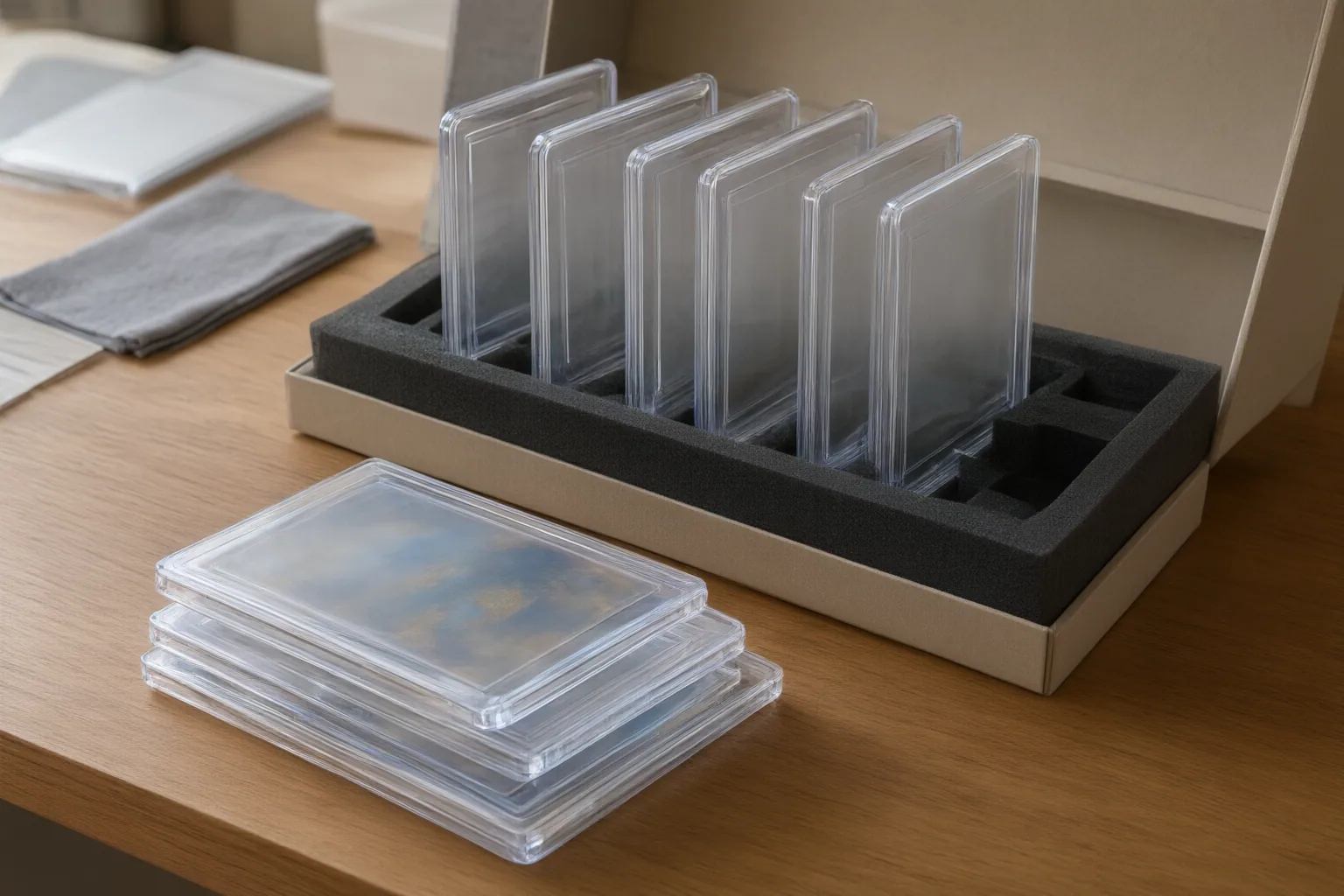
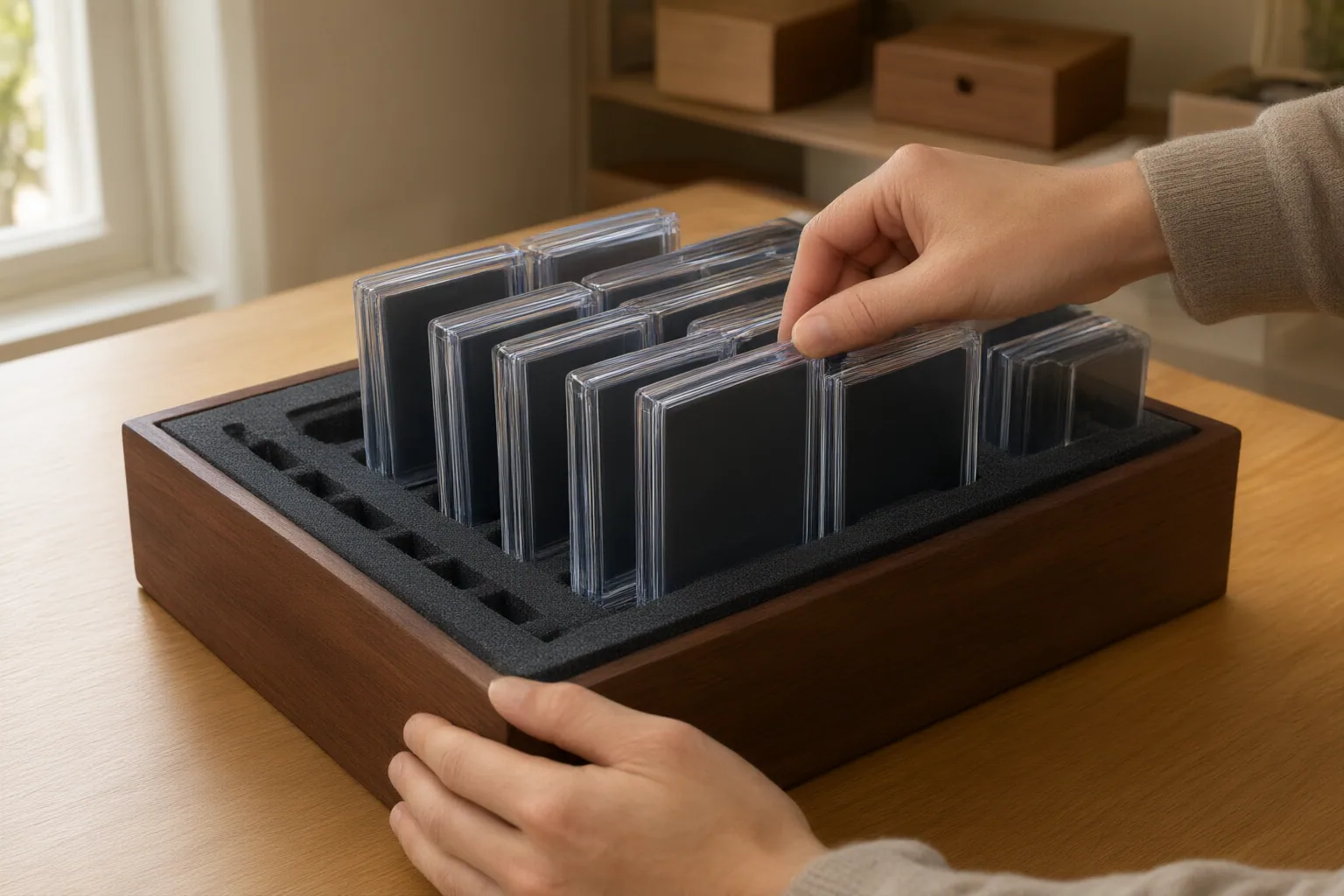
A purpose-built slab box can help keep holders organised and restrained. For upright storage, use snug spacing so the slabs do not lean, topple or gain enough room to knock together. Do not force so many holders into a box that excessive pressure is required to insert or remove one; the supported guidance calls for snug storage, not compression.
For flat storage, keep the slabs level and prevent them from sliding. Get Graded permits flat positioning but warns against tilted or loose storage. This means that simply laying holders in a large drawer without restraint does not address the main risk: movement can allow slabs to rub or collide. Strictly Graded Cards likewise advises against leaving cards loose in a drawer, where they may shift and strike one another.
Encapsulation offers protection from routine handling hazards, but both guides caution that slabs are not indestructible. Scratching, impact and cracking remain relevant concerns. Whichever orientation you select, handle holders deliberately and maintain enough organisation that individual slabs can be retrieved without disturbing an unstable row or stack.
Orientation is only part of graded card storage
Positioning cannot compensate for an unsuitable environment. Both guides recommend stable storage conditions and warn against areas such as attics, garages and basements, where temperature or humidity may fluctuate. A well-supported slab can still face environmental risk if it is kept in one of these locations.
Light also matters. Both sources advise keeping graded cards out of direct sunlight. When cards are displayed, they recommend UV-filtering protection. This does not make display risk-free, but it addresses a hazard that an upright or flat orientation alone cannot manage.
Assess the complete setup: whether holders are stable, whether the room avoids pronounced temperature and humidity changes, and whether sunlight reaches stored or displayed cards. Treat the slab as one protective layer rather than as a guarantee against every form of physical or environmental damage.
Conclusion
Support and stability matter more than declaring an unproven universal winner. Upright storage has an explicit recommendation from one guide, while the other allows secure upright or flat storage. In either case, avoid loose, leaning or tilted holders and prevent slabs from rubbing or knocking together.
Inspect your graded-card storage now: secure loose slabs snugly upright or level and stable when flat, then relocate the collection if it is exposed to fluctuating temperatures, humidity or direct sunlight.
Disclosures and limitations
- This article was prepared with AI assistance from the two storage guides identified by the supplied source IDs; those sources do not report controlled upright-versus-flat testing.
- The guidance describes ways to reduce storage risk and does not guarantee preservation or a particular future card or holder condition.
Related reading
Sources
- How Do I Store and Protect My Graded Sports Cards? – Get Graded — Get Graded
- How to Store and Protect Your Graded Card Collection — strictlygradedcards.com