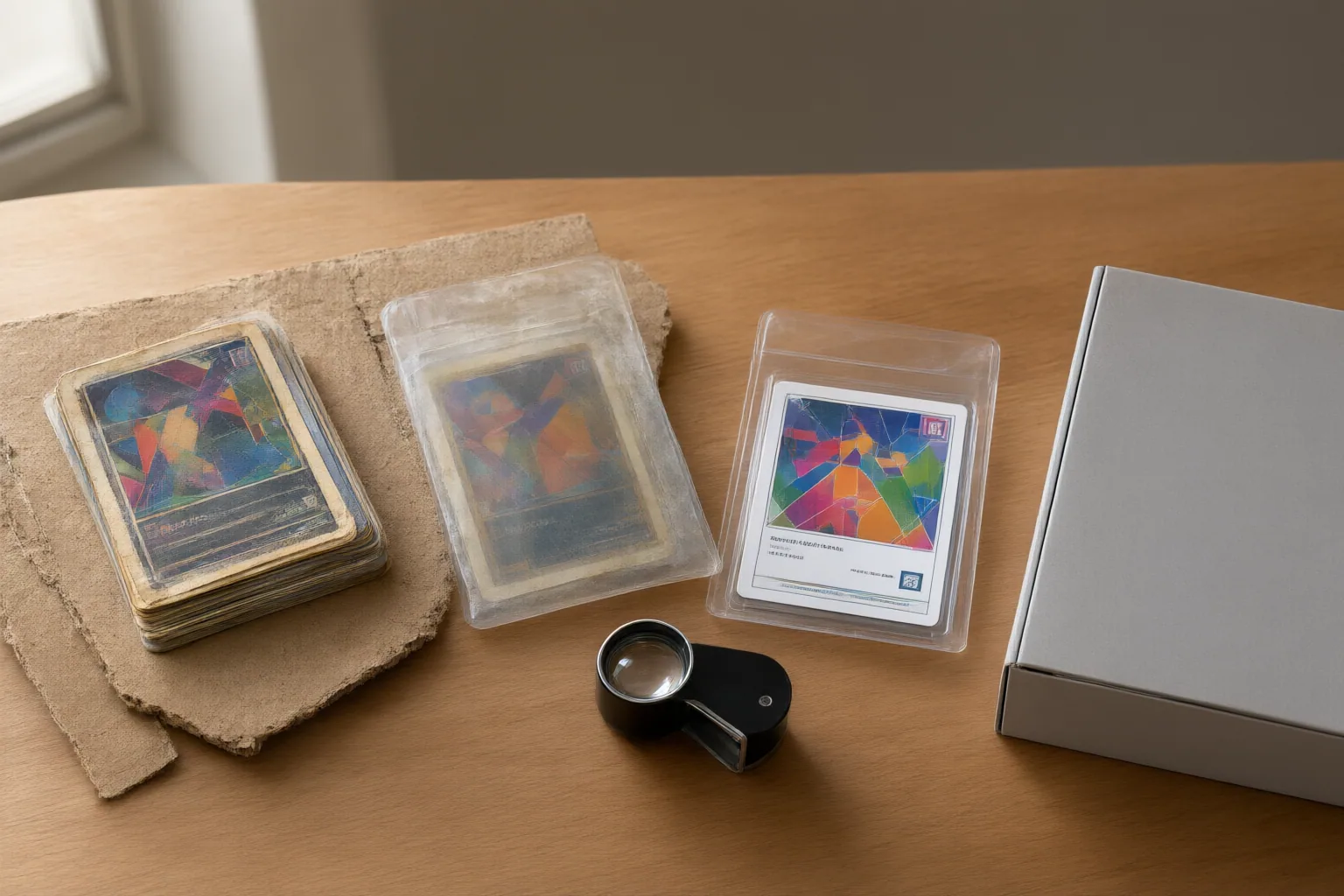
Acidic paper-based storage can transfer acids to nearby paper objects over time, while unsuitable flexible PVC products may release plasticisers. Collectors should inspect every material touching a card, watch for gradual changes, verify enclosure composition and control the wider storage environment.
How unsuitable storage materials can affect trading cards
Acidic storage materials can create a long-term contact risk. The Library of Congress advises separating acidic papers from other works on paper because acids can migrate between them. Applied cautiously to trading cards, that means acidic cardboard, paper dividers or similar materials may place nearby cards at risk rather than merely ageing in isolation.
Flexible PVC presents a different concern. A card-preservation source reports that plasticisers can migrate from flexible PVC storage products over time, potentially causing discoloration, brittleness, staining, stickiness or surface damage. It also distinguishes indefinite storage from short-term handling or transit, so a holder used briefly should not automatically be assumed suitable for permanent storage.
These effects may emerge gradually. General paper-preservation advice is useful, but trading cards can include inks, coatings, foils and adhesives that may respond differently. The available guidance therefore supports careful material selection and observation, not a promise that any enclosure will prevent damage.
Warning signs and contact points to inspect
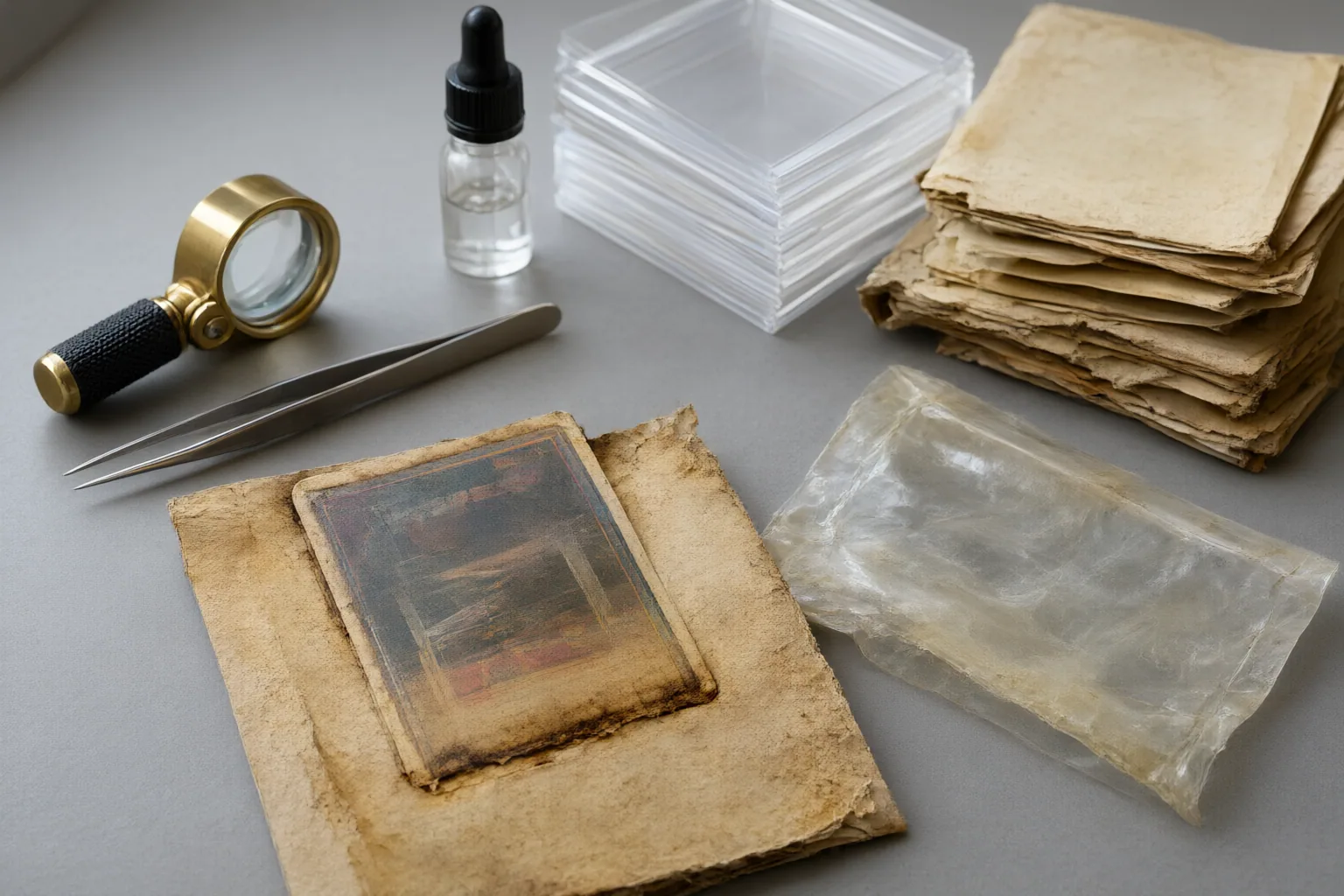
Reported warning signs include yellowing, browning, fading and brittleness. With unsuitable plastic storage, staining, stickiness, discoloration or other surface changes may also appear. These signs do not by themselves establish a single cause, but they justify examining the card's surroundings and separating it from questionable materials.
Inspect the complete storage chain, not just the outer box. Look at sleeves, binder pages, cardboard dividers or backings, tape, clips and every other enclosure or fitting in direct or nearby contact with a card. Compare affected cards with cards stored elsewhere, and note whether changes appear near a particular contact surface. Because deterioration may develop slowly, a material that looks harmless today should not be treated as verified solely because obvious damage is absent.
If a card shows a change, avoid presenting a visual check as authentication or a definitive diagnosis. Isolate it from suspect materials, record what you observed and review each contact point before choosing a replacement enclosure.
How to assess labels and choose enclosures
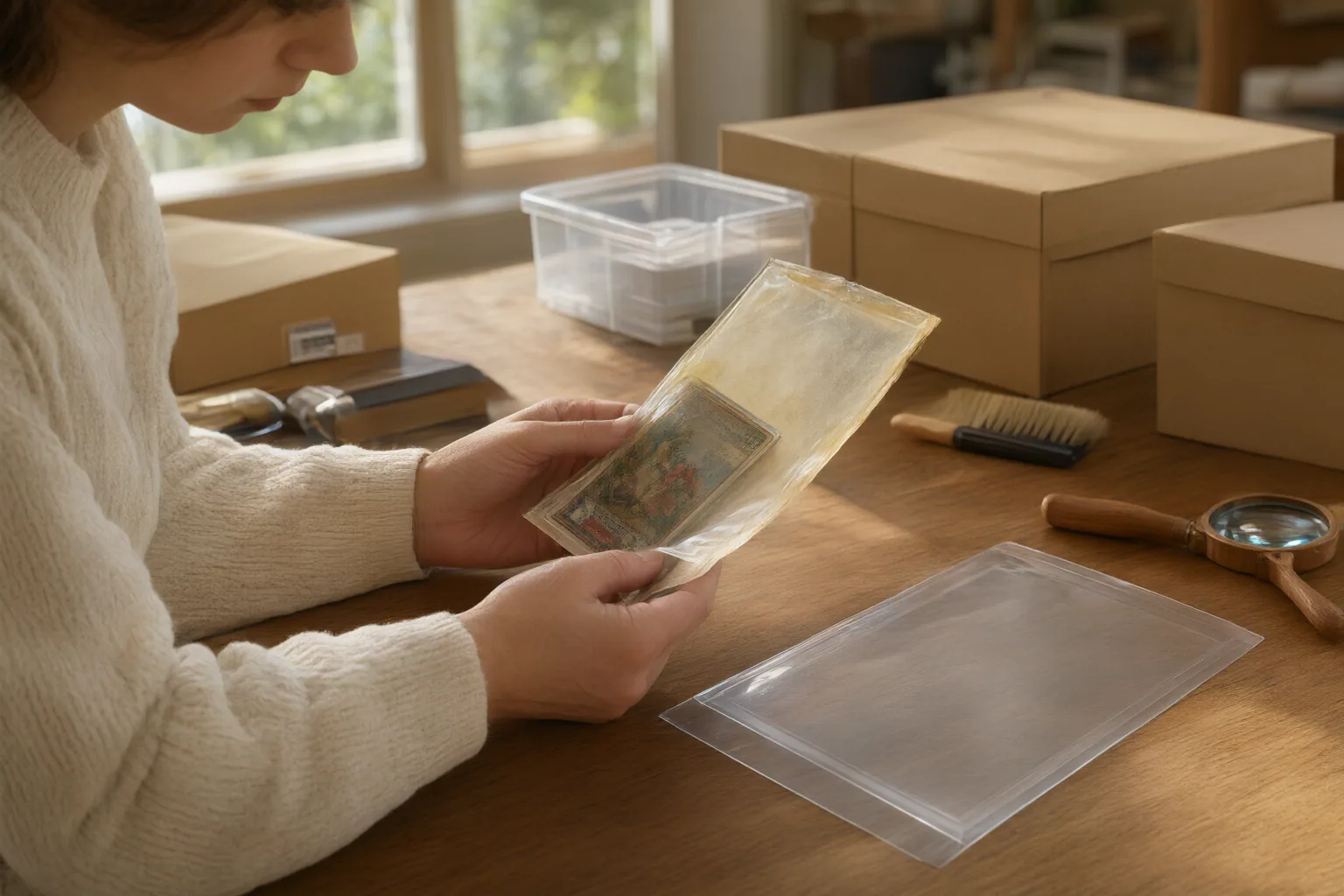
Terms such as “acid-free,” “lignin-free,” “neutral-pH,” “alkaline-buffered,” “inert” and “archival-safe” are useful selection clues, but they should not be treated as interchangeable guarantees. Check which specific component a claim covers: a box labelled acid-free does not establish the composition of an unlabelled sleeve, binder page, insert or adhesive inside it.
The Library of Congress identifies acid- and lignin-free folders, mats and document boxes, in neutral-pH or alkaline-buffered forms, as protective choices for works on paper. It says alkaline-buffered materials can neutralise acids inherent in ageing paper, while also cautioning that some media may be sensitive to alkaline pH. That limitation matters for cards carrying varied inks, coatings, foils or adhesives.
For card storage, the cited card-preservation source identifies polypropylene, PET and PETG as alternatives to flexible PVC. Verify the stated material rather than relying only on broad marketing language, and consider whether the enclosure is intended for brief transport or indefinite storage. A suitable enclosure is only one layer of preservation: moisture, light, temperature extremes and unstable conditions remain relevant risks.
Conclusion
Use a simple storage audit. Examine every sleeve, binder page, divider, backing, piece of tape, clip and box component that touches or sits close to a card. Isolate suspect acidic papers and any cards showing yellowing, browning, fading, brittleness, staining, stickiness or surface change. Then verify the replacement enclosure's composition and preservation claims, taking the card's inks, coatings, foils and adhesives into account.
Finally, maintain a cool, relatively dry, clean and stable storage area with minimal light, away from radiators and vents. Recheck stored cards periodically because deterioration may be gradual. Start now by inspecting every contact material, separating questionable enclosures and replacing them only with materials whose composition you can verify.
Disclosures and limitations
- This article was prepared with AI assistance from the supplied Library of Congress guidance and card- and collectibles-preservation sources. General paper guidance may not apply identically to every trading card, and the commercial editorial sources are not official conservation standards.
Related reading
Sources
- Care, Handling and Storage of Works on Paper – Collections Care (Preservation, Library of Congress) — www.loc.gov
- Acid-Free Storage for Collectibles Protection Matters – Watch and Gather — Watch and Gather
- How to Store Acids Safely: A Comprehensive Guide — northindustrial.net
- Stop Damaging Your Trading Cards: Expert Preservation Hacks — Fine Toys Ltd.
- Acid Storage Tank Materials and Their Compatibility: What Every Industry Must Know — linkedin.com