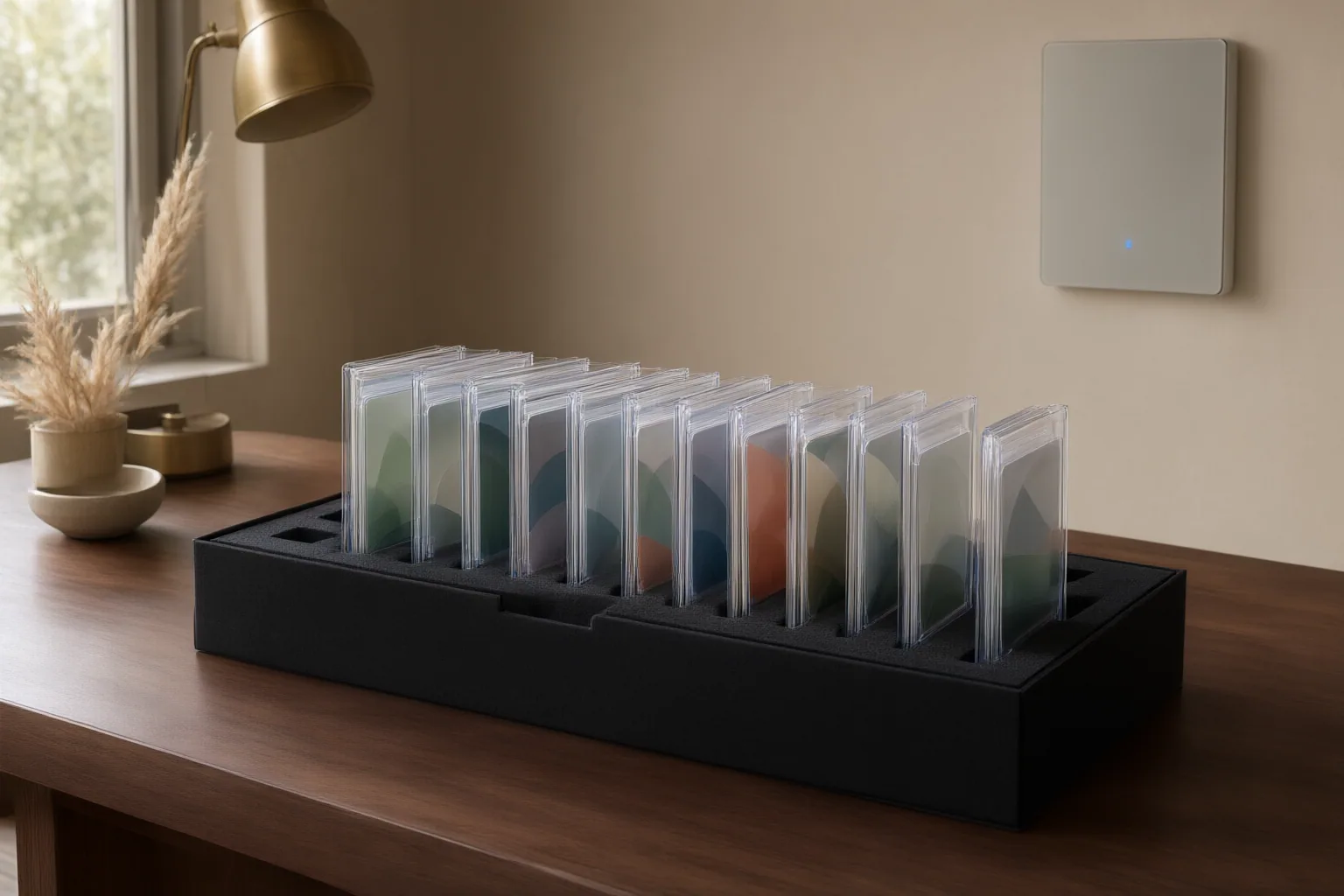
Reduce the risk from temperature fluctuations in card storage by keeping cards in a stable, conditioned part of the home, away from heat sources and sunlight, and by using layered protection while checking regularly for gradual changes.
Why temperature fluctuations can affect trading cards
Trading cards can respond to changing environmental conditions because their layered materials may absorb and release moisture at different rates. According to Cardshellz, the resulting internal tension may contribute to curving or bowing. Temperature therefore should not be considered alone: humidity, light, physical pressure, and handling can also affect stored cards.
The practical aim is to limit repeated environmental swings rather than assume that one temperature setting guarantees protection. The supplied guidance is commercial or hobby-oriented, and its suggested ranges are adapted from broader recommendations for paper and photographic materials rather than conservation standards tested specifically on modern trading-card stock, foils, and inks. Collectors should treat numerical targets as general guidance, not as a promise that damage will be prevented.
Choose the most stable storage location available
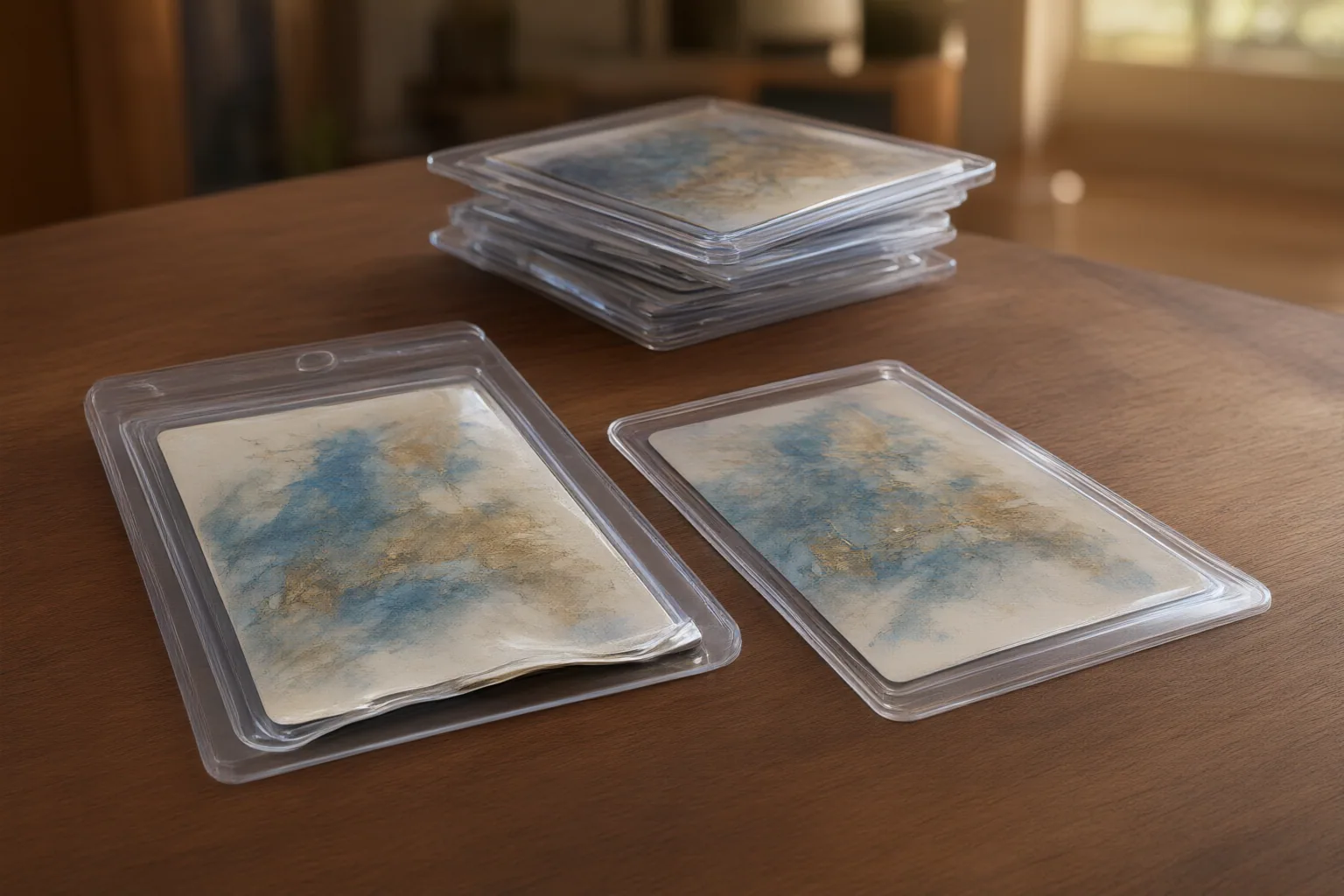
Keep cards within the home's conditioned living space whenever possible. An interior closet can be a practical choice if it remains dry, ventilated, and separated from heat-producing equipment. Its location within the living area may expose cards to fewer environmental swings than an attic, garage, or other space outside the routinely conditioned part of the home.
Avoid storing cards beside windows, in direct sunlight, or close to radiators, vents, electronics, appliances, and other heat sources. Attics and garages can experience substantial temperature variation. Basements may add risks from humidity, poor ventilation, leaks, or flooding, so a basement should not be assumed suitable merely because it feels cool.
Assess the surroundings as well as the container. Sleeves, binders, rigid holders, and boxes do not regulate the room around them. A well-protected card can still be exposed to unstable temperatures, moisture, or light if its storage location is poorly chosen. Move the collection if its current position is sunny, damp, or repeatedly heated and cooled.
Use layered protection and inspect for early changes
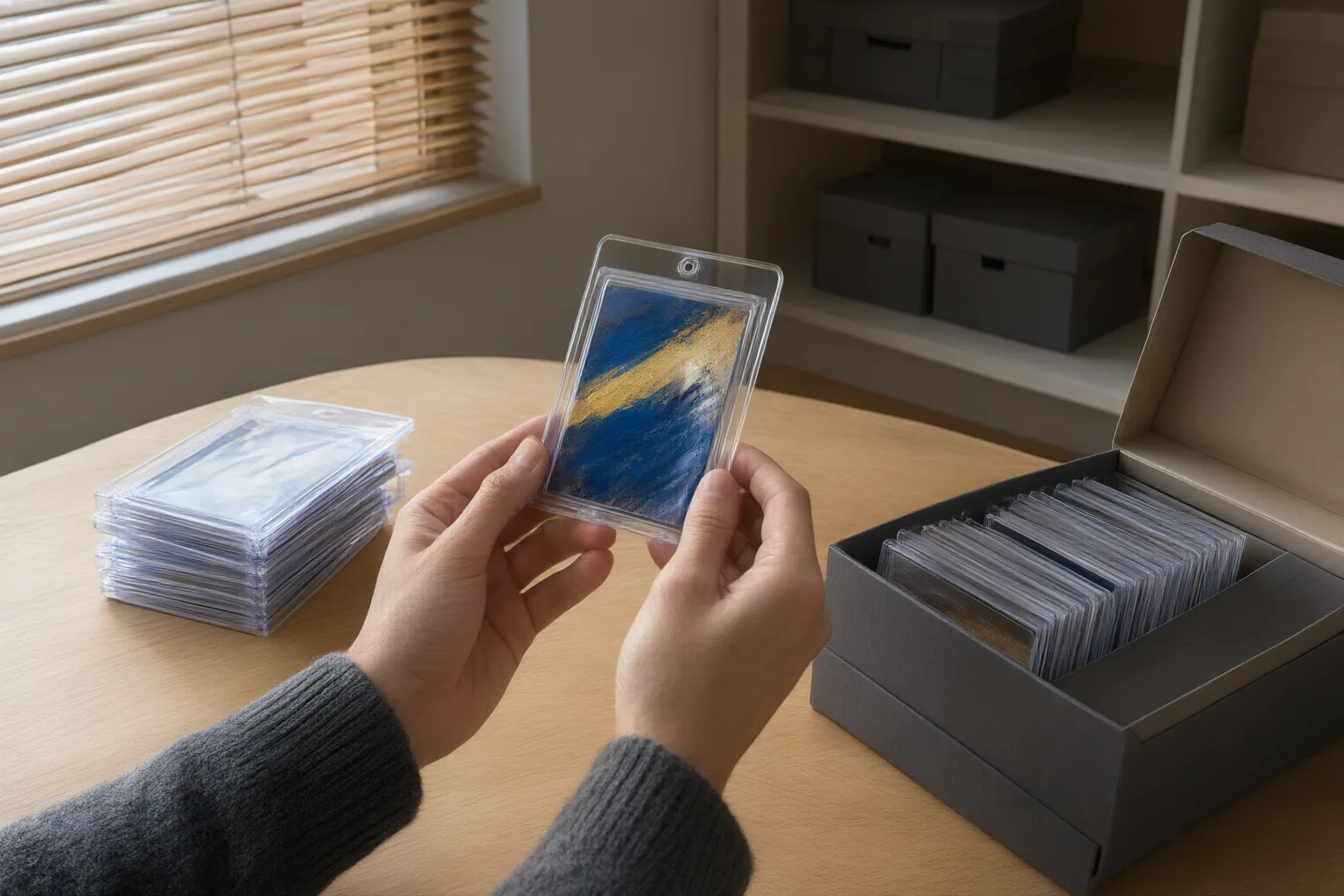
Nested protection can slow the rate at which changes in room temperature reach a card. One example is a card placed in a sleeve, then in a rigid holder, then in a box stored inside a closet. These layers provide a buffer, but they cannot correct an unstable room environment. Location and protection need to work together.
Inspect stored cards periodically because environmentally driven changes may develop gradually. Look for:
- Slight curvature or a change in the card's shape.
- Bowing that can be seen through a holder.
- A sleeve adhering to a localized part of a card.
- A rigid holder that has become warped.
- New rippling on foil cards.
Transport deserves additional attention. Cards taken to shows or sent through delivery networks may encounter abrupt heat or cold in parked vehicles, trucks, warehouses, or garages. After transport, return them to stable indoor storage and include them in the next condition check. The supplied sources do not establish a guaranteed waiting period or recovery method, so avoid assuming that protective packaging alone has eliminated the exposure.
Conclusion
Environmental stability is a more defensible priority than pursuing a supposedly perfect numerical target. The available ranges come from broader paper and photographic-material guidance, not trading-card-specific laboratory testing. Review where your cards are kept, move them away from unstable or heat-exposed areas, check that their protective layers remain sound, and schedule recurring inspections for curvature, rippling, adhesion, and warped holders.
Disclosures and limitations
- This article was prepared with AI assistance using the cited hobby-oriented and commercial secondary sources; those sources do not constitute trading-card-specific conservation standards. No product or affiliate recommendation is included.
Related reading
Sources
- How to Store Your Trading Card Collection — Cardshellz
- How to Store Trading Cards Long Term: The Real Numbers — The Card Shop Finder
- Pokemon Card Storage Temperature Guide | Safe Range and Damage — pokesnap.app
- The Best Card Storage Conditions: Heat, Humidity & UV — Geeky Domain