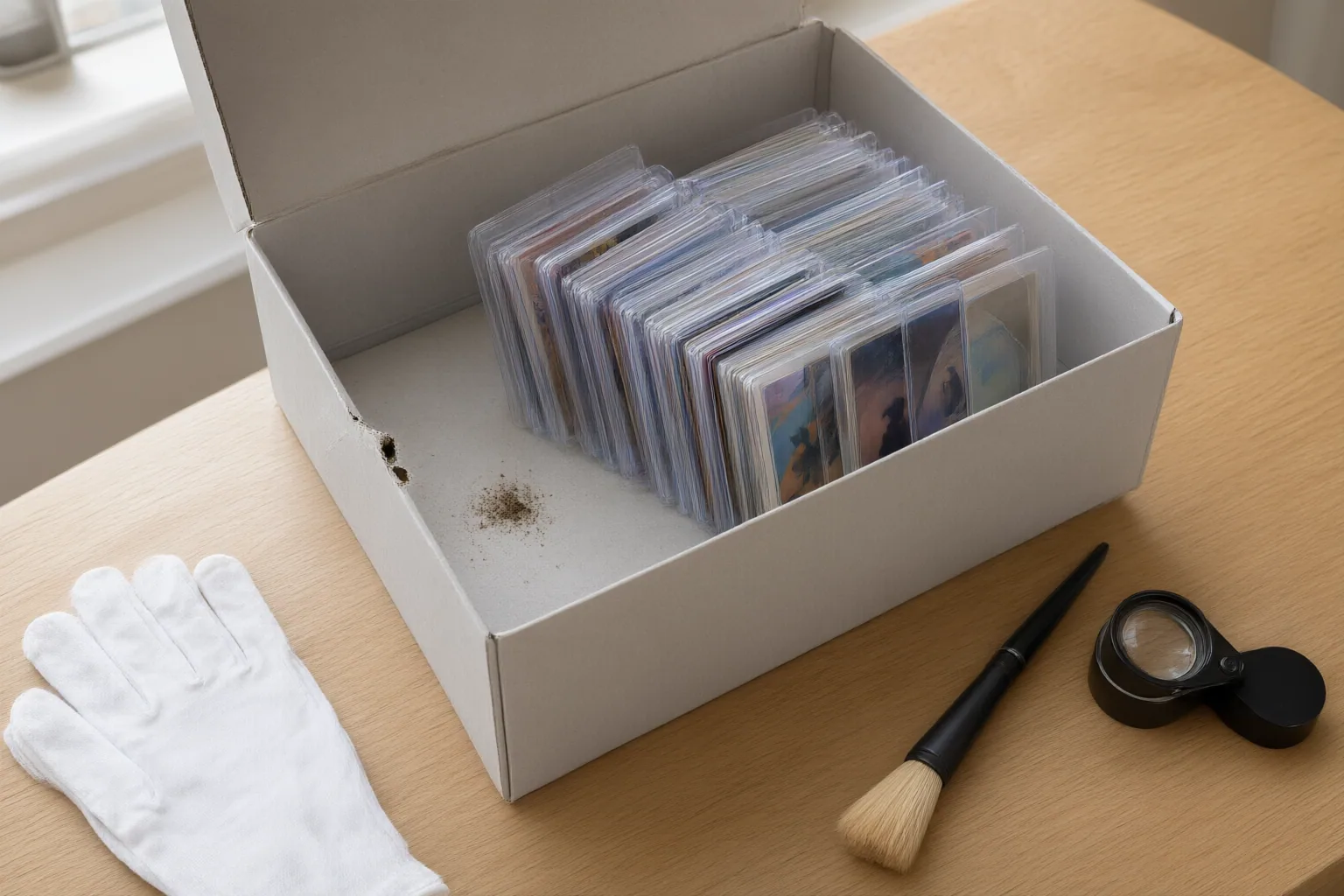
Possible pest activity in card storage can appear as holes, surface grazing, insect remains, frass, damaged packaging, chew marks, droppings, scratches, or unusual odors. Inspect both the collection and its surroundings, document what you find, correct avoidable storage problems, and monitor before deciding that an infestation is active.
Signs to look for in cards and storage areas
Evidence associated with insects in paper collections includes small holes, grazed surfaces, insect remains, and frass. In a card-storage setting, also look for damaged packaging, scratches, chew marks, droppings, or an unusual odor. These signs may appear on cards, sleeves, boxes, bins, shelving, or nearby surfaces rather than in one obvious location.
Gnawing or chewing can indicate rodents. Their urine and droppings also create contamination and potential health hazards, so suspicious material should not be treated merely as cosmetic damage.
Extend the inspection beyond visible cards. Quiet gaps behind or beneath cabinets and shelving can offer shelter, while suitable temperature, humidity, and access to food can help pests become established. Because the supporting guidance covers archives and stored collections generally, these indicators should be applied cautiously to trading-card storage rather than treated as card-specific diagnostic rules.
How to judge whether the evidence may be recent
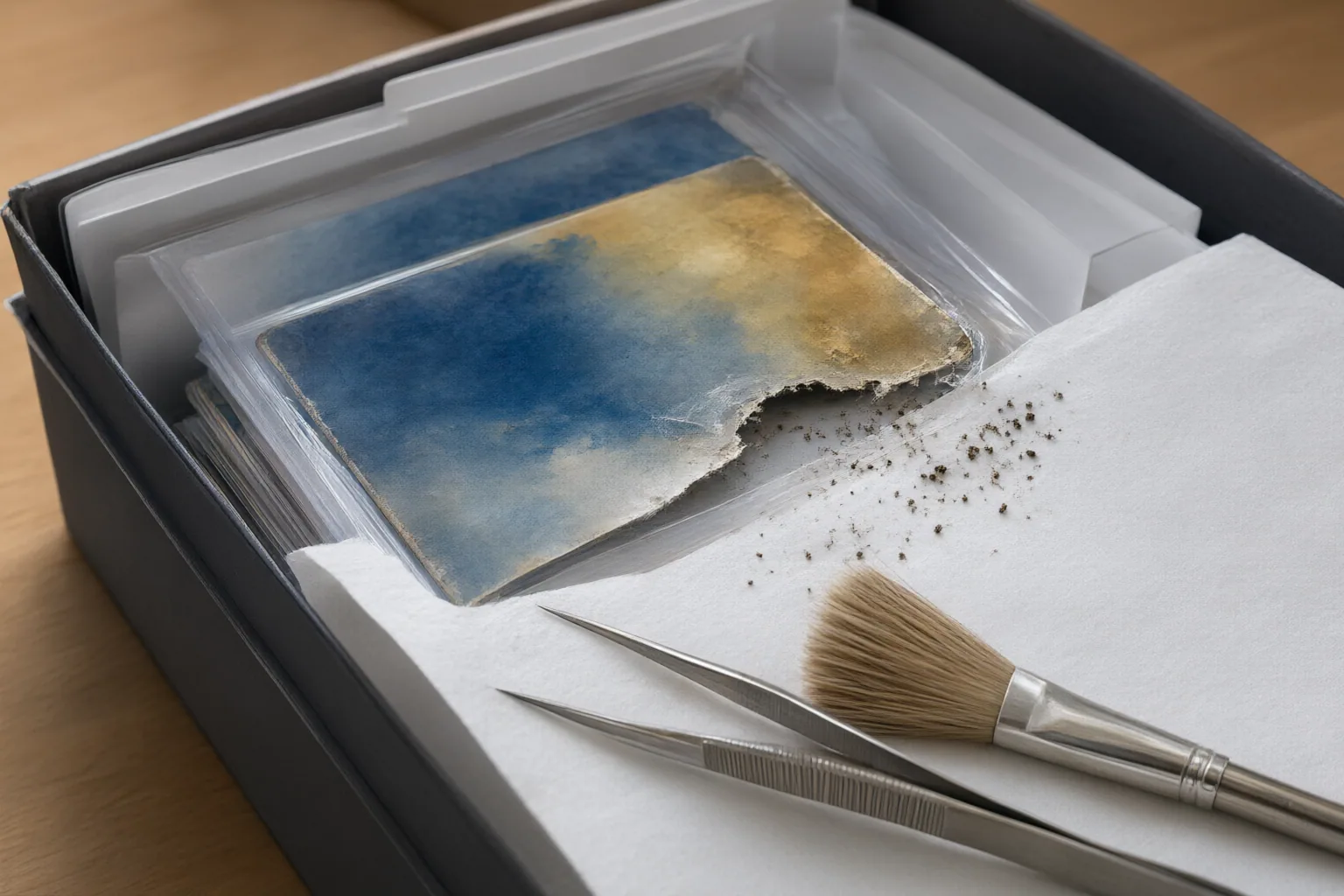
A hole, chewed edge, or grazed surface does not by itself prove that pests are currently active. Damage can be historical, and some pests that feed on paper or other cellulose-based material may not leave immediately obvious visible damage.
Assess marks alongside present evidence. Examine the affected items, their containers, adjacent shelving, and concealed or rarely disturbed spaces for remains, frass, droppings, damaged packaging, or other changes. Record where each sign appears and its condition so later observations can be compared with the first inspection.
Continued inspection and monitoring are more reliable than a conclusion based on appearance alone. New evidence or repeated findings may help clarify the extent of activity, while an unchanged old mark should not automatically be presented as proof of an active infestation.
How collectors should respond
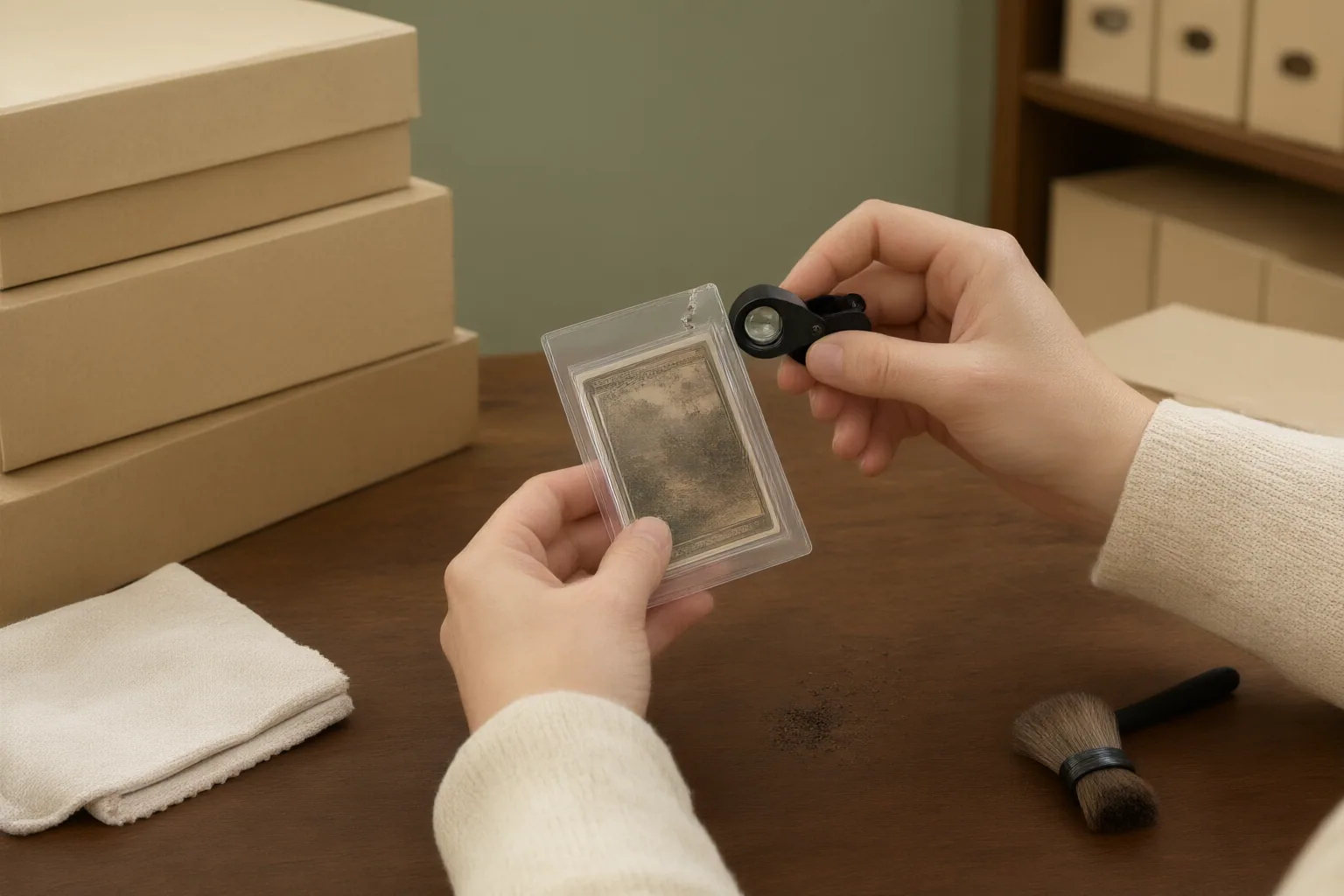
Begin with a methodical inspection of the affected cards and the wider storage area. Check sleeves, boxes, bins, cupboards, shelving, floors, and gaps behind or beneath furniture. Look for evidence that could help indicate what kind of pest may be present and how widely the signs are distributed. Avoid assuming that the first damaged item marks the full extent of the problem.
Inspect containers as carefully as their contents. Cracks, holes, or other damage can create entry points. Carefully remove dirt and debris, and replace compromised containers rather than returning a collection to packaging that remains open to access.
Next, address conditions that could favor pests. Reduce avoidable debris and examine undisturbed spaces that may provide shelter. Consider whether the storage environment supplies suitable temperature or humidity alongside food and shelter, without claiming that any single condition proves the cause.
Keep a written record of the date, locations inspected, evidence observed, containers replaced, and housekeeping or environmental changes made. Then monitor the area for further signs. This prevention-monitoring-control cycle reflects integrated pest management guidance, which treats pest control as an ongoing, documented strategy whose actions and results should be reviewed regularly.
Conclusion
Protecting stored cards is an ongoing process, not a one-time check. Prevention, regular inspection, monitoring, and documentation make it easier to notice change without mistaking old damage for current activity. Containers and the surrounding storage area matter alongside the cards themselves.
Inspect your cards, containers, shelving, cupboards, and concealed gaps now. Photograph or write down what you find, replace damaged containers, correct avoidable debris or storage problems, and schedule a follow-up inspection so you can compare later evidence with today’s record.
Disclosures and limitations
- This article was prepared with AI assistance using only the supplied research package and its identified sources.
- The evidence concerns paper archives and stored collections generally; it is applied cautiously here as collection-care guidance for trading-card storage. No products or affiliate recommendations are included.
Related reading
Sources
- Integrated Pest Management (IPM) for paper archives — Archives & Records Association — Archives & Records Association
- Pest Prevention Strategies for Stored Collections Success – Watch and Gather — Watch and Gather