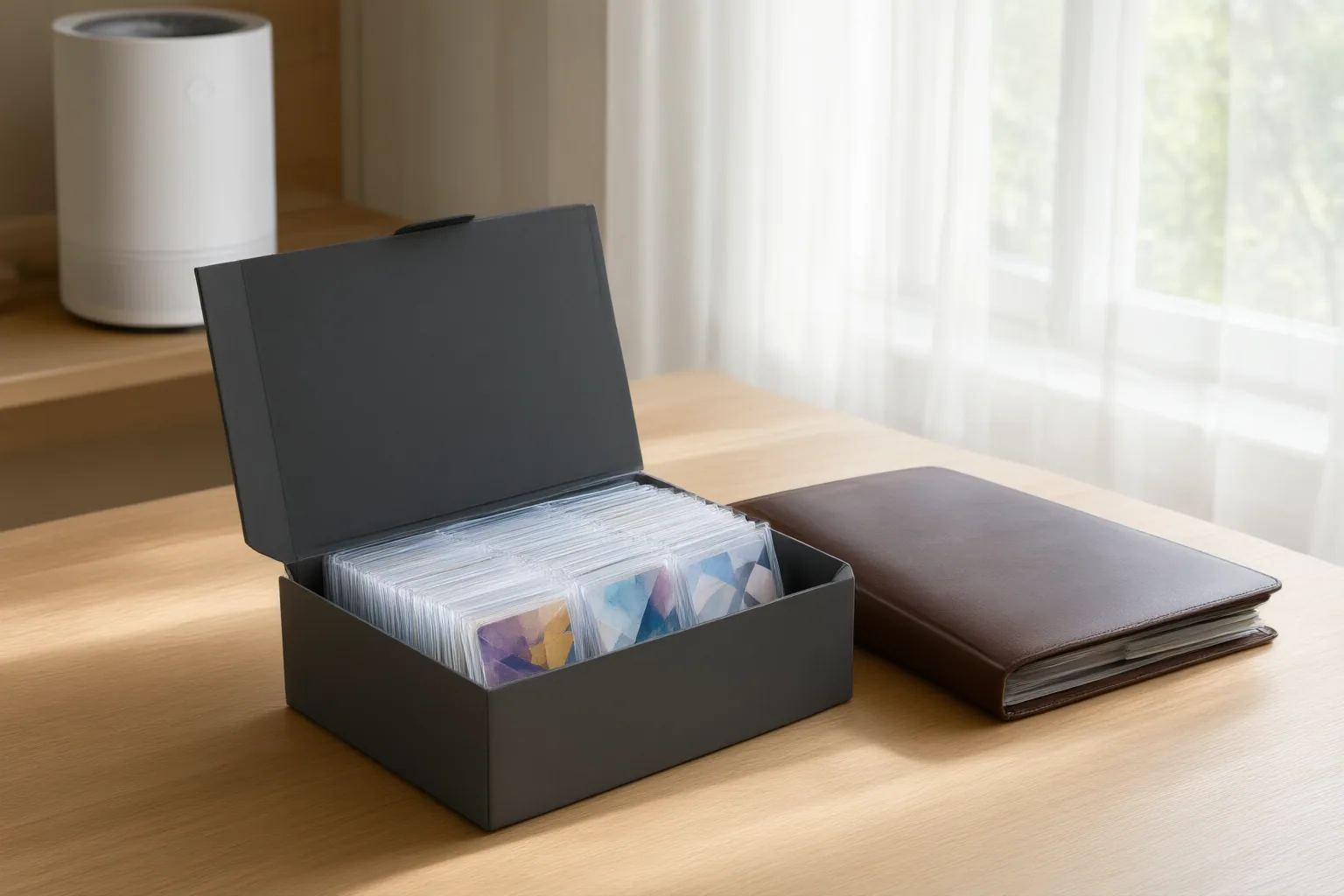
Smoke can move through airflow and ventilation pathways, so distance from a fire or a clean-looking storage room does not rule out possible exposure. Collectors should document the circumstances, avoid assuming that one cleaning method fits every incident, and seek qualified advice when contamination is serious or uncertain.
How smoke can reach a card collection
Smoke is not a single substance. The supplied fire-remediation source describes it as a mixture of solid particles, liquid droplets and gases. Its composition—and therefore the residue it leaves—depends on factors including combustion temperature and the materials burned.
Contamination is not necessarily confined to the room containing the fire. Pressure differences and heating, ventilation and air-conditioning pathways can transport smoke into other rooms and building systems. Another supplied source reports that smoke-related volatile organic compounds and residues may persist in indoor air and on surfaces, including furniture, carpets, walls and ventilation systems.
For a collector, this means the location of stored cards should be considered alongside possible airflow routes. Cards kept away from visible flames cannot automatically be treated as unexposed. However, the supplied evidence concerns post-fire environments rather than controlled testing of trading cards, so it does not establish how a particular card, sleeve, box or other storage material will respond.
Why a visual check is not enough
A clean appearance provides only limited information. According to the supplied sources, smoke contamination can involve visible deposits as well as less obvious gases and volatile compounds. Residues may remain on indoor surfaces or within furnishings and ventilation systems after the immediate incident.
The source discussing post-fire analysis says that contaminant type and concentration cannot be established reliably from visible residue alone. It identifies professional VOC analysis as one method for identifying and quantifying volatile contaminants. That does not mean every suspected exposure requires testing, but it shows why appearance alone cannot provide a complete assessment after a serious event.
Material structure also matters. One source explains that porous materials can absorb volatile compounds, meaning surface cleaning may not resolve contamination or odour held within the material. The research does not test trading cards specifically, so this principle should not be converted into a claim about a card’s condition or into a universal cleaning instruction.
A cautious response after suspected exposure
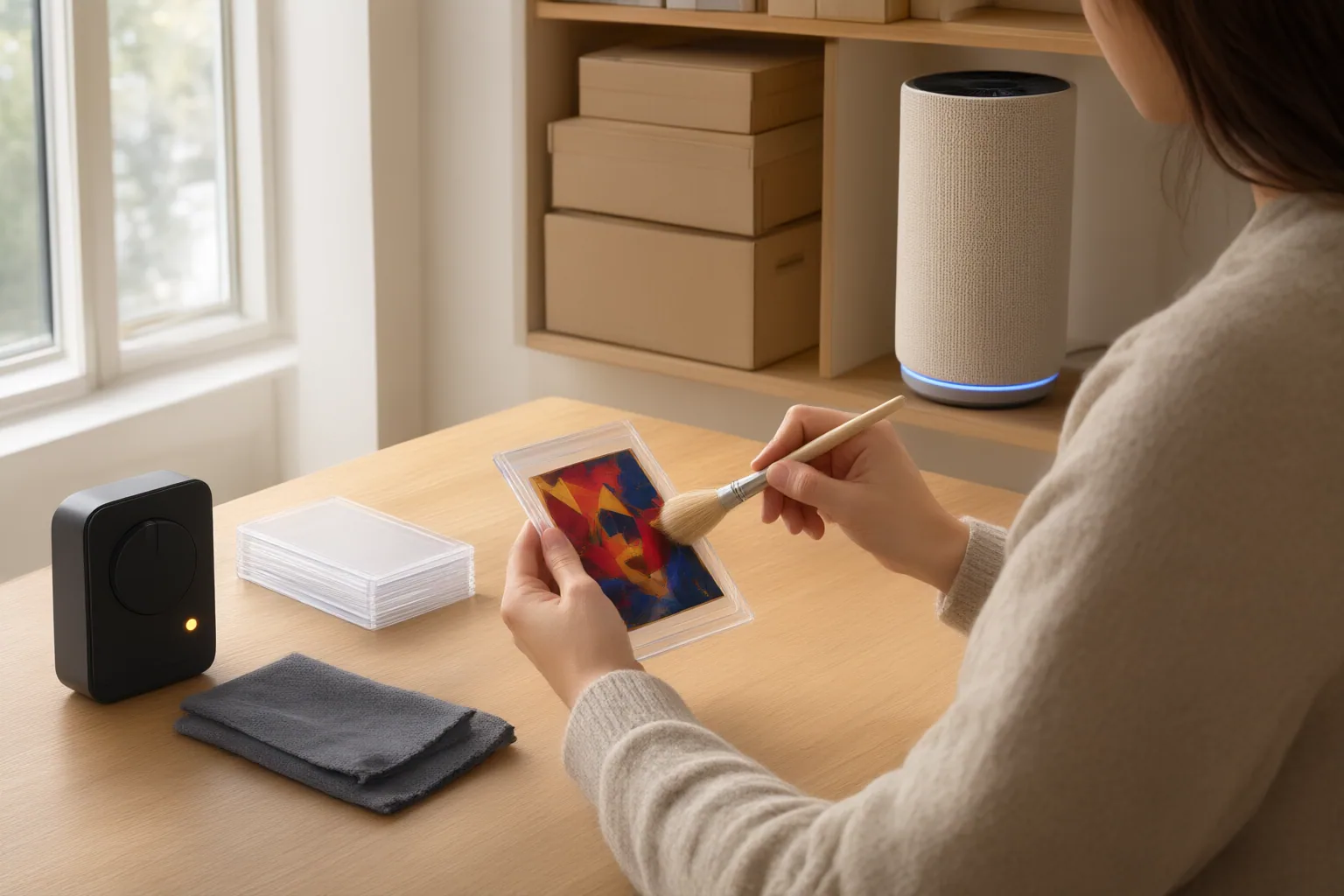
Begin by recording what is known rather than choosing a treatment immediately. Note the source of the smoke, which rooms were directly affected, whether ventilation or other airflow routes connected those rooms to the collection, and exactly where the cards were stored. Record visible deposits or odour-related changes without treating their presence or absence as proof of the contamination level.
Keep uncertainty explicit. Different burned materials and combustion conditions can create different mixtures of particles, droplets, gases and residues. A response that appears suitable in one incident therefore cannot be assumed to suit another. The supplied research does not evaluate card sleeves, storage boxes, cleaning products or treatment techniques, and it offers no basis for promising that a particular method will remove contamination without affecting a card.
When exposure may be extensive, persistent or difficult to characterise, an appropriately qualified contamination or conservation professional can assess the situation in context. Professional VOC analysis may help identify and quantify volatile contaminants after a serious incident, according to one supplied source. Until suitable advice is available, avoid improvising an unsupported treatment or repeatedly handling cards merely to check them. Preserve a written record of storage conditions, possible airflow paths and observed changes so that any later assessment starts with clearer evidence.
Conclusion
Neither distance from the smoke source nor a clean-looking card rules out exposure, because contaminants can travel through indoor airflow and may not be visible. At the same time, these sources do not establish that any particular card is contaminated or prescribe a card-specific treatment. Record where and how the collection was stored, map plausible ventilation or airflow routes, and minimise unnecessary handling if serious contamination is suspected. When the extent or nature of exposure remains uncertain, consult an appropriately qualified contamination or conservation professional instead of applying an unverified cleaning method.
Disclosures and limitations
- This article was prepared with AI assistance from the supplied research package and approved content plan. Its factual claims rely on two commercial fire-remediation sources, not independent trading-card studies or official grading-company guidance.
- No products or affiliate offers are recommended here. The evidence does not test trading-card storage or cleaning methods, and the article should not be read as authentication, grading or treatment advice for a specific card.
Related reading
Sources
- Smoke Damage Restoration: Methods and Best Practices — National Fire Restoration Authority
- The Hidden Dangers of Smoke Residue After a Fire: Why VOC Testing and Analysis Are Essential | Rarefied Air Environmental, Inc. — Rarefied Air Environmental, Inc.