
A provenance gap does not automatically establish that a card is inauthentic, but it leaves part of its history unsupported. Before buying, separate authenticity evidence from ownership records, confirm that each document refers to the specific physical card, and treat any unexplained interval as uncertainty rather than filling it with assumptions.
What a Chain of Custody Can—and Cannot—Show
Provenance is the documented history of an object: its origin, previous owners, and condition at significant points. Authentication answers a different question—whether the object is genuine. Evidence supporting one conclusion does not automatically establish the other.
For a collectible card, a chain of custody can show the history supported by available records. It cannot establish undocumented transfers or owners merely because the current seller provides a plausible account. A gap should therefore be described precisely: note the last supported event, the next supported event, and what remains unknown between them. Do not interpret an incomplete history as proof of wrongdoing, but do not present it as complete either. This distinction helps buyers assess the evidence without overstating what it proves.
Evidence to Request for the Specific Card
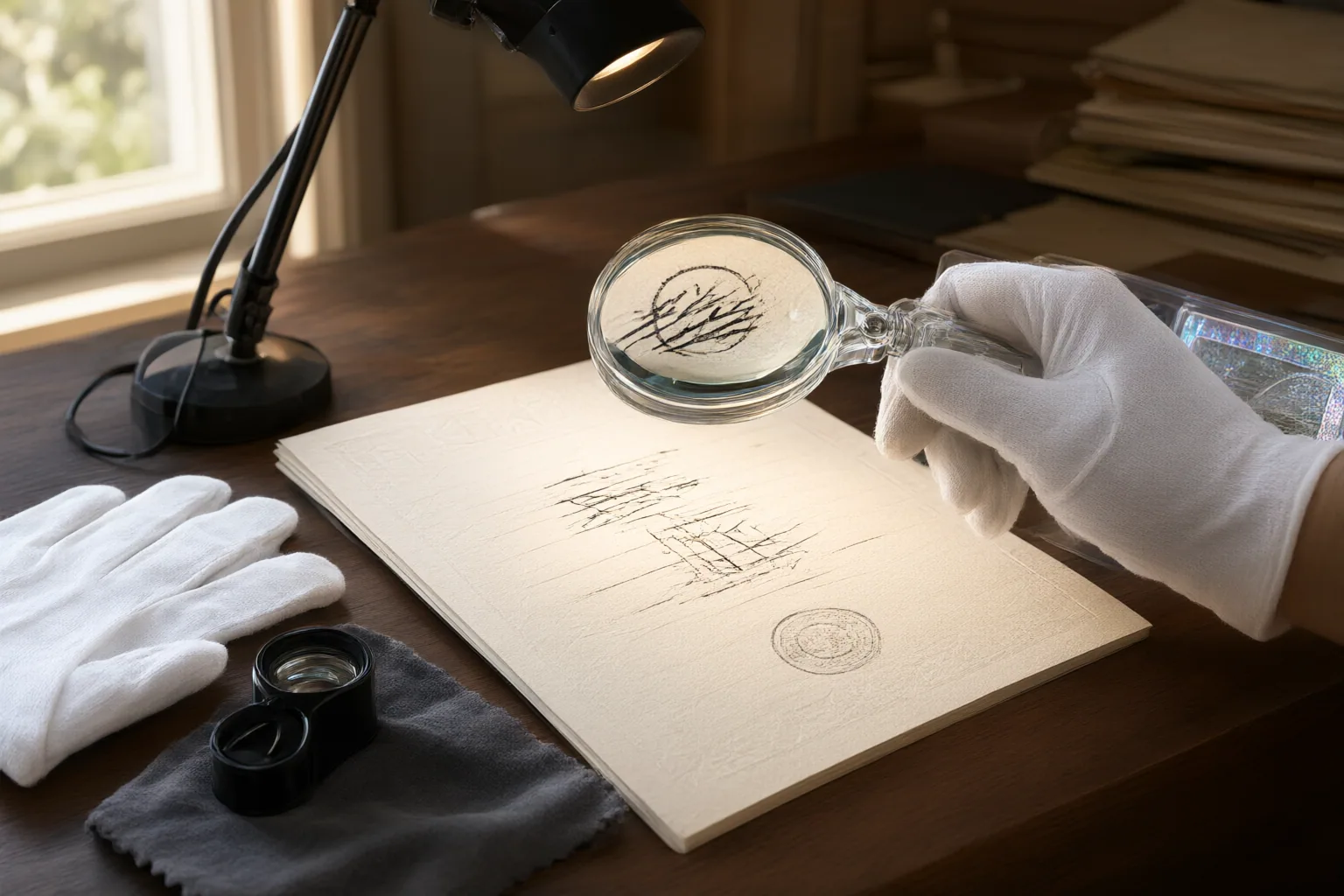
Ask the seller for records covering the card’s claimed origin, previous ownership, and condition at meaningful stages. Relevant material may include dated ownership records, condition documentation, photographs or other media, metadata, and any unique identifier intended to connect the record to the individual object.
The critical question is whether each record identifies this physical card rather than only its general card type. Compare identifiers and visible details wherever the supplied material permits. If a document cannot be connected to the individual card, record that limitation instead of treating the document as item-specific provenance.
Alliance Authentic and CollectorLINK each describe commercial systems that connect physical collectibles with persistent digital records. CollectorLINK says its system records ownership, origin, provenance, media, and metadata after professional authentication. These descriptions explain how their respective systems are intended to work; they do not independently demonstrate that every entry is accurate or that every ownership transfer was recorded. A digital record should consequently be examined as part of the evidence, not treated as automatic proof of a complete history.

How to Examine an Undocumented Interval
Arrange the supplied records in chronological order. For each entry, note the date, identified holder or event, condition information, media, metadata, and item identifier. Then locate the last documented holder before the gap and the first documented event after it.
Compare the records on both sides. Check whether their identifiers consistently point to the same physical card and whether their condition descriptions and images are compatible. A difference is a question to investigate, not a licence to invent an explanation. Ask the seller what transfer or custody events occurred during the missing interval and request any supporting records available for those events.
Keep the seller’s explanation separate from documentary support. If no record resolves the interval, write down exactly what remains unknown—for example, an unidentified holder or an unrecorded transfer. The supplied sources describe general provenance concepts and commercial record systems, not a trading-card-specific procedure for resolving such gaps. Your review can identify the strength and limits of the available trail, but it cannot reconstruct missing events without evidence.
Conclusion
Judge authenticity evidence and ownership history separately. Prefer records tied to the individual physical card, compare them for chronological continuity and consistent identifiers, and preserve a written list of unanswered questions. Commercial provenance systems may organise useful records, but their publishers’ descriptions do not establish that a history is complete.
Because the available sources provide general provenance concepts rather than a card-specific verification standard, avoid treating this process as a guarantee. Before buying, request the item-specific record trail, review each link, document every unresolved gap, and proceed only if the remaining uncertainty fits your collecting standards.
Disclosures and limitations
- This article was prepared with AI assistance from the supplied research package and approved content plan. Material claims are limited to the identified sources, which describe general provenance concepts and their publishers’ commercial systems.
Related reading
- Provenance & Ethics
- How Sellers Should Disclose a Conserved, Cleaned or Chemically Treated Collectible Card
Sources
- Why Provenance Matters in Record Collecting? — Alliance Authentic
- CollectorLINK Tokenizing Truth Empowering Collectors — collectorlink.net
- Bridging Wealth Gaps: Ethical Collecting & Investment — goldcoin.news