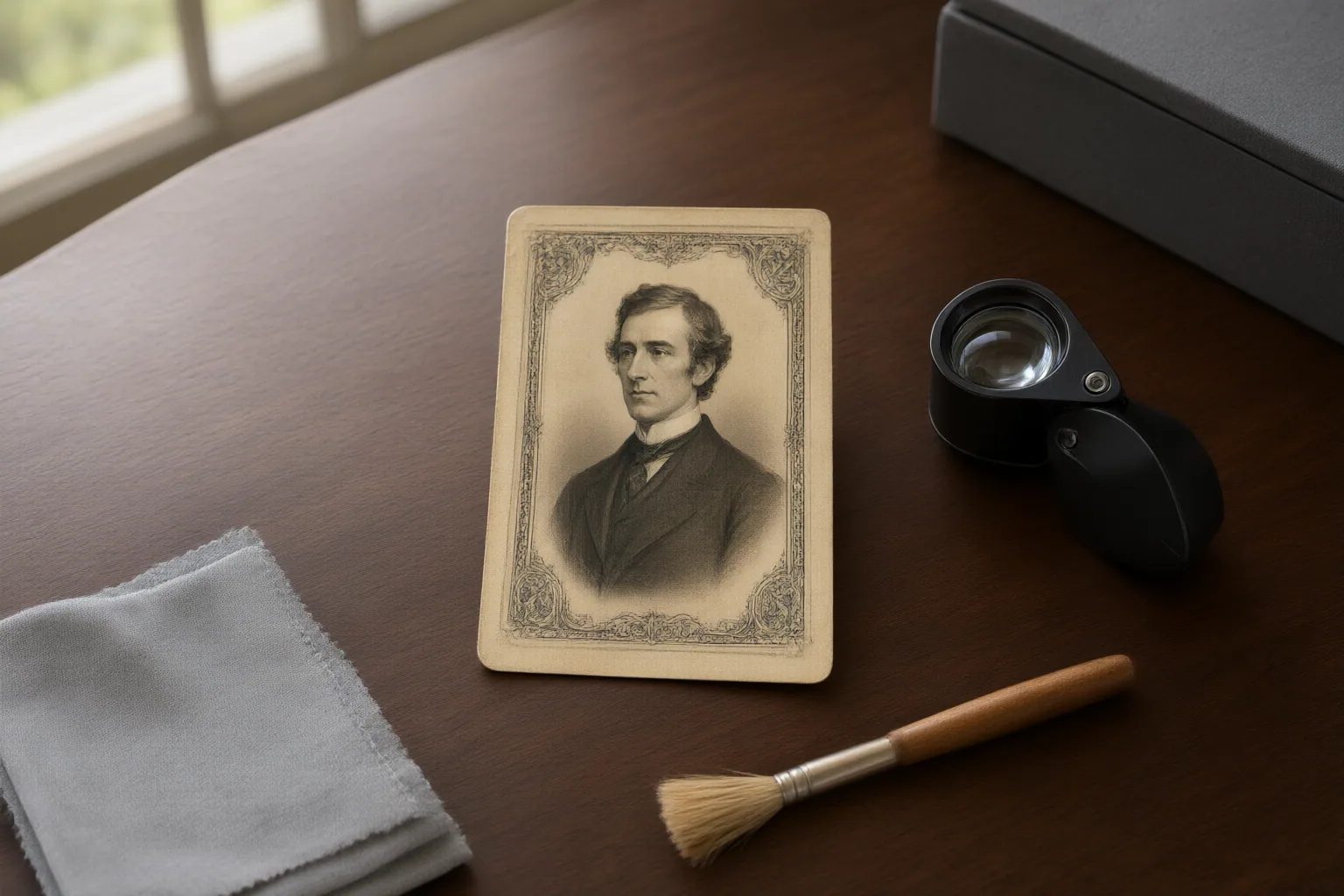
Tell buyers clearly whether a card is known or suspected to have been conserved, cleaned or chemically treated. Describe the evidence, name the method only when it is documented, and separate confirmed facts from uncertainty. The available sources provide a limited collectibles analogy, not a universal trading-card standard.
What a useful treatment disclosure should say
A practical disclosure should answer three questions: what intervention is known or suspected, what evidence supports that description, and what remains unknown. Put the statement where a buyer can see it before deciding whether to purchase, rather than relying on an unexplained term such as “restored.”
Use the most precise description the evidence permits. For example: “Prior records describe this card as cleaned; the method and materials are not documented.” If a chemical or heat-related process is documented, identify it without extending the description beyond the record. If there is only a suspicion, label it as suspected rather than confirmed.
This framework is informed by NGC’s treatment of collectible coins. Its guidance distinguishes improper cleaning, artificial colour produced using chemicals, fillers or heat, and artificial toning involving chemicals and/or heat. NGC also uses a generic “improperly cleaned” designation when the precise action is uncertain. These distinctions illustrate why the intervention and the degree of certainty should be recorded separately. They do not establish a rule, approved vocabulary or grading outcome for trading cards.

Separate conservation, cleaning and chemical treatment
Avoid treating conservation, cleaning and chemical treatment as interchangeable labels. The supplied coin guidance shows that interventions within the broader collectibles field can differ in method and consequence. NGC distinguishes light, non-destructive cleaning from harsher cleaning that damages a coin’s aesthetic appearance. It also discusses artificial colour and toning as alterations that may involve chemicals, fillers or heat.
That distinction supports a cautious description of a card. If the available evidence says only that it was cleaned, do not relabel the work as conservation. If records identify chemicals or heat, include that detail. Conversely, do not infer chemical treatment merely from an unexplained appearance. A seller can state both the broad fact and the narrower evidence: “The card is documented as treated; the record identifies heat but does not identify any chemical.”
NGC says harsh, destructive cleaning of a coin cannot be corrected through conservation and can lead to Details grading rather than a numeric grade. That is a coin-specific outcome. It should not be converted into a prediction about a card’s condition, eligibility for grading, authenticity or value. The useful lesson is narrower: disclosure should not imply that every harmful intervention is reversible.

How to disclose an unknown or partly documented treatment
Incomplete provenance calls for explicit uncertainty, not a guessed method. NGC’s generic “improperly cleaned” designation demonstrates that an unknown action can be described without falsely identifying its exact nature. For a card, suitable wording might be: “Evidence suggests prior cleaning, but the method, date and materials are unknown.” That sentence reports the limitation alongside the suspected intervention.
Keep the evidence trail distinct from the conclusion. State whether the description comes from retained records, information attributed to a prior owner, or visible evidence, and do not present one category as another. A visible change may support a cautious observation, but the supplied research does not establish that appearance alone can prove a particular card treatment.
No supplied source sets a universal card-disclosure format or explains how treatment affects a card’s grade, authenticity or value. One cited source concerns cleaning and chemical treatment of athletic tracks, not collectibles, so it supplies no card-specific guidance. Sellers should therefore avoid presenting this practical framework as an official trading-card rule or claiming outcomes the evidence cannot support.
Conclusion
Fair disclosure means identifying the known or suspected intervention, supporting it with the available evidence, and preserving uncertainty where records stop. Do not promise a grade, confirm authenticity remotely, claim that treatment is reversible, or predict value: the supplied sources establish none of those outcomes for cards.
Before publishing the listing, write and save a concise treatment statement. Record what is known, the source of that information and what remains uncertain; display the statement prominently for the buyer and retain it with the card’s provenance records.
Disclosures and limitations
- This article was prepared with AI assistance from the supplied research package and approved content plan. Its substantive collectibles example comes from official NGC guidance about coins, not trading-card-specific rules.
- No product is recommended here, and no affiliate relationship is presented. The athletic-track source was considered only to identify that it provides no relevant collectible-card guidance.
Related reading
- Provenance & Ethics
- How Collectors Should Handle Authenticity Evidence That Cannot Be Independently Checked
Sources
- NGC Details Grading | NGC — NGC
- Athletic Track Cleaning – Sports Maintenance — Sports Maintenance