
A useful trading card inventory combines consistent card details with grading status, acquisition records and precise storage locations. Start with a spreadsheet or dedicated platform, record what you know, and complete missing information as the collection is catalogued.
Choose an inventory format that fits your collection
A spreadsheet and a dedicated inventory platform can both provide a structured place to record and organise a collection. The Smarter Collector presents its spreadsheet as a customisable option, while CardInvy describes a dedicated workspace with searchable and filterable inventory views. These are capability claims from commercial publishers about their own products, not results from independent comparative testing.
Choose according to the way you expect to maintain the catalogue. A spreadsheet allows fields to be adapted to the collection, and its rows and columns can provide a straightforward overview. CardInvy says its platform can separate active items, drafts, cards undergoing grading and sold cards. Whichever format you select, use it as the main record rather than keeping important details across disconnected notes. Consistent entries make it easier to search the collection and identify gaps without relying on memory.
Decide which card details to record
Begin with fields that identify each card clearly. The Smarter Collector lists player name, team, year, brand and set among its spreadsheet fields. Depending on the collection, rookie status, autograph status and serial numbering can help distinguish cards that might otherwise look similar in a basic list. CardInvy likewise says its sports-card inventory supports team, sport, year, serial-number and autograph fields.
Raw and graded cards also need consistent condition-related records. Include a grading-company field and a grade field where applicable, leaving them blank or using a consistently defined status for raw cards. This makes it possible to filter graded cards separately without treating an ungraded card as though it has received a formal grade.
Add purchase price and purchase source to preserve acquisition context. A notes field can hold relevant collection-specific information that does not fit elsewhere. The Smarter Collector advises entering the details already known, filling gaps later and customising fields to suit the collection. That approach keeps an incomplete entry useful while avoiding guesses. Establish a consistent spelling and format for recurring values so searches and filters return complete results.

Track status, transactions and physical location
An inventory becomes more useful when it records what is happening to a card as well as what the card is. Use a controlled set of status values instead of varied free-text descriptions. CardInvy describes views for active items, drafts, cards undergoing grading and sold cards, supported by search and filtering. Similar status fields can be created in a spreadsheet, provided the same terms are used consistently.
Keep acquisition information beside the card record. Both sources describe recording purchase details, including prices and sources. CardInvy also describes sales and associated costs, allowing a record to retain transaction context after a card leaves the active collection. These records can help collectors and sellers avoid losing track of an item’s current status or the costs associated with it.
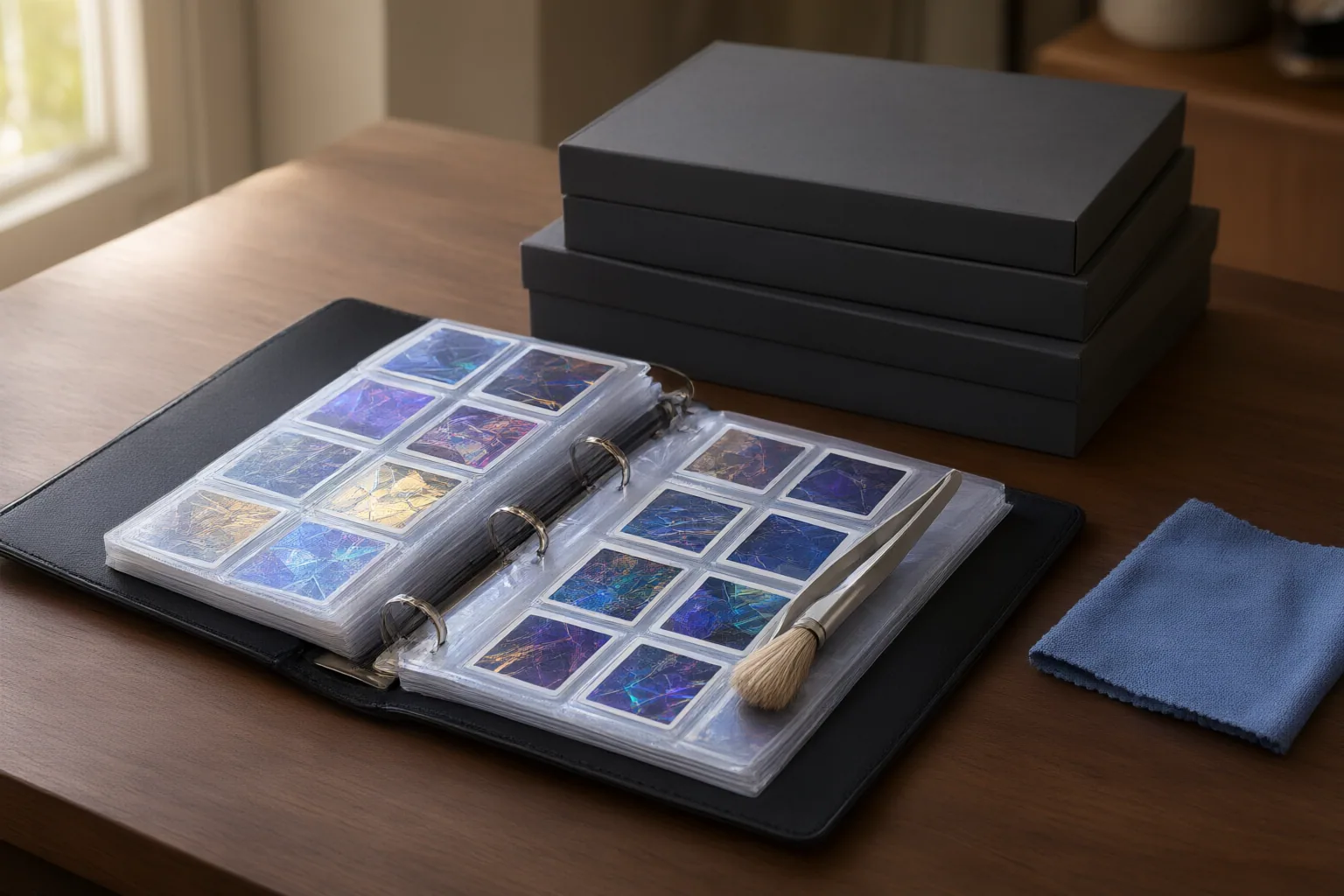
Connect the digital entry to the physical collection. The Smarter Collector includes storage location or box number as a field. Use a location label that points to a specific binder, box or other defined collection segment, then apply the same label to the physical container where practical. When a card moves, update its record promptly. Searchable identifying fields and reliable locations can help confirm whether a particular card or parallel is already owned and show where to retrieve it, reducing dependence on memory and the risk of accidental duplicate purchases.
Conclusion
A manageable trading card inventory starts with one chosen format and a stable set of fields. Record identifying details, grading information, acquisition context, status and physical location consistently. Do not delay the entire catalogue because some information is missing; enter what is known and update incomplete records later. Choose a spreadsheet or inventory platform now, define your standard fields, and catalogue one box, binder or collection segment before expanding the system.
Disclosures and limitations
- This article was prepared with AI assistance using only the supplied research from The Smarter Collector and CardInvy; their descriptions of their own tools have not been independently tested.
- The cited sources are commercial publishers. Readers should consider possible commercial or affiliate interests before choosing any inventory product or service.
Related reading
Sources
- The Only Sports Card Inventory Spreadsheet You’ll Ever Need — Smarter Collector
- CardInvy – Trading Card Inventory & Profit Tracking — CardInvy
- TCG Retail Hub — Trading Card Inventory Intelligence — TCG Retail Hub