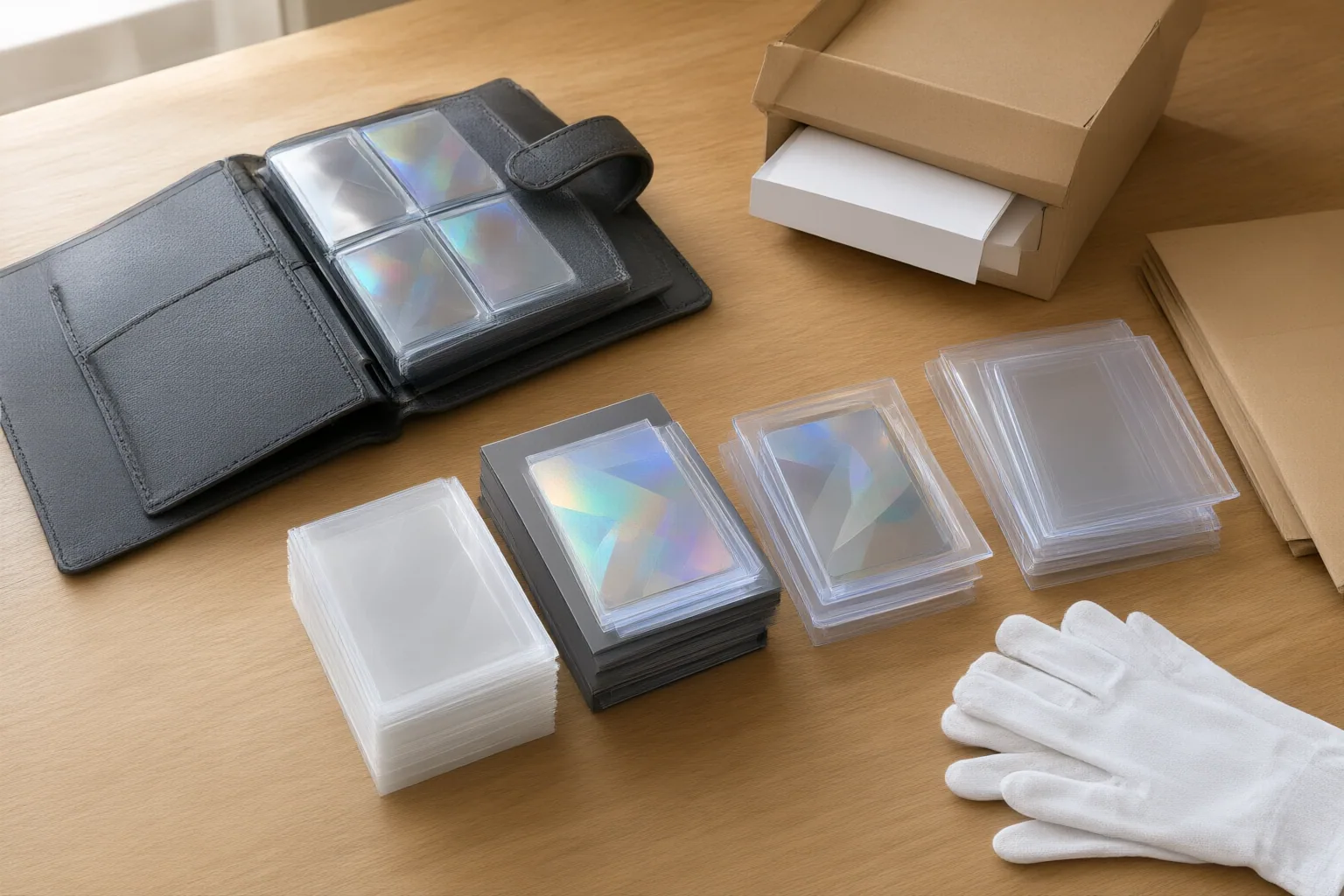
Choose trading card sleeves by checking the card’s dimensions and thickness, then matching the sleeve and any supporting holder to whether the card will be played, stored, displayed, shipped or prepared for grading submission.
Start with card and sleeve size
Sleeve labels are not universal measurements, so compare the card’s dimensions with the manufacturer’s specifications. As brand-specific examples, Dragon Shield says its Standard Size sleeves accept cards up to 63 × 88 mm, while its Japanese Size sleeves accept cards up to 59 × 86 mm. Ultra PRO describes 2.5 × 3.5 inches as the standard size of most modern baseball cards.
Aim for a fit that holds the card without forcing it into place. An overly tight sleeve can put pressure on edges or corners during insertion, while excessive room can let the card shift inside a binder, box or toploader. Check thickness as well as height and width. Ultra PRO specifies that its regular 3 × 4-inch toploader accommodates standard cards up to 35pt; thicker relic, memorabilia, patch or autograph cards may require a specialized holder rather than a standard format.
Match the sleeve setup to the card’s use
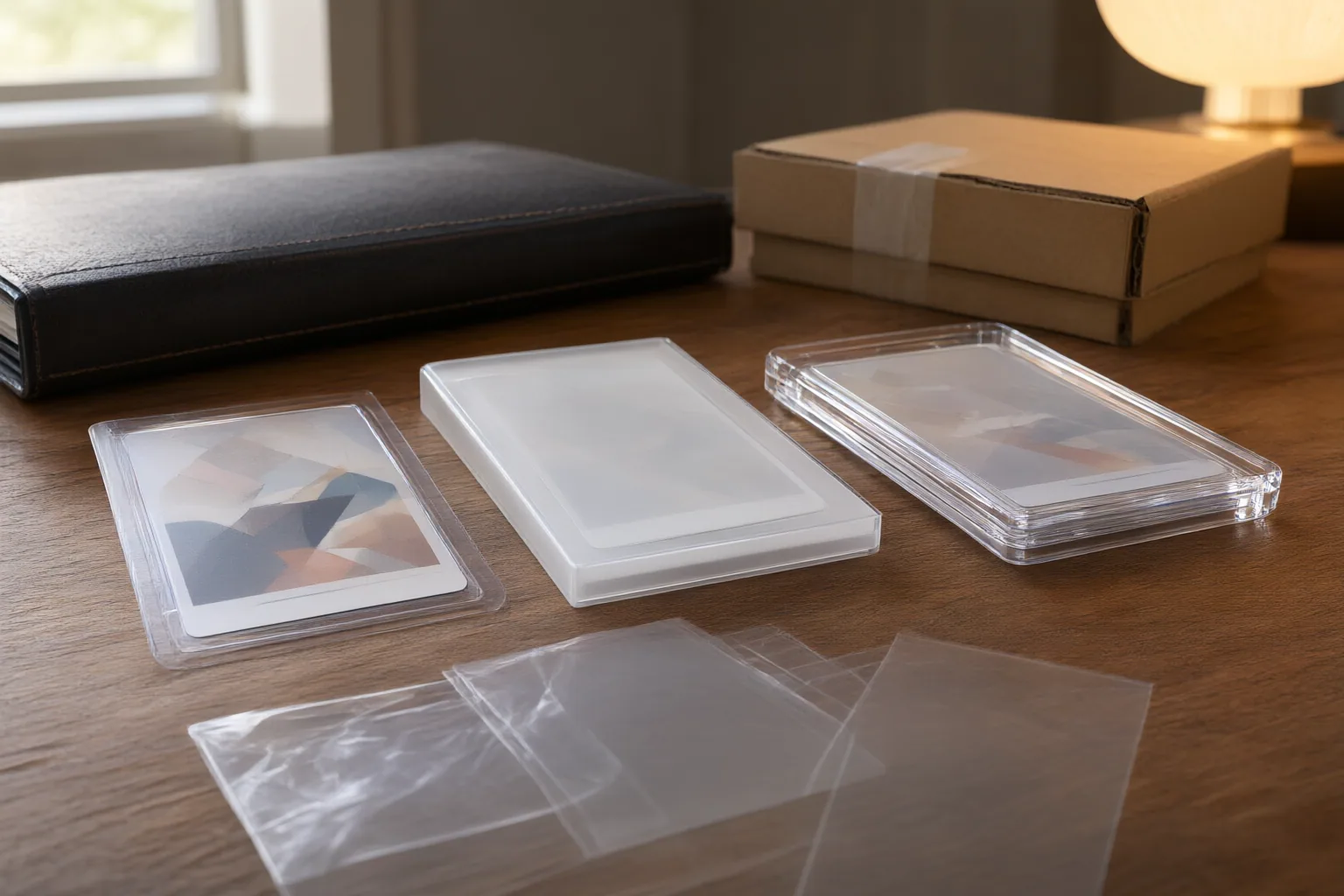
For played decks, balance coverage with comfortable handling. An inner sleeve fits closely around the card and can sit inside a normal sleeve; an outer sleeve goes over an already sleeved card. Extra layers can increase protection from surface contact, but a thicker deck may become harder to shuffle or fit into storage.
Competitive play adds another consideration: sleeve backs must be sufficiently opaque and consistent so card identities cannot be inferred. Dragon Shield says visible card backs can lead to disqualification and identifies its Matte Dual sleeves as fully opaque. This is a product-specific statement, not comparative testing across brands.
Binder pages can organize stored sets, but bulky sleeve combinations may tighten the pockets and create pressure if the binder is overfilled. Cards intended for display or shipping may need a sleeve combined with an appropriately sized rigid holder. Semi-rigid holders are another option for cards being prepared for professional grading submission. In every case, confirm that each layer fits without squeezing the card.
Know when a sleeve needs rigid support
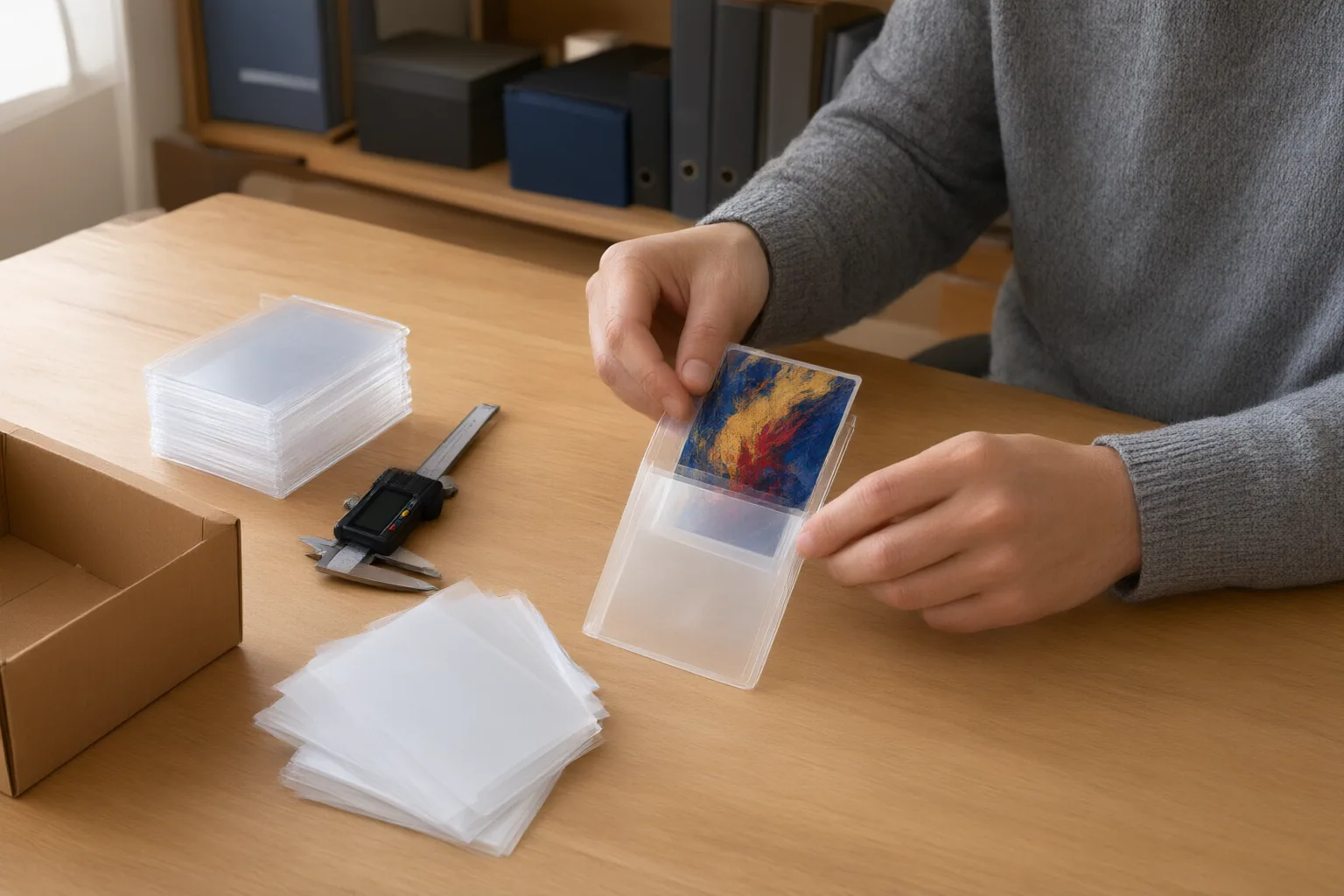
A soft sleeve helps create a barrier against surface scratches and handling wear, but it does not provide the structural support needed to resist bending or pressure. When those risks matter, pair the sleeve with a correctly sized rigid or semi-rigid holder rather than treating the sleeve as complete protection.
Ultra PRO recommends putting a card in a soft sleeve before inserting it into a toploader so the card does not contact the rigid holder directly. Check both card thickness and holder capacity before insertion: a standard holder rated up to 35pt should not be assumed to fit a thicker specialty card. For those cards, use a holder made for the required thickness.
The destination also matters. Binder pages support organized storage, regular toploaders add rigidity for compatible standard cards, and semi-rigid holders may suit grading-submission preparation. None should be overfilled or forced around a card that exceeds its stated capacity.
Conclusion
Use a short checklist before sleeving a collection: verify each card’s dimensions and thickness, choose the sleeve layers for its intended use, add correctly sized structural support where bending or pressure is a concern, and avoid overfilling binders or storage.
Material claims also require checking. Dragon Shield says its own sleeves are archival-safe and free of PVC and acid, but that statement should not be generalized to every manufacturer. Review the specifications for the exact sleeve and holder being considered. Measure the card, decide whether it will be played, stored, displayed or shipped, and confirm every component’s fit before protecting the rest of the collection.
Disclosures and limitations
- This article was prepared with AI assistance using only the cited manufacturer and seller materials supplied in the research package; product-specific claims are attributed and do not represent independent comparative testing.
- No individual products, current prices or affiliate offers are recommended here. Readers should verify current specifications before purchasing sleeves or holders.
Related reading
Sources
- Protecting Your Collection – Baseball Cards — support.ultrapro.com
- Card Sleeves — Dragon Shield
- Amazon.com : trading card sleeves — amazon.com
- Best Sleeves for Trading Cards | Unarity — Unarity
- Best Sleeves for TCG Cards (2026 Edition) — Thornberry Media LLC
- The Ultimate Trading Card Sleeves Guide: Master TCG Protection — TCG Protectors
- A Top To Bottom Guide on Toploaders — Ultra PRO International
- Amazon.com : Collectible Trading Card Protective Sleeves — amazon.com