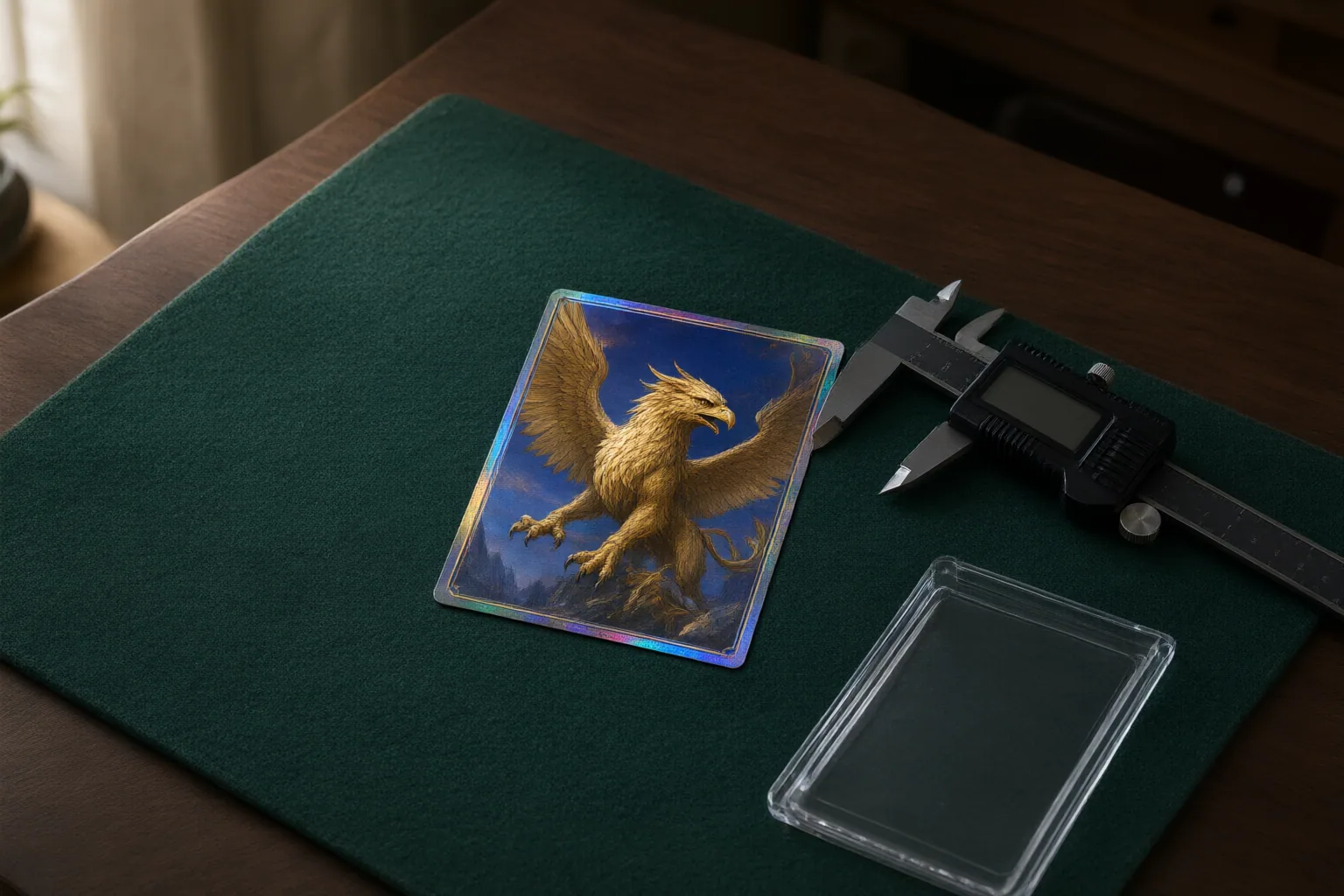
Replica and custom cards should be identified before purchase, with their status stated prominently in the listing title and opening description and made visible in product images. Where a sale involves blind boxes, live streams or similar formats, provenance and transaction records can provide additional traceability.
Disclose the Card’s Status Before Purchase
A buyer should not have to search through a listing to discover that a card is a replica, proxy, playtest card or custom creation. PrintMTG advises sellers of proxy or playtest cards to put that status in the listing title and repeat it in the first line of the description. This approach gives buyers the relevant distinction before they make a purchasing decision.
Disclosure buried later in a description is easier to overlook. Use direct language that describes what the item is rather than wording that could imply it is an officially issued collectible. The same description should remain consistent throughout the listing. These recommendations come from a commercial proxy-printing source and should be treated as practical listing guidance, not as universal legal advice or a substitute for checking the rules of the relevant marketplace and jurisdiction.

Make the Difference Visible in Text and Images
Written disclosure and photographs should communicate the same message. PrintMTG recommends making proxy or playtest status unmistakable in product photos as well as in the title and opening description. A clear text statement can be missed if the images appear to present the card as an ordinary official issue, so each part of the listing should reinforce its non-official status.
The source also distinguishes between a proxy presented as a clearly labelled stand-in for casual use and a counterfeit presented to look authentic and pass as genuine. That distinction depends on transparent presentation: a seller should not rely on a vague reference, an easily missed disclaimer or images that obscure the nature of the item.
Clear disclosure does not authenticate a card. Buyers should therefore avoid treating listing language or photographs alone as proof that any particular collectible is genuine. The practical objective is narrower: make sure a replica or custom card cannot reasonably be mistaken for an officially issued item because its status was hidden or inconsistently presented.
Preserve Provenance and Transaction Records
Complex sales formats can require more than a conventional listing description. A Law.asia discussion of custom blind boxes says sellers should disclose card provenance and warns that inadequate provenance disclosure may lead to allegations of false advertising and insufficient transparency. Provenance information can help buyers understand where a custom card came from and how it is being represented.
For the live-stream trading-card activities covered by that article, the authors recommend truthful presentation throughout the unboxing process. They also recommend comprehensive records that allow sales and draw results to be traced. In practice, preserving the relevant provenance details and transaction history can reduce ambiguity and give buyers and sellers a clearer record to examine if a dispute arises.
The scope of that source matters. Its legal discussion concerns live-stream trading-card unboxing, cited rules and cases in China. It does not establish the requirements of every marketplace or jurisdiction, and the supplied research does not identify specific UK marketplace rules for replica or custom cards. GB readers should therefore treat these points as transparency and record-keeping practices, not as a definitive statement of UK law.
Conclusion
A practical disclosure process has three parts: identify the card’s non-official status before purchase, show that distinction consistently in both text and images, and retain provenance or transaction records when the sales format makes them relevant. Together, these measures help separate a disclosed casual-use stand-in or custom creation from an item presented as authentic.
Before listing or buying a replica or custom card, review the title, opening description and photographs, then check whether relevant provenance and transaction records are available. If any of those elements leaves the card’s status unclear, seek clarification before proceeding.
Disclosures and limitations
- This article was prepared with AI assistance using only the supplied research from PrintMTG and Law.asia; the commercial nature and jurisdictional limits of those sources have been identified in the text.
- No product recommendation or affiliate offer is included. The article provides general disclosure guidance, not authentication or jurisdiction-specific legal advice.