
Fair card trades with children begin with shared understanding, an unpressured choice, and protection for cards that carry special importance. Identify and inspect both cards together, discuss what each participant is giving up, and pause for trusted-adult approval when appropriate.
Put understanding and free choice before the deal
A fair exchange is not simply one that gets completed. Each participant should understand what is being offered, what will be received, and that saying no is acceptable. This matters especially when an adult is trading with a child, because differences in knowledge, confidence, or negotiating experience can affect the conversation.
Trading can give children opportunities to explain decisions, negotiate, and describe what they consider fair. It can also build communication skills and trust through exchanges with family and friends. Those benefits depend on a process that values the relationship more than securing a particular card. Use clear language, avoid pressure, and allow enough time for questions or reconsideration.
The supplied guidance focuses mainly on children. Applying the same principles to another person who may need additional support is an editorial recommendation, not a source-established safeguarding rule. In practice, slow the discussion down, check understanding in plain language, and preserve a genuine option to decline or seek help from someone trusted.

Check the cards and the proposed exchange together
Before agreeing to a trade, place both cards where everyone can examine them and follow a simple checklist:
- Identify each card by its name and set.
- Look at both cards and agree on their condition.
- State clearly which card each participant would give and receive.
- Ask whether either card would be missed afterwards.
- Invite questions and confirm that either participant can walk away.
These checks reduce the chance that participants are discussing different cards or making assumptions about condition. Asking whether a card would be missed can also reveal personal or sentimental importance that is not obvious from its appearance.
This process does not establish an objective market value, and the supplied sources do not provide a universal formula for equal value. Its purpose is narrower: to make the proposed exchange understandable and expose disagreements before ownership changes. If identity, condition, or the terms remain unclear, pause rather than pushing for an immediate decision.
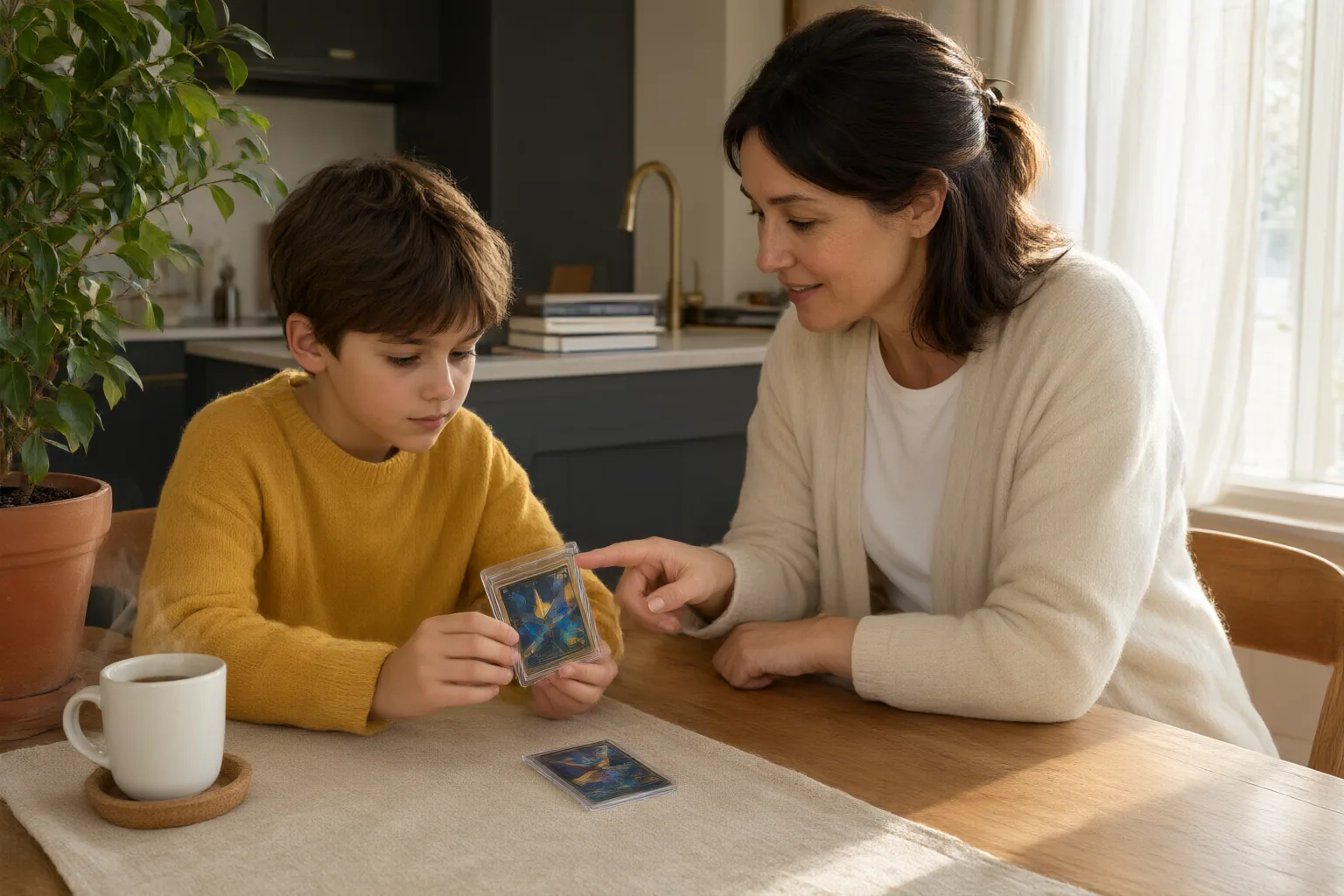
Use adult approval and protect special cards
Some cards should not enter casual trading at all. The guidance recommends keeping very valuable cards outside casual play and requiring adult approval when a child views a card as a prize. The same cautious approach is sensible when a card may have unusual financial, personal, or sentimental importance that the child does not fully appreciate.
There is no universal price or age threshold in the supplied evidence. Instead, pause whenever importance is uncertain, the child seems hesitant, or the consequences are difficult to explain. A parent, guardian, or other trusted adult can help the child review the proposed exchange; their involvement should support understanding rather than create pressure to proceed.
Good storage also reduces avoidable problems. Keeping cards organised and protected in a binder, box, or other container helps keep them safe and easy to find. Separate prized or sentimental cards from the cards available for ordinary swaps. That boundary can prevent accidental loss, damage, or a trade that is regretted later.
Conclusion
Review the exchange after it happens. Identify what changed hands, ask whether both participants remain comfortable, and discuss what made the trade feel fair or unfair. The guidance specifically recommends reviewing a trade afterwards, while the broader sources present trading as an opportunity to practise decision-making, communication, and trust.
If concern emerges, focus on protecting the relationship rather than defending the transaction merely because it was completed. The supplied material is family-oriented guidance rather than legal, consumer-protection, or official safeguarding advice, so seek appropriate specialist help where a situation raises those issues.
Before the next trade, identify and inspect both cards, confirm that everyone understands the exchange and can decline without pressure, and obtain trusted-adult approval whenever a card has special value or importance.
Disclosures and limitations
- This article was prepared with AI assistance from the two supplied family-oriented and commercial guidance sources; those sources are not official legal, safeguarding, consumer-protection, or grading-company documentation.
- No product recommendation or affiliate offer is included. The article does not establish market value or replace appropriate professional advice.
Related reading
Sources
- Choose Age-Appropriate Trading Cards for Kids: A Parent's Checklist — Next Gen Cards LLC
- Benefits of Collecting Trading Cards for Kids — Buggy and Buddy