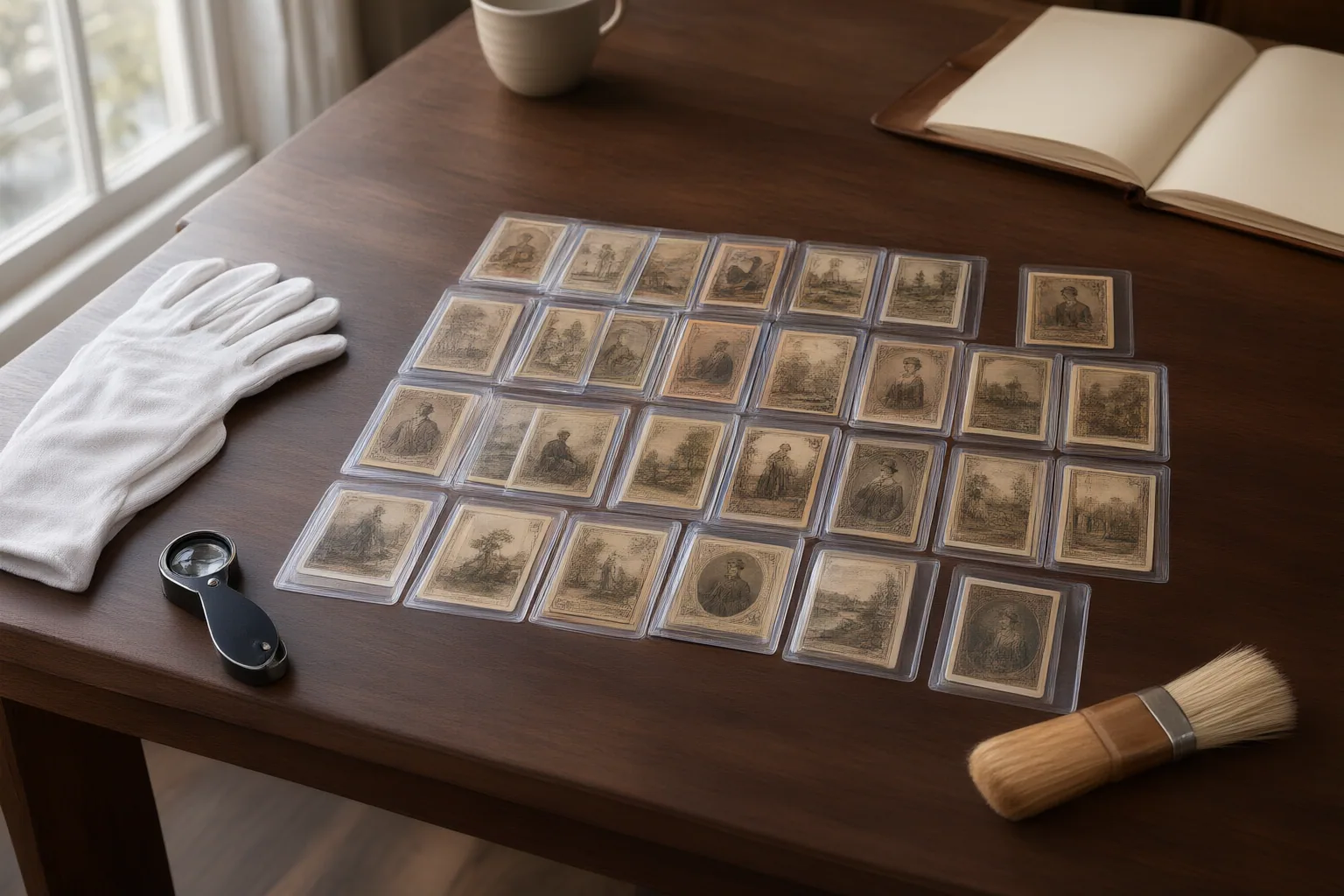
Before buying an inherited card collection, slow the transaction down: preserve its original arrangement, confirm who may sell it, create an inventory, check important cards individually, research comparable completed sales and explain every adjustment behind the offer.
Document the collection and confirm who can sell it
Begin before moving or sorting anything. Photograph the boxes, binders, notes, receipts and storage arrangement as received. Record labels and the order of items, because the collector’s organisation and paperwork may help establish provenance, family history and the scope of the collection.
Confirm who owns the cards and who is authorised to sell them. If authority, ownership or estate administration is unclear, pause the purchase until appropriate evidence or qualified independent advice resolves the issue. Material legal, tax or appraisal questions may also require suitably qualified advice.
Ask the seller to identify cards or related records with personal meaning. Keep those items outside the negotiation unless the owner makes a knowing decision to include them. Agree how the final transfer will be documented, including an inventory of what changes hands. This protects both parties from later disagreement about missing, retained or included items.
Inventory and triage without damaging evidence
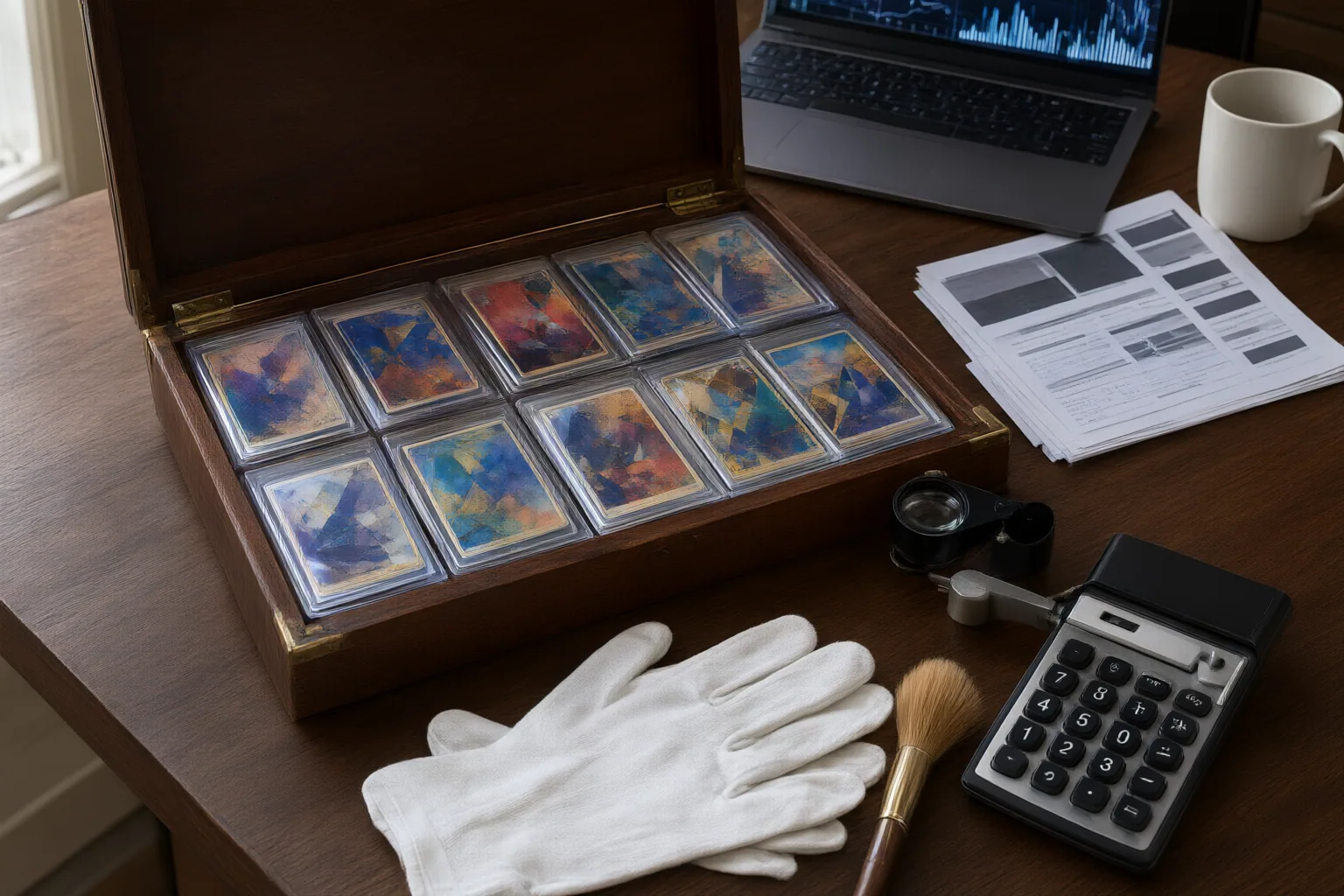
Create an inventory before assigning a price. Record enough information to distinguish cards and versions, while noting apparent condition, quantities, packaging and unresolved identification questions. A collection can contain different versions, condition levels and demand profiles, each requiring a different amount of research or resale work.
Use a first-pass triage to flag material for closer examination: graded cards, older issues, sealed products, key players or rookies, scarce parallels, autographs, and anything unfamiliar or possibly altered. These categories indicate research priorities, not guaranteed value.
Handle the cards conservatively. Do not clean them, bind them with rubber bands, repeatedly remove them from storage, open sealed products or take cards out of graded holders before their significance is understood. Those actions can cause damage or remove evidence relevant to condition and identity. Isolate vulnerable items using appropriate existing protection where possible, but avoid making irreversible changes during initial assessment. Keep uncertain cards clearly marked as unresolved rather than forcing an identification into the inventory.
Verify identity, condition and realistic value
Treat identity, authenticity, condition and grade as separate questions. Confirm the set, year, subject and exact version, including relevant parallel or reprint distinctions, before looking for price evidence. For a graded card, compare the physical holder, label, card description and stated grade with the certification record and any available images. A matching certification number alone does not resolve possible inconsistencies or tampering concerns.
Research completed sales for the same card or exact version in comparable condition. An advertised asking price only shows what a seller requested; it does not show that a buyer paid that amount. Avoid substituting sales of a different grade, parallel or version. Where comparisons are imperfect, record the mismatch and limit the confidence placed in the estimate.
Keep possible reprints, unfamiliar products, damaged cards and other unverified items outside any confident total until evidence supports their identity, authenticity, condition and realistic saleability. Separate well-supported estimates from provisional notes so uncertainty remains visible.
A purchase offer is not simply one card value multiplied by the number of cards. Its calculation may need to allow for expected selling costs, shipping, labour, authentication or grading expenses, return risk, time and unresolved uncertainty. Show these adjustments rather than hiding them inside a single unexplained discount. For significant cards, another informed opinion—or an appraisal from someone who is not bidding—can help separate valuation advice from the buyer’s purchasing interest.
Conclusion
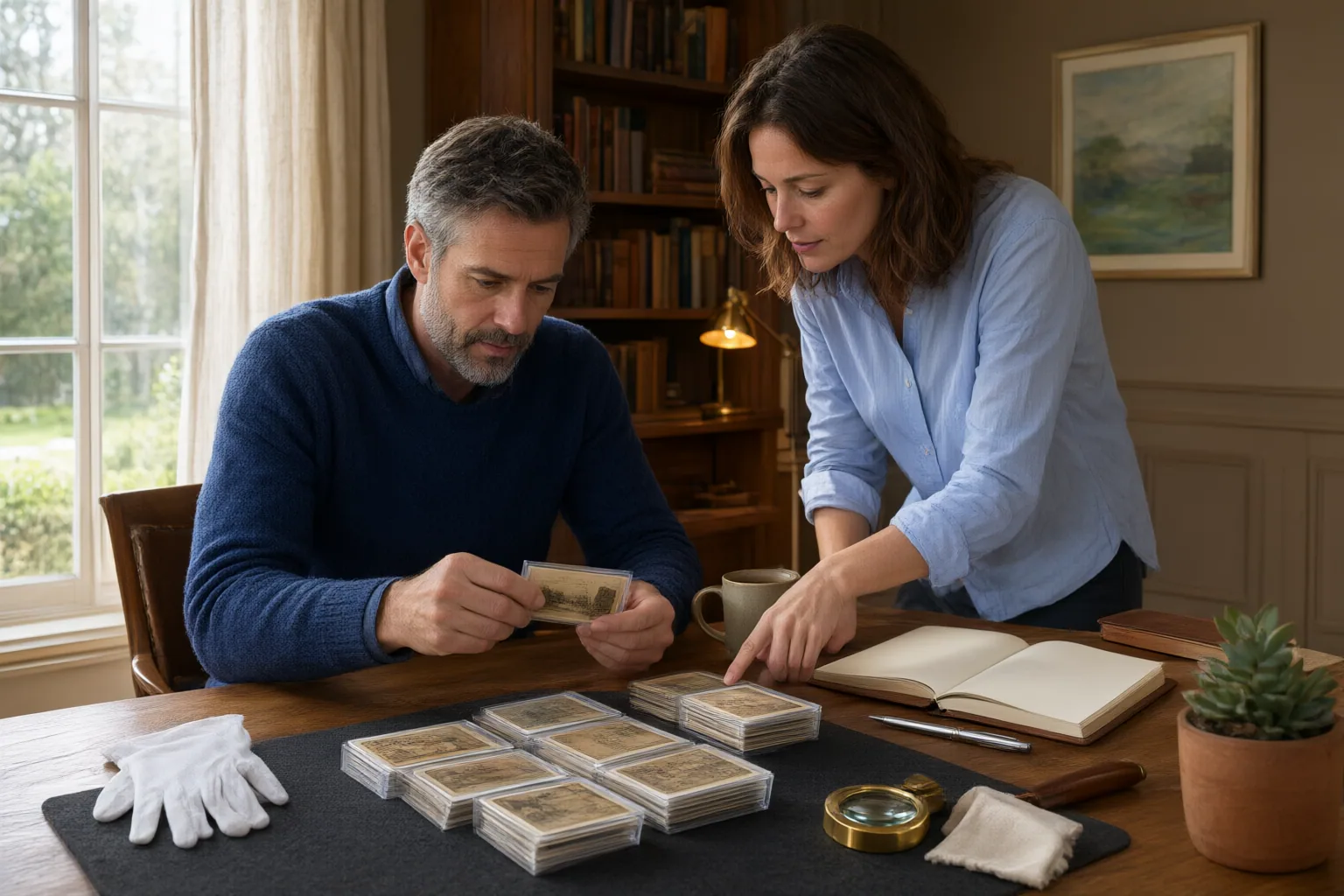
A fair purchase process gives both parties time to understand the collection. Show the seller which cards were researched, the completed-sale evidence used, the items that remain uncertain and each material adjustment in the proposed amount. Avoid pressuring the seller into a same-day decision before an inventory exists.
Where important cards or competing interests justify extra scrutiny, seek an informed opinion from someone who is not also trying to buy the collection. Before agreeing a final price, prepare and share a written inventory that lists the researched cards, unresolved items, supporting evidence and the method used to calculate the offer.
Disclosures and limitations
- This article was prepared with AI assistance from the supplied secondary commercial and editorial sources; material ownership, legal, tax, certification and valuation conclusions should be independently verified where relevant.
- No products or affiliate recommendations are included.
Related reading
- Provenance & Ethics
- How to Check Collectible Cards for Undisclosed Trimming, Recolouring or Restoration
Sources
- How to Buy Sports Card Collections | Card Collector Capital — Card Collector Capital
- Found or Inherited a Card Collection? What to Do First (2026) — HobbyCardIndex
- How to Appraise a Card Collection You Just… | ORB Trading Cards — ORB Trading Cards
- I Inherited a Card Collection. What Should I Do First? — LocalCardShopsNearMe
- I Inherited a Card Collection — What Do I Do? A Step-by-Step Guide | 5 Star Cards — 5 Star Cards
- I Inherited a Card Collection — Now What? A Step-by-Step Guide | Slabline — Slabline