A careful inspection can reveal warning signs of trimming, added colour or other restoration, but no single visual clue proves alteration. Check edges, dimensions, colour and surface texture under ordinary and angled light, use magnification, and obtain written disclosure before buying.
Separate authenticity, originality and disclosure
A genuine collectible can still have undisclosed post-production work. Buyers should therefore separate four questions: Is the underlying item genuine? Are its edges and surface original? What intervention may have occurred? Was that intervention accurately disclosed?
Added colour or finish can improve appearance while concealing wear, repairs, construction details or the surviving original surface. Likewise, trimming removes material to reduce visible damage or sharpen corners. A convincing appearance does not establish that a card remains unaltered or show how much original material survives.
The available evidence concerns general collectibles and comic books rather than collectible cards specifically. Its inspection principles can support a cautious card-buying workflow, but they do not establish card-specific dimensions, grading rules or an authentication standard. Treat observed inconsistencies as reasons to investigate and ask questions, not as a final verdict.
Inspect edges, colour and surface under changing light
Begin under ordinary, diffuse frontal light. Examine the whole card before concentrating on individual defects. Look for colour that appears unusually fresh or uniform, decoration that continues across damaged areas, or colour extending where it would not normally belong. These inconsistencies may indicate added material, although appearance alone cannot establish their cause.
Next, compare the edges and corners. Warning signs described for trimmed collectibles include a fresh-looking cut edge, uneven alteration between edges and dimensions smaller than expected for the item. Because very small trims can be difficult to see, make comparisons cautiously and do not infer a card-specific size standard that the available sources do not provide.
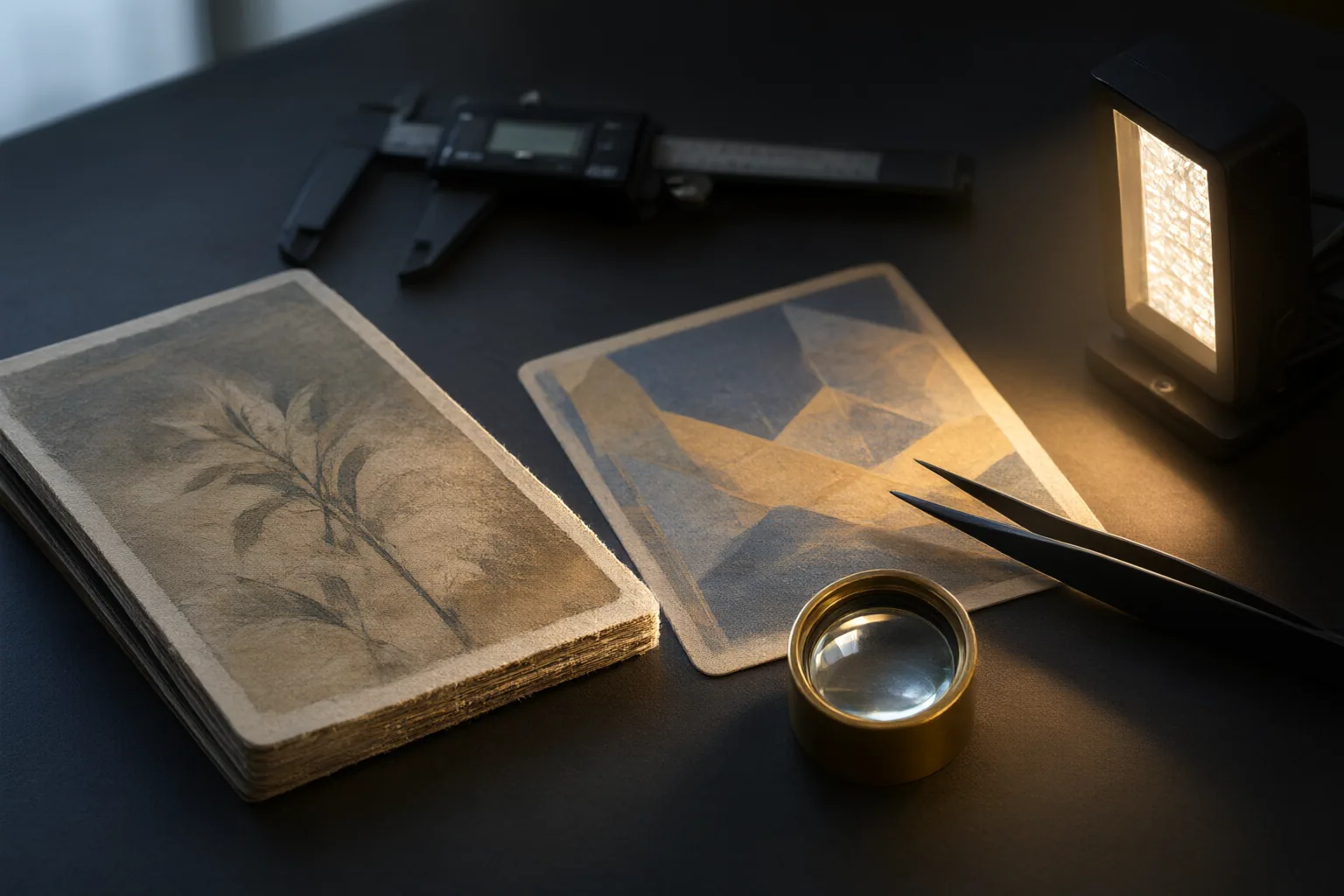
Change the lighting angle so that light travels across the surface. This raking light can make changes in surface topography easier to notice, including raised overpaint edges, brush ridges, overspray particles, filled depressions, sanding scratches and variations in coating thickness.
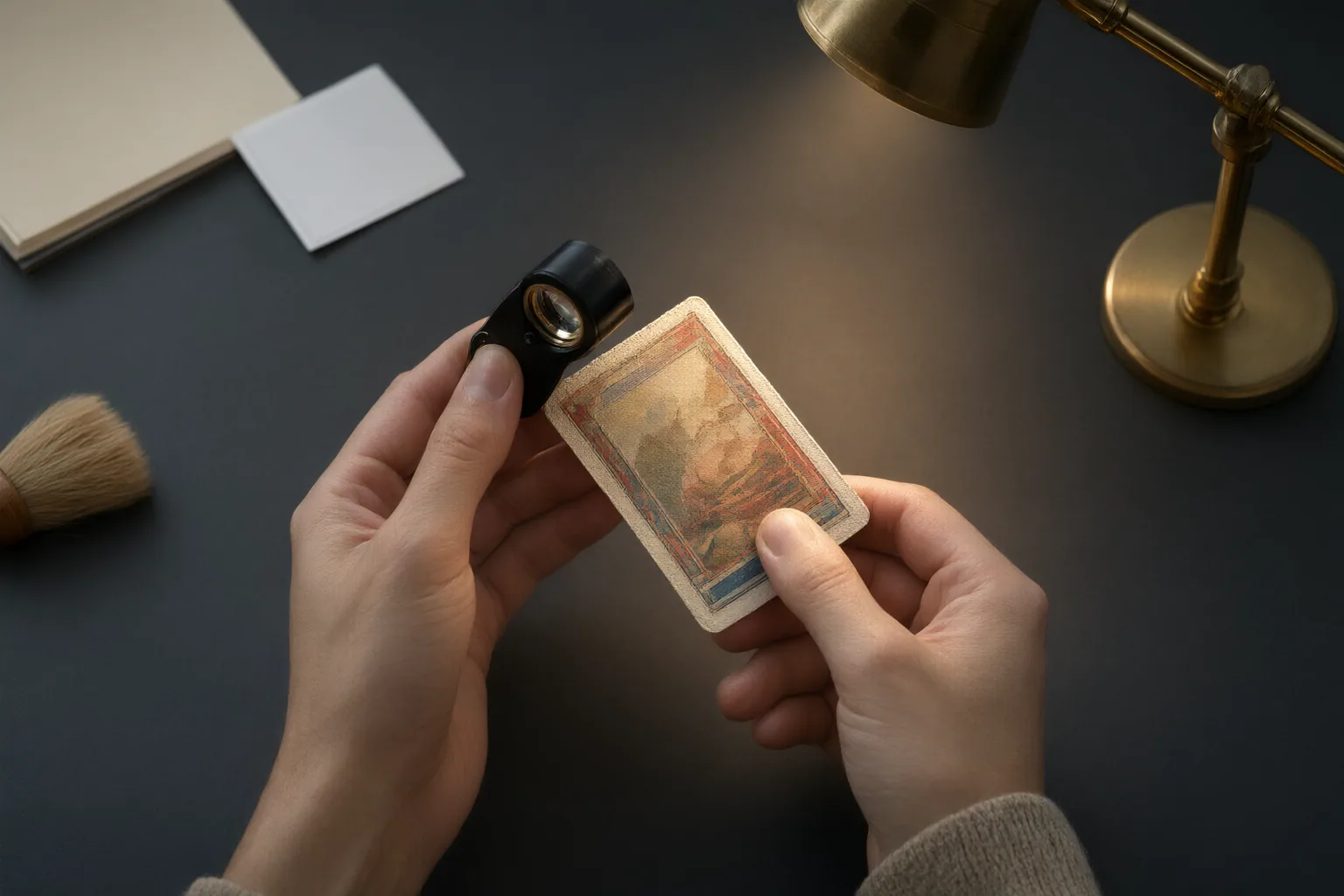
Finally, use magnification on suspicious areas, especially edges and dark regions. Look for brushstrokes, texture changes, bleed-through, spray droplets, sharp masking boundaries, trapped fibres or added pigment sitting above older dirt or damage. At a chip, distinct layers may reveal multiple generations of applied colour. Each feature is a prompt for further inquiry rather than conclusive proof of recolouring or restoration.
Buyer FAQs: certainty and seller documentation
Visual inspection has limits. Subtle alterations may blend with the original appearance, penetrate the material or remain nearly invisible without specialised examination. A combination of suspicious features may justify caution, but one feature by itself does not conclusively identify restoration.
Documentation helps address what appearance cannot. Ask the seller to state in writing whether any trimming, added colour, refinishing, repair or other intervention is known. Request available records describing what was done, why it was done and how much of the item was affected. Clear disclosure helps distinguish the identity of the underlying collectible from the originality and condition of its surface.
Conclusion
Use a layered inspection rather than relying on one apparent defect. Start with diffuse light, examine edges and colour, introduce raking light to reveal surface irregularities, and use magnification for small texture or pigment differences. Even then, appearance may not show how much original material remains or conclusively establish an intervention. Before purchasing, compare edges and dimensions cautiously and obtain the seller’s written disclosure of any known alteration or restoration.
Disclosures and limitations
- This article was prepared with AI assistance from the supplied research package. Its evidence comes from guidance about general collectibles and comic books, not a card-specific detection or authentication standard.
- No product recommendation or affiliate offer is included. Readers should verify alteration disclosures and relevant card-specific requirements independently before purchasing.
Related reading
Sources
- Overpainting, Refinishing & Recolouring — Collectaneum
- How to Spot a Fake or Restored Comic Book | Raw Comics — Raw Comics