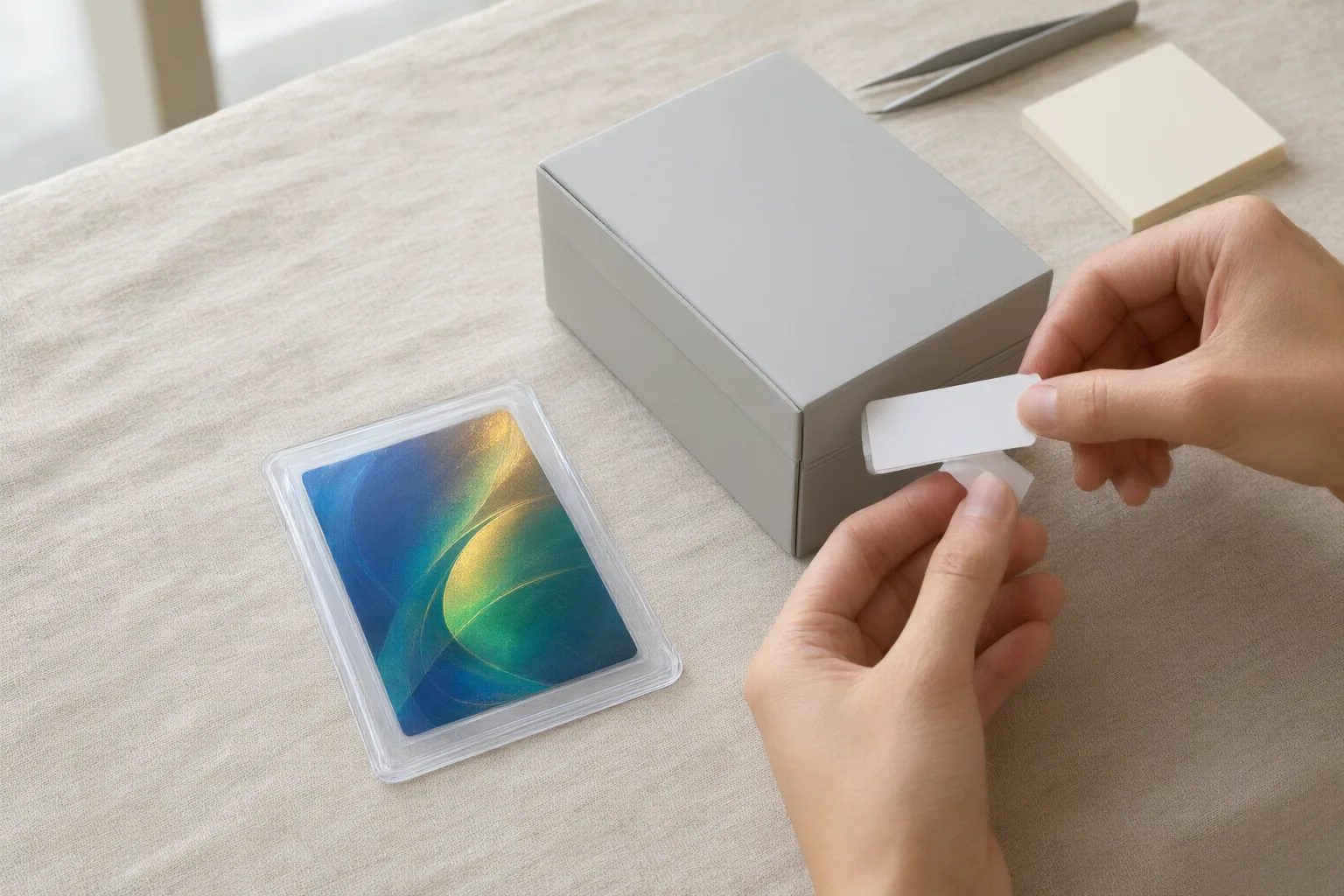
Keep adhesive labels away from collectible cards and, where practical, place identifying information on the outside of an outer storage container. Because the available sources do not establish that any adhesive is universally safe for card holders, choose labels according to the intended surface and duration, then inspect them regularly.
Keep Adhesives Separated From Cards
The simplest preventive principle is separation: do not place a label or tape directly on a collectible card. When adhesive identification is necessary, position it on the outside of an appropriate outer storage container rather than where it could contact the card.
National Archives guidance for paper-based records says tape should be applied only to the outside of a storage box. It also says identifying information may be written directly on a box in pencil. Although this is not trading-card-specific test evidence, it offers a useful low-contact approach for collection storage: identify the outer enclosure without introducing adhesive material beside the stored item.
Where the container permits suitable non-adhesive marking, a written identifier avoids attaching a label. If an adhesive label is required, the National Archives recommends a specification-compliant option instead of an ordinary office-quality label. This archival recommendation should not be treated as proof that a label is compatible with every card sleeve, top loader or graded-card holder.
Choose Labels for the Surface and Timeframe
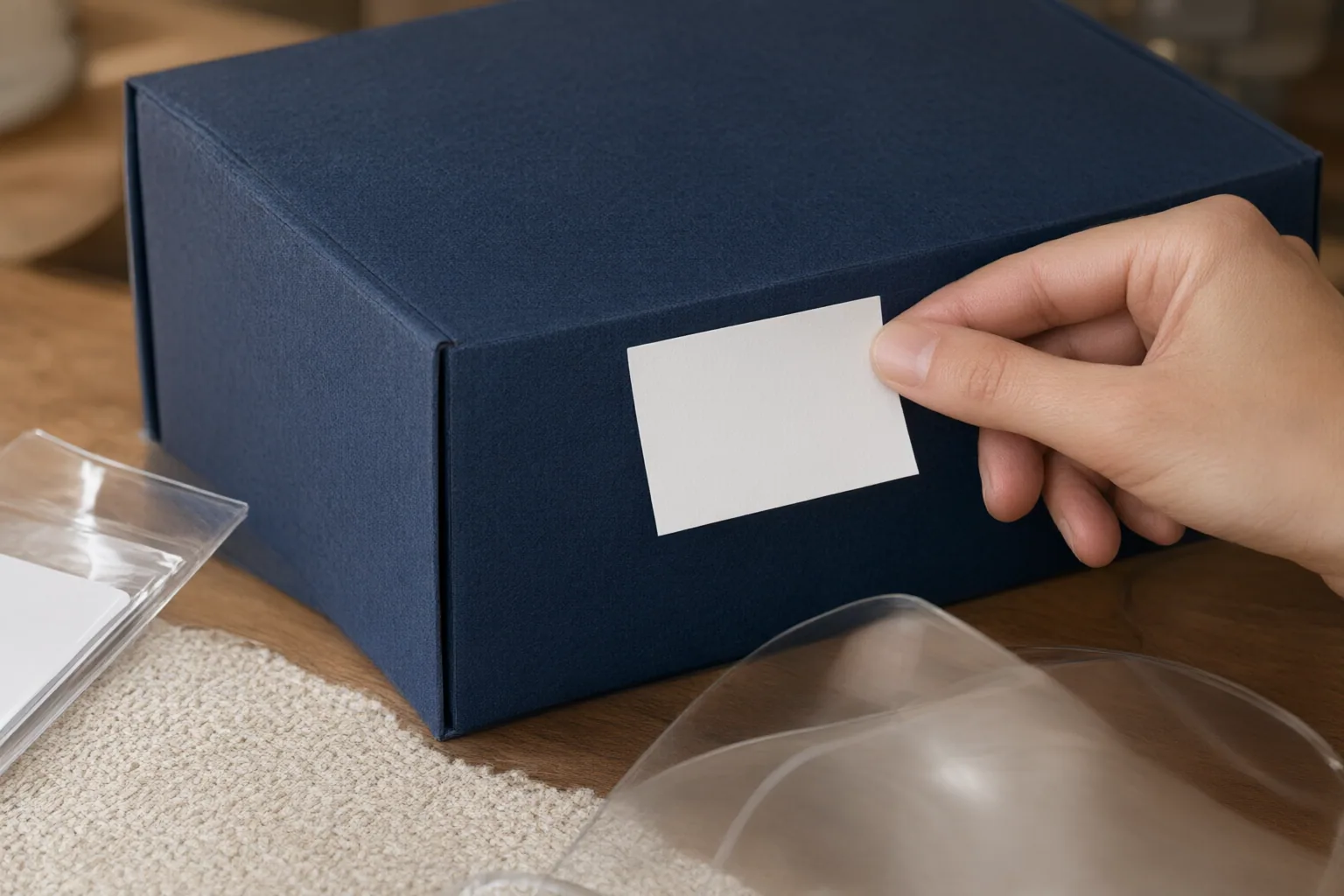
“Permanent” and “removable” describe different intended uses; neither term proves universal compatibility with collectible-card holders. The supplied manufacturer material describes high-tack permanent adhesives for surfaces including rigid plastics and glass, while its removable stickers are intended for temporary tagging without sticky residue. Those statements come from the manufacturer, not from independent testing on sleeves, top loaders or graded-card cases.
Before choosing between them, consider which surface will receive the label, how long the identifier must remain in place and whether it will need replacement. A permanent adhesive is intended to hold more firmly, which may be undesirable if labels change frequently. A removable label is intended for temporary use, but the evidence supplied does not support promising clean removal from every holder material.
An adhesive sticker is a layered product containing a facestock, functional components, an adhesive layer and a release liner. Selection therefore involves more than the visible paper or film: the adhesive layer and intended substrate matter. When compatibility is uncertain, keeping the label on an outer container limits unnecessary contact with the card and its immediate holder.
Build a Labelling and Inspection Routine
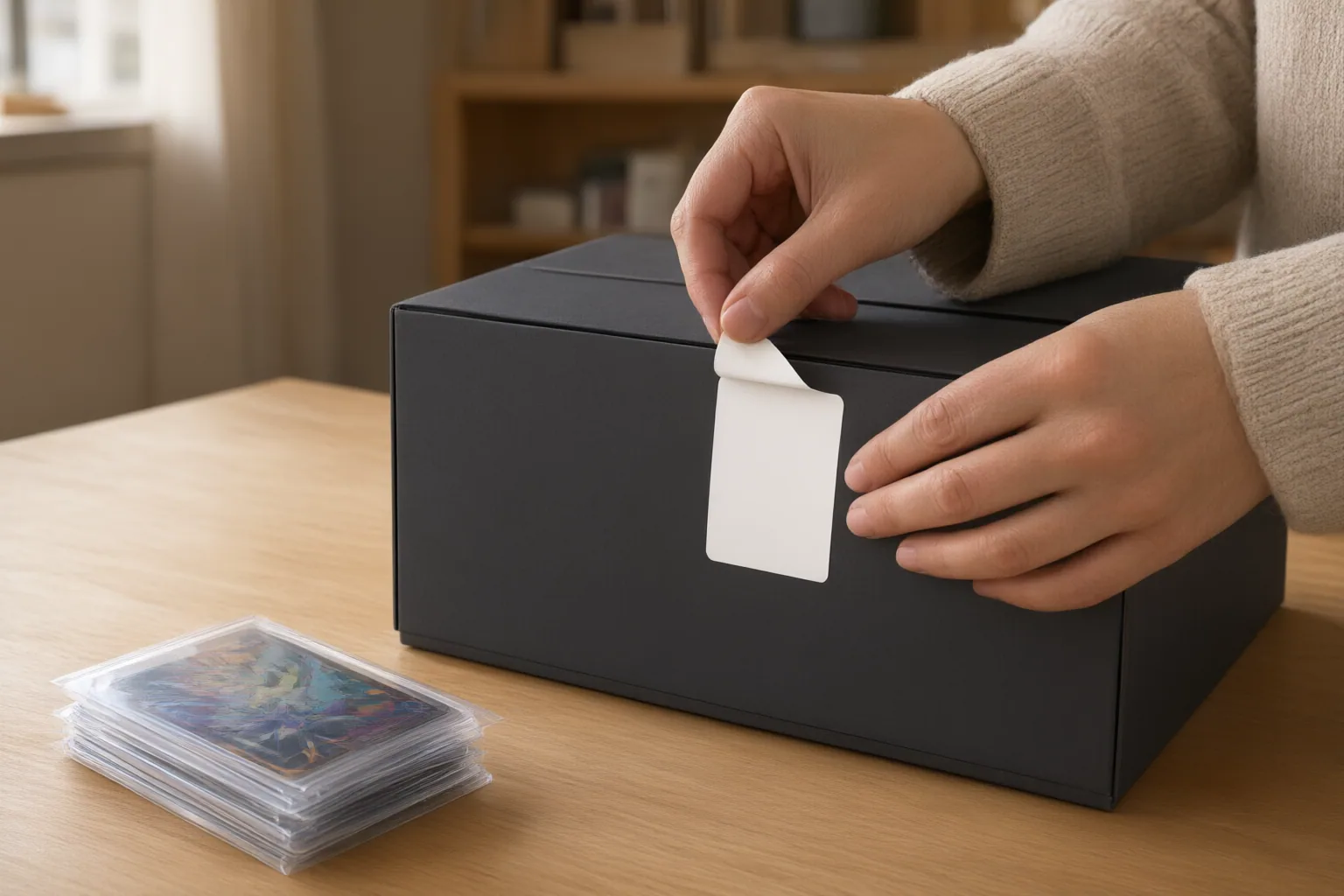
Start with a stable identifier for each card, group or storage location. Put that identifier on the outside of the appropriate outer container, and enter the same identifier in the collection inventory. Mirroring the code in the records helps preserve the connection between an item and its information if a physical label becomes detached.
Review labelled storage periodically. Look for labels that are lifting, shifting or no longer securely associated with the correct enclosure. National Archives guidance warns that office-quality adhesive labels on folders may fall off as the adhesive deteriorates. The source concerns archival folders rather than trading-card storage, but the resulting record-keeping problem is relevant: a detached label can separate identifying information from its intended container.
When replacing an uncertain or deteriorating label, preserve the existing identifier in the inventory before removing it. Avoid assuming that a manufacturer’s general removable-adhesive description guarantees residue-free removal from a particular holder. If a label does detach, use the inventory identifier to confirm its correct location rather than relying on proximity to other containers.
Conclusion
The lowest-contact approach is to keep adhesive labels off cards and place identification on suitable outer storage wherever practical. Non-adhesive marking on an outer box can remove the need for a sticker, while any adhesive choice should reflect its intended surface and timeframe. Permanent and removable labels serve different uses, but the available evidence does not establish a universally safe or residue-free option for all card-holder materials.
Review every labelled enclosure now. Move identifying information to the outer storage container where practical, record the same identifier in your collection inventory, and replace any label that touches a card, sits on an uncertain holder surface or shows signs of deterioration.
Disclosures and limitations
- This article was prepared with AI assistance from the supplied National Archives guidance and commercial label-manufacturer material. Manufacturer statements are not independent card-holder tests, and no affiliate product recommendation is made.
Related reading
Sources
- Paper-Based Records — National Archives
- Adhesive RFID Stickers Manufacturer | Printable Label OEM – JNRFID — RFID Manufacturer