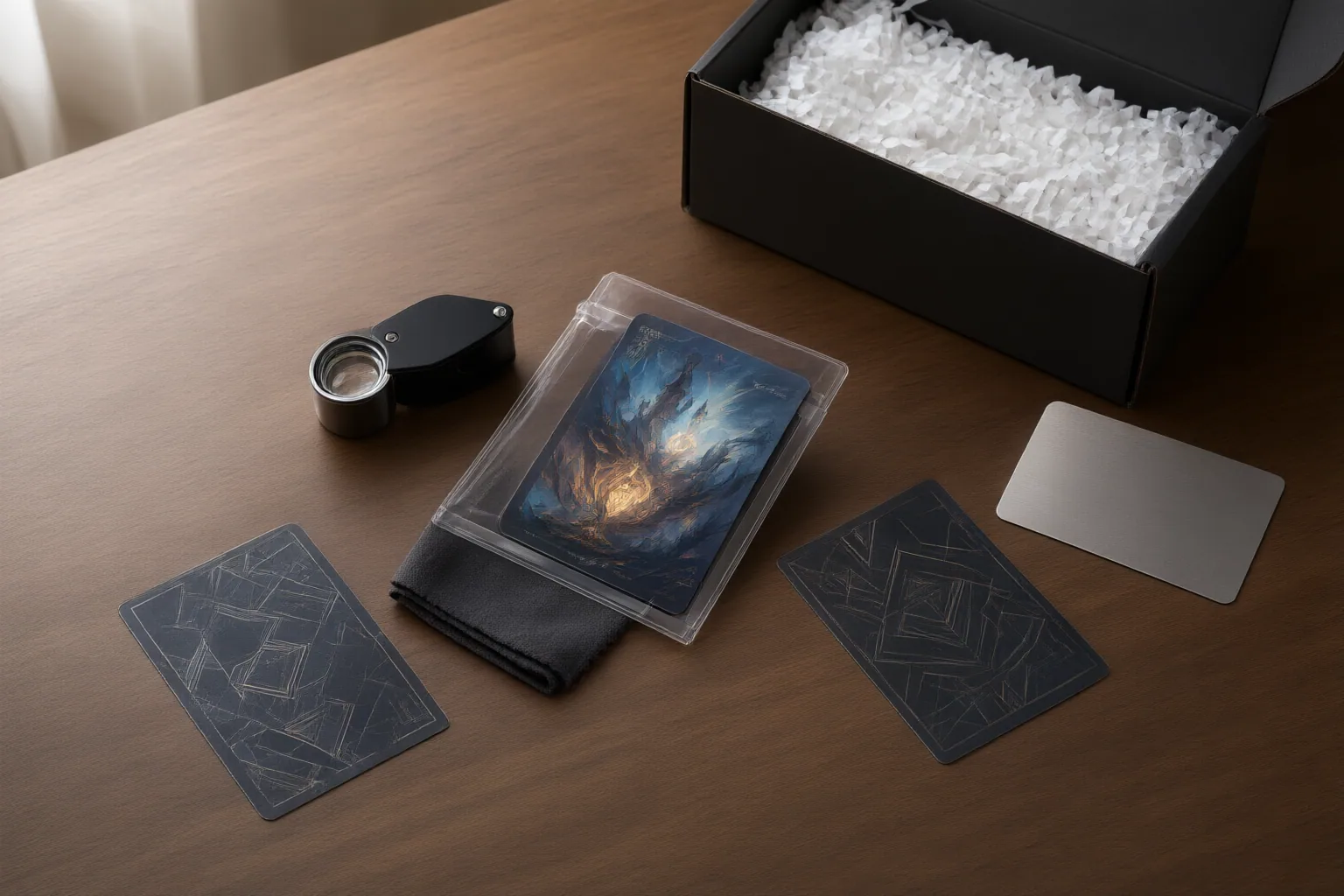
Safer online card buying starts with four practical steps: review the seller’s history, verify the exact item, keep payment protected, and preserve evidence for an arrival inspection. No single check proves authenticity, but using them together can expose avoidable risks before you pay.
Check the seller and transaction terms
Review the seller’s feedback, ratings, sales history, account history, and prior complaints. Give particular attention to comments about inaccurate condition descriptions, undisclosed damage, authenticity concerns, packaging, or items that differed from their listings. These signals help establish a track record, but even extensive positive feedback does not prove that a particular card is authentic.
Look at how the seller presents and discusses the item. Sparse history, copied or blurry photographs, a vague description, or evasive answers make assessment more difficult. Ask direct questions when important details are missing, and keep the replies as part of the transaction record.
Read the marketplace’s return and buyer-protection terms before committing. Pressure to move the transaction outside the marketplace or use an unprotected payment method is a warning sign because it may leave fewer practical remedies if the card is counterfeit, damaged, or materially different from its description. Keep both communication and payment on services offering buyer protection.
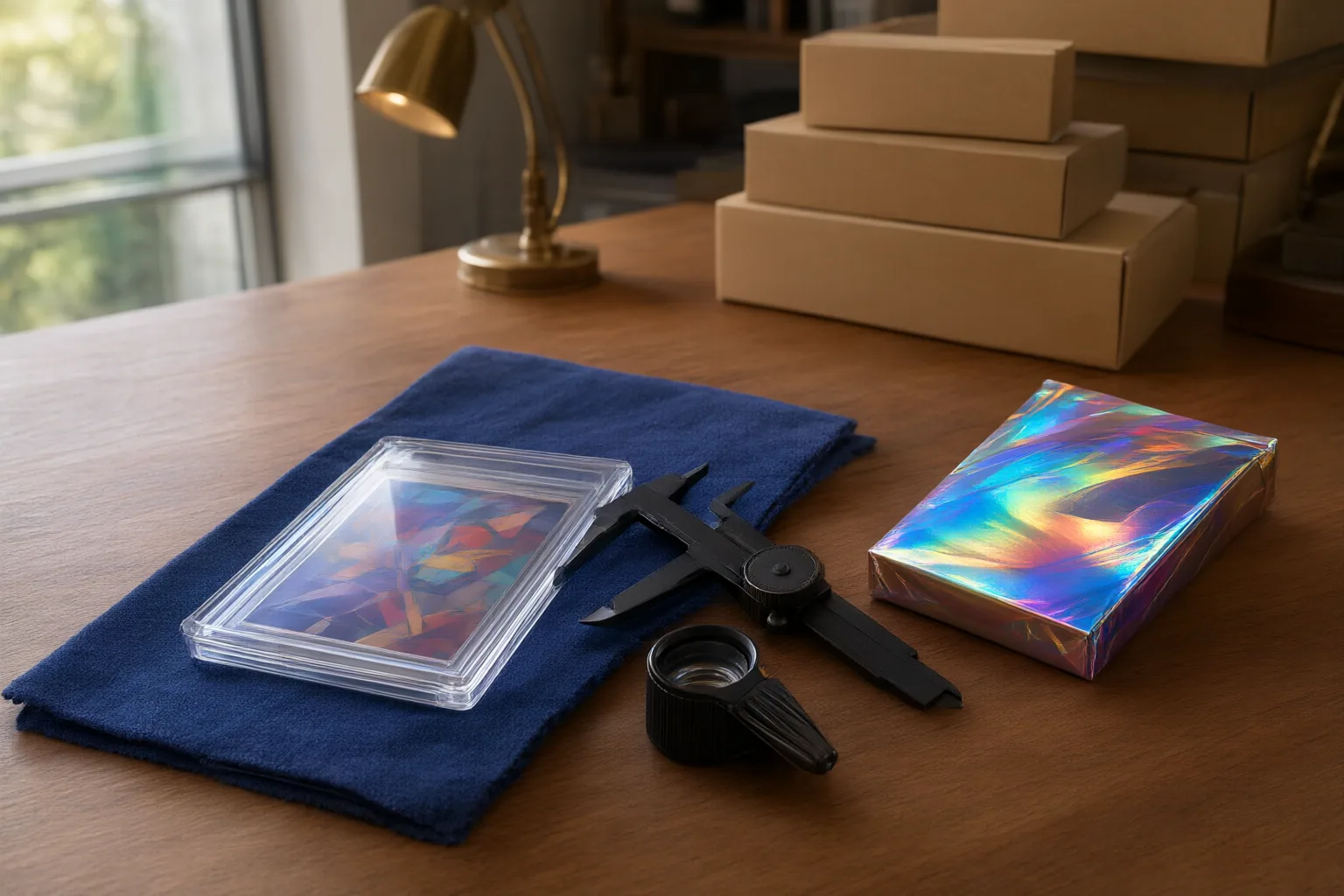
Verify the exact card or sealed product
Do not rely on the listing title alone. Compare the card name, set, card number, language, finish, edition, and reprint status, and confirm that the photographs show the exact copy being sold. This reduces the chance of buying a different variant from the one expected.
Treat condition labels as summaries rather than consistent standards. Request clear photographs of the front and back, plus close views of the corners, edges, surfaces, and every disclosed flaw. Angled-light images can provide more useful evidence about dents, scratches, print lines, or surface impressions that soft or incomplete photographs may hide. Ask specifically about damage when the images do not answer the question.
For sealed products, examine photographs of every side, corner, seam, section of wrap, and label, as well as any dents or tears. These images document packaging condition and identify areas requiring clarification.
For a graded card, check the certification number in the grading company’s database, then compare the database information with the pictured card, label, holder, and listing photographs. A matching certification number is useful evidence, but it does not by itself establish that the pictured item is genuine.
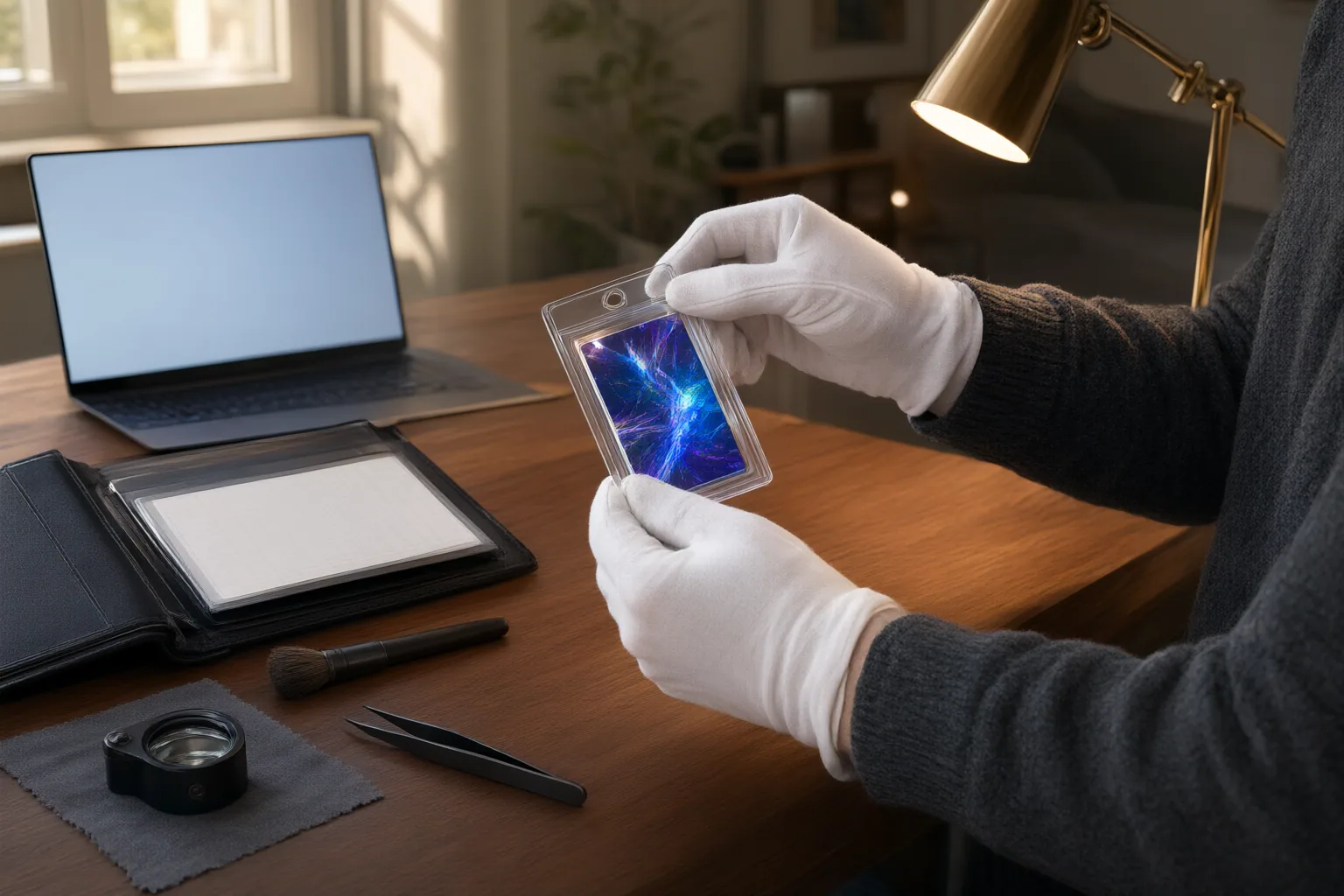
Protect the payment, delivery and purchase record
Before paying, confirm that the payment service provides buyer protection and understand the applicable claim or return terms. Avoid requests for unprotected payment or an off-platform transaction. Also ask how the item will be packed: even an accurately described card can suffer movement, bending, moisture exposure, or impact when packaging is inadequate.
Save the listing, seller correspondence, receipt, and shipping information. Together, these records can support a later dispute and document the item’s purchase history.
After delivery, retain the mailing materials while checking the contents. Compare the received card’s front, back, corners, edges, and surface with the listing photographs and description. For sealed products, compare the packaging condition with the recorded images. Do not discard the packaging or transaction evidence until you have completed this review and addressed any material difference through the protected service’s process.
Conclusion
Use a repeatable checklist for every online purchase: review the seller’s track record, identify the precise card or sealed product, obtain item-specific photographs, read the protection terms, pay through a protected service, and confirm the packing method. When the parcel arrives, preserve its packaging and compare the item promptly with the listing.
Before paying, complete the seller, listing, payment, and delivery checks; afterward, retain the listing, correspondence, receipt, and shipping information as your purchase record.
Disclosures and limitations
- This article was prepared with AI assistance from the supplied research package and does not claim first-hand inspection, purchase, use, or authentication of any item.
- No specific product is recommended here. If affiliate links are added later, that commercial relationship should be disclosed clearly and must not replace independent seller, listing, payment, or delivery checks.
Related reading
Sources
- How to Buy Trading Cards Online Without Getting Burned · Kizuna Kin — kizunakin.com
- Discover the Ultimate Guide to Buying Rare Collectibles Online Safely — Collectorsparadise
- How to Buy and Sell Collectible Cards Online Safely and Securely — Card Review Club
- Where to Buy Collectible Cards Online: The 7 Criteria for Choosing Well (2026) — GS-Gameon