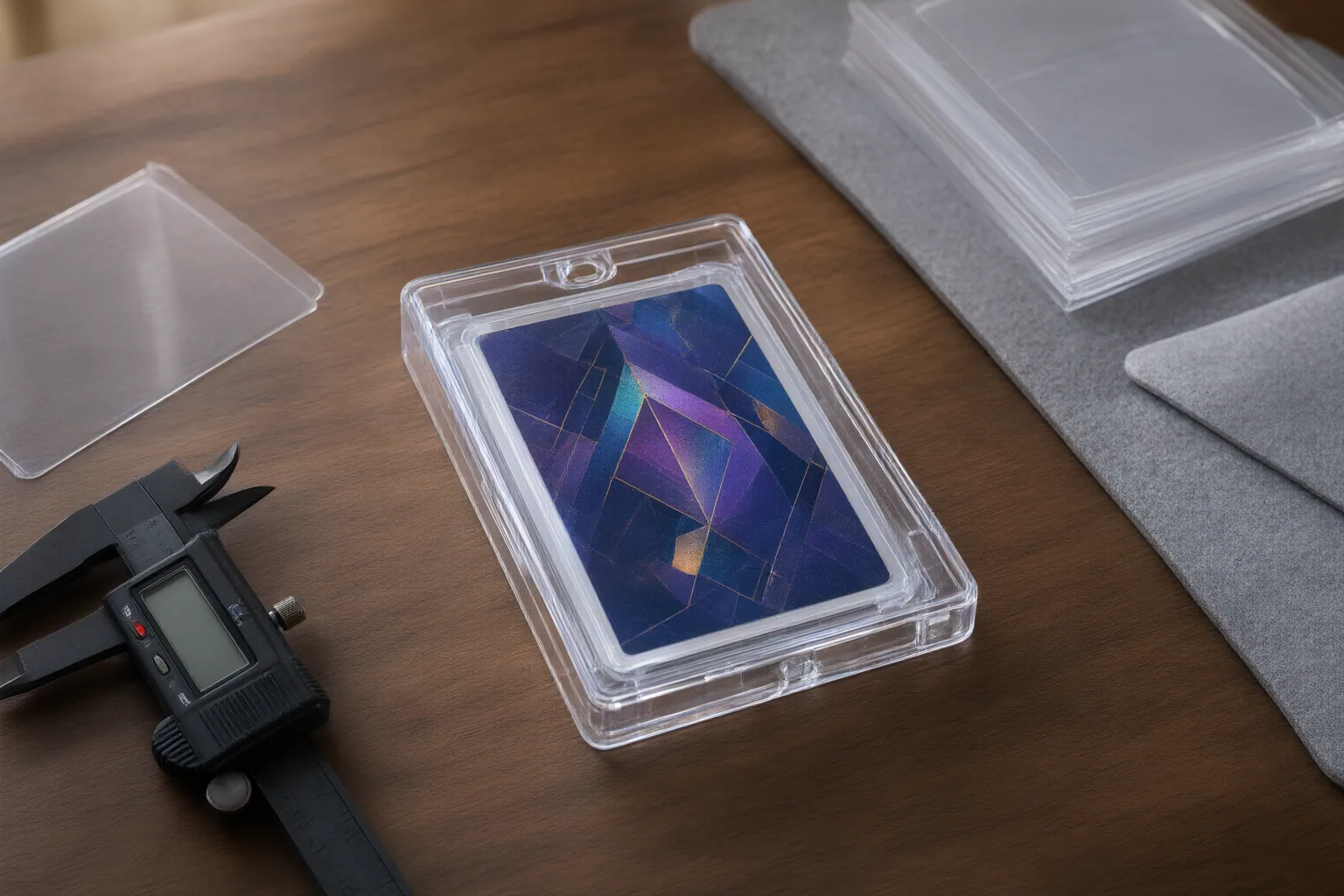
Match rigid card holder dimensions to the card as it will actually be stored: consider its width, height, thickness and intended sleeve, then compare those measurements with the holder manufacturer’s published capacity. The correct fit should require no force, place no pressure on the card and limit avoidable movement against rigid plastic.
Check the Card, Sleeve and Intended Use First
Begin with the individual card rather than assuming that a familiar holder size will fit. The cited card-care guidance says holder choice should reflect the card’s size, condition and intended purpose, whether that is storage, display or grading. Check both its dimensions and thickness.
Cards from different eras or sets may not share the same dimensions. In particular, some vintage issues differ from modern cards, so a holder commonly used for current releases cannot automatically be treated as a universal option. Inspect and measure the actual card instead of relying only on its category or appearance.
Include the intended sleeve when assessing fit. This matters because the card-care guidance recommends sleeving a card before putting it into a rigid top loader. The relevant measurement is therefore the sleeved card’s overall thickness and dimensions, not simply those of the bare card. Decide how the card will be stored first, prepare that intended configuration, and use it consistently when comparing the card with holder specifications.
Recognise Compression and Movement Risks
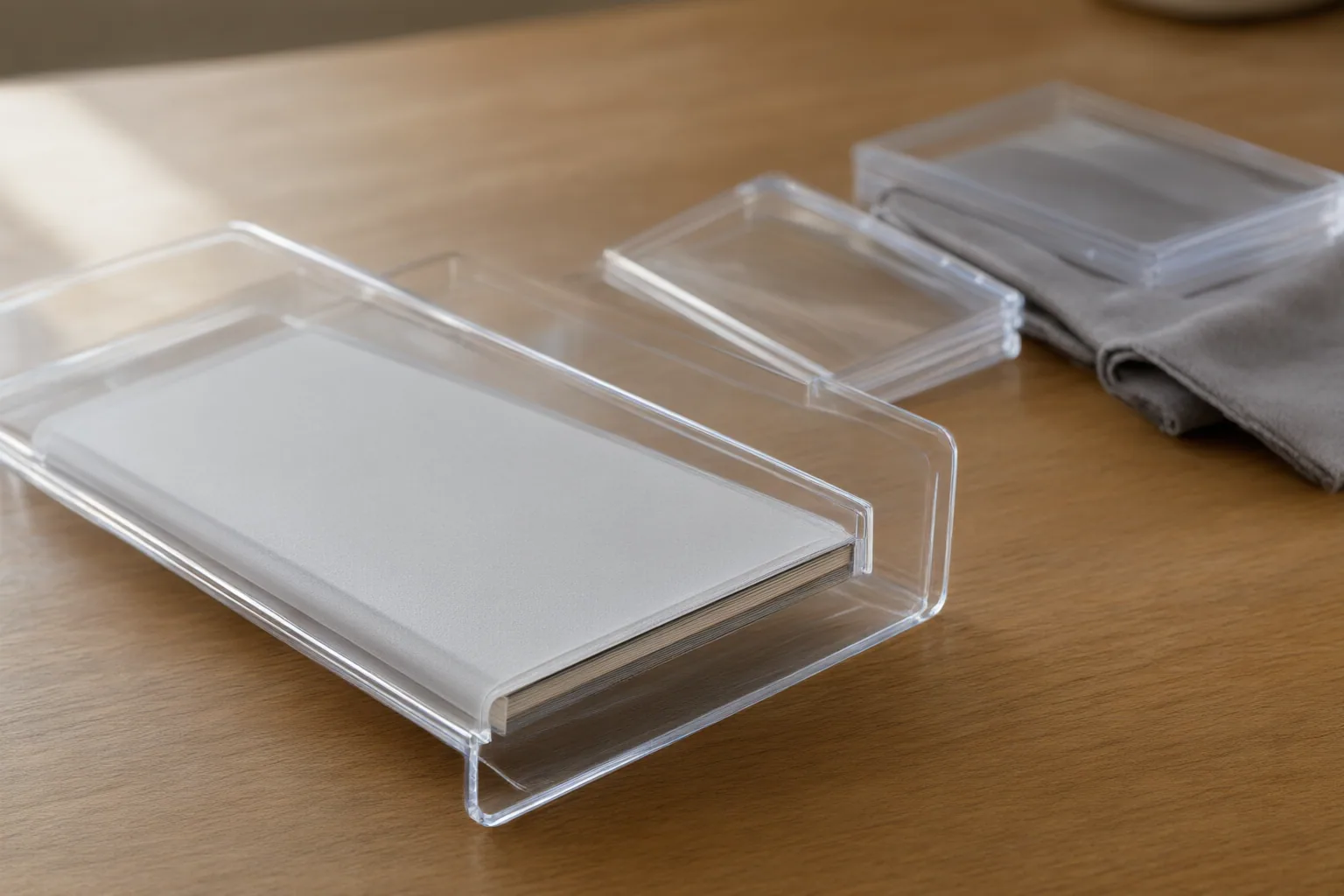
A fit is too tight if insertion requires force or the holder places pressure on the card’s surfaces, edges or corners. The source specifically warns against forcing a card into an undersized case or tight sleeve. Resistance should be treated as a reason to stop, not as evidence that the card is securely protected.
Compression is not the only concern. A card that is insufficiently restrained can move inside rigid plastic, creating avoidable surface contact. For rigid top loaders, the cited guidance recommends putting the card in a sleeve first and then matching the holder to the card’s thickness. The sleeve separates the card from direct contact with the rigid holder, but it must be included when judging the required capacity.
Magnetic holders present the same basic fit question in a different design. The guidance recommends a recessed holder that supports the card without compressing its surfaces, edges or corners, and it cautions against assuming that one magnetic case fits every card. Reject a fit at either extreme: one that squeezes the card or one that permits avoidable movement against the rigid interior.
Confirm the Holder Type and Published Capacity
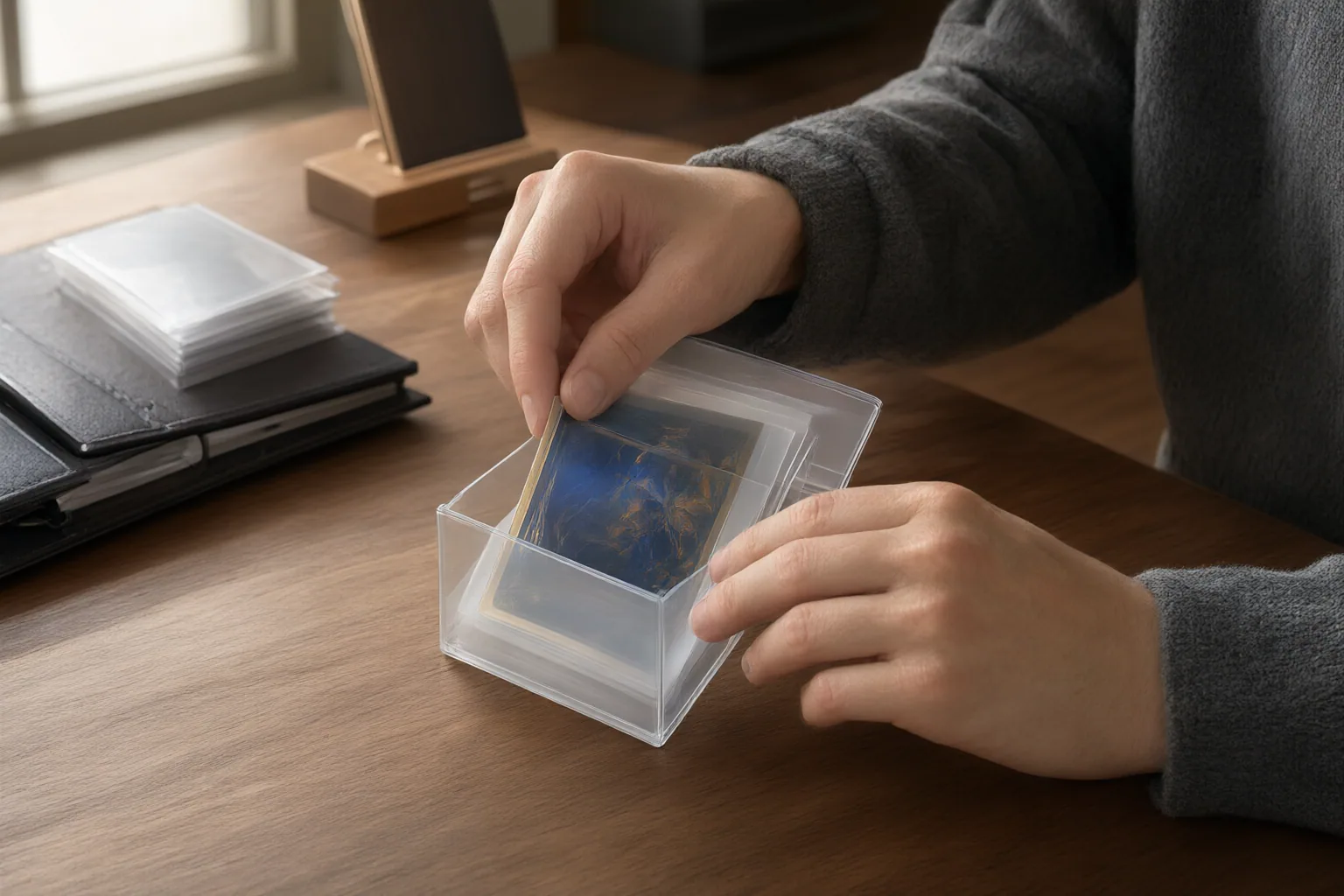
Check what the holder was designed to contain before comparing dimensions. The generic description “rigid holder” does not establish that a product is intended for trading cards. One cited catalogue, for example, uses that language for identification products made for badges, proximity cards and smart cards. Its range includes single- and multi-card formats as well as locking cases, extractor slides and thumb slots. Those details show why the product’s intended purpose matters; they do not establish suitability for collectible cards.
For a trading-card top loader, compare the thickness of the sleeved card with the selected manufacturer’s published capacity. For a magnetic holder, confirm that its recess is intended to support the particular card configuration without pressure. Do not infer capacity from the holder’s general name or outward appearance.
The supplied evidence does not contain a verified chart converting specific card thicknesses into holder sizes. Consequently, no universal numerical pairing can be given from these sources. Exact selection requires two pieces of information: a measurement of the card in its intended sleeve and the capacity specification published for the particular holder. If either is unavailable, the fit cannot be confirmed from a generic label alone.
Conclusion
Use a short sequence for every card: identify whether the holder is genuinely intended for trading cards, decide whether the card will be stored in a sleeve, and measure that complete configuration. Compare the result with the chosen holder manufacturer’s published specifications. Insert the card without force, then check for pressure on its surfaces, edges or corners and for avoidable movement inside the rigid plastic.
Do not assume that a modern standard holder, a magnetic case or a product generically described as a rigid holder will suit every card. If the card is compressed or inadequately restrained, remove it and choose another size or design. Measure the sleeved card and verify the specific holder capacity before committing to storage.
Disclosures and limitations
- This article was prepared with AI assistance and synthesises only the supplied card-care guidance and rigid-holder catalogue information. No product or affiliate recommendation is included.
Related reading
Sources
- Vintage Baseball Card Holders: 7 Smart Picks to Protect — Baseball Card Roadshows
- Rigid Badge Holders | Identification Solutions — IDenticard.com